
Analysis
As Burma’s first election phase wraps up, observers say Beijing is seizing on the isolated regime’s desperation to secure strategic gains while turning a blind eye to the junta’s slaughter of civilians.
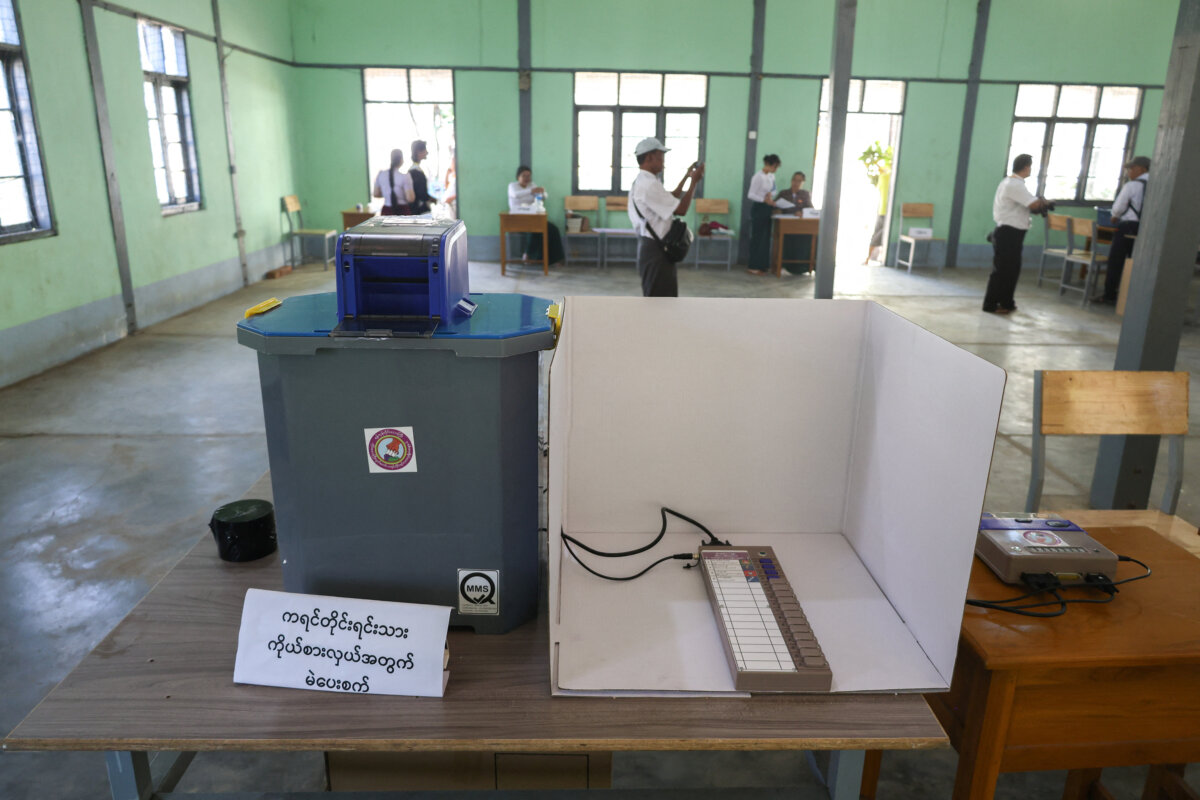
A source from a pro-military Union Solidarity and Development Party (USDP) in Burma (also known as Myanmar) indicated the party is winning a majority in the election’s opening stage by securing 82 of the 102 contested lower house seats, Agence France-Presse (AFP) reported on Dec. 29.
The vote, held on Dec. 28, marked the Southeast Asian nation’s first general election since the 2021 military coup, with subsequent phases scheduled to follow on Jan. 11 and 25.
The military has framed the election as proof that the armed forces can be trusted to restore civilian rule.
However, U.N. High Commissioner for Human Rights Volker Türk warned on Dec. 23 that the election is unfolding in a climate of violence and repression that leaves “no conditions for the exercise of the rights of freedom of expression.”
‘Fraud’ Election with China’s Backing
In Yangon, resident Yan Phyu Yin said she abstained from voting while those around her appeared largely indifferent to the election.
“Because [former State Counselor] Aung San Suu Kyi’s party was gone, people paid little attention to other parties, and most of my close friends, like me, whose household registrations are not in Yangon, did not return to their registered hometowns to vote,” Yan told The Epoch Times.
The ballots notably excluded the main opposition National League for Democracy (NLD), which the regime dissolved after imprisoning Suu Kyi, the de facto leader of the Burmese government.
Yan stated that amid years of constant conflict and economic distress that have forced many to flee abroad, citizens are prioritizing their future livelihood over the election results.
“We all hope that our country can stabilize and the economy can improve after this election, but we are not quite sure whether it can become more democratic,” she said.
Chen Shang-mao, president of the Taiwan Network for Free Democracy who has closely watched the Burma crisis since the coup, cautioned that even these expectations for stability are likely to fall short.
“I went to Yangon and Mandalay in November to observe the pre-election situation, but I found no campaign billboards and locals who did not care about the results, so this vote is basically symbolic rather than substantive and will not bring any peace or democracy,” Chen told The Epoch Times.
Jason Tower, senior expert at the Global Initiative Against Transnational Organized Crime, was more blunt, describing the vote as “one of the most extreme forms of fraud.”
“[It’s] a desperate attempt to inject legitimacy into an otherwise wildly bogus regime that would have likely collapsed in late 2024 if not for Chinese interference in Myanmar’s domestic affairs,” Tower told The Epoch Times.
Tower added that the military has learned from scam syndicates and is using support from China and Russia to parade uninformed officials as observers in a move to disguise this scam as a democratic process.
“Over the past four years since the coup, Myanmar has become one of the most violent countries in the world as the junta has used extreme violence to hold onto power.
“As such, we can expect this farce of an election to do little more other than further aggravate the underlying drivers of conflict in the country,” Tower said.
‘Useful to Beijing’
Tower noted that while official results are pending, the election will likely change little on the ground other than the formal re-emergence of the military’s proxy USDP.
“Another question is the extent to which the USDP party will become a focus of ongoing revolution in the country—which is very likely given that the USDP will politically represent a regime that has been soundly rejected by the Myanmar people,” said Tower.
He added that the junta chief Min Aung Hlaing now clearly recognizes that he will lose power without Beijing’s support, a reality that has effectively broken down any resilience the regime might have held against Chinese influence.
“In this regard, Min Aung Hlaing may be seen as useful to Beijing in that he is completely willing to trade major aspects of the country’s national interests and even sovereignty for his personal interest in remaining the dominant political and military figure in the country,” he said.
Tower emphasized that the junta has already begun delivering on China’s specific demands, including a pledge to restart the Myitsone Dam—a Beijing-backed project which the two countries agreed on in 2009—and legal revisions that allow foreign companies to provide armed private security to China’s advantage.
“China’s assumption is that Min Aung Hlaing will follow China’s playbook with respect to key national issues, including especially the approach to and sequencing of ceasefire agreements, and the approach to key infrastructure projects,” he said.
Enabling Atrocities for Influence
Chen argued that Beijing’s primary motivation regarding the election is not the specific outcome but rather posturing as the dominant peacemaker in Southeast Asia to counter American influence.
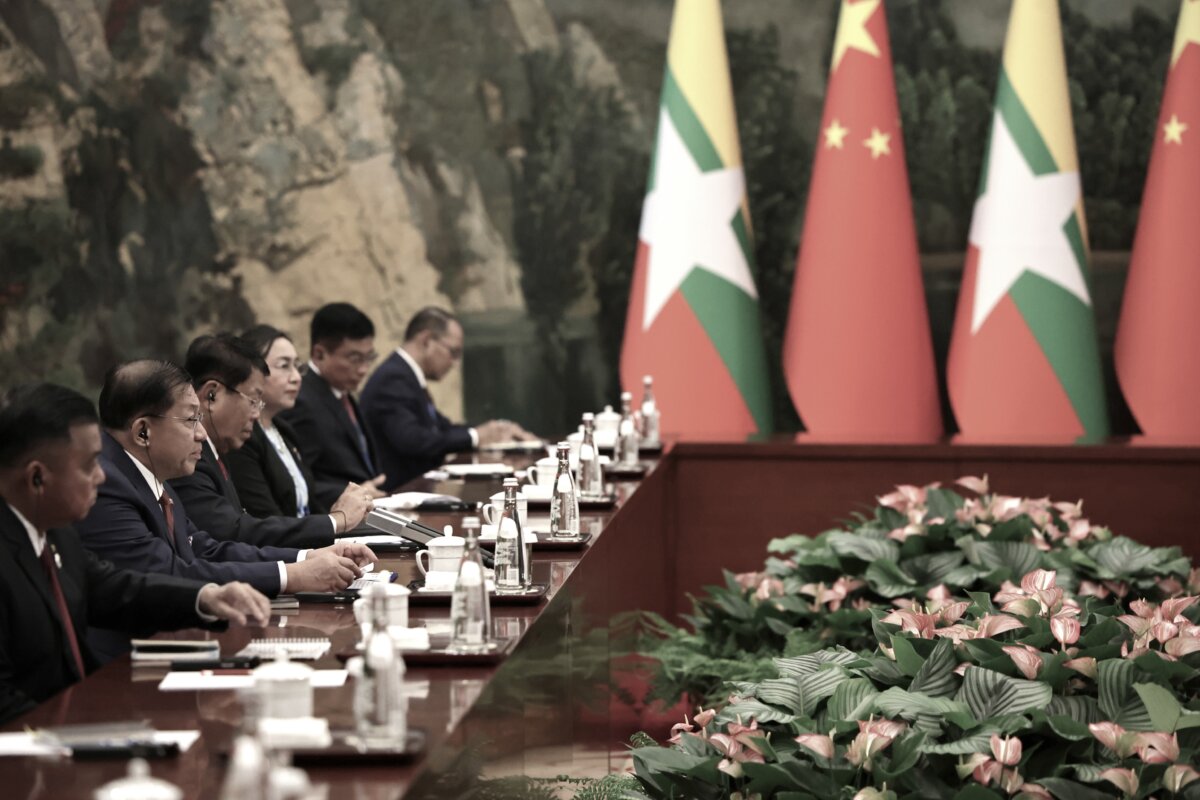
“Since the 2021 coup, China has tried unsuccessfully to mediate Myanmar’s issues, and with the Trump administration seen as playing a major role in the recent Thai-Cambodian conflict, Beijing is now desperate to reclaim dominant power from Washington in resolving regional disputes,” Chen said.
Following months of border clashes, Thailand and Cambodia agreed to a ceasefire on Dec. 27 after President Donald Trump mediated talks between the two nations. Trump said on Truth Social that both sides would “go back to living in PEACE, as per our recently agreed to original Treaty.”
Chen added that Beijing prioritizes political leverage over economic interests and intends to frame the election as a sign of “democratic progress” under its guidance, even though this support effectively enables the junta’s violence against civilians.
“For the Chinese Communist Party, it seems difficult to stop Min Aung Hlaing from attacking civilian areas, and even though the world will view this as aiding the junta’s atrocities, Beijing currently does not care about its international image at all,” Chen said.
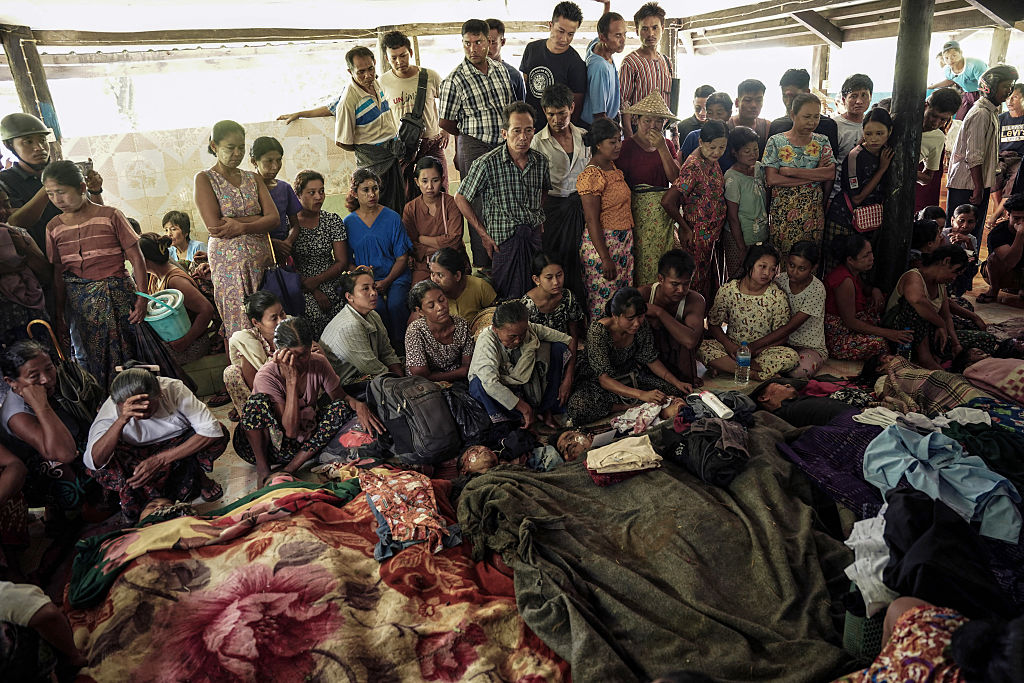
The junta’s air campaign in Burma has reached its deadliest intensity since the coup, with nearly 2,000 people killed in over 2,600 strikes this year, according to figures from the monitoring group Armed Conflict Location and Event Data Project (ACLED) cited by Al Jazeera.
US Countermove
In a bid to counter this expanding Chinese leverage, Washington appears to be signaling a shift toward engagement with the military regime, marked by the lifting of sanctions on junta-linked firms in July and the ending of Temporary Protected Status (TPS) for Burma nationals in November.
However, Tower cautioned that any moves that strengthen the junta risk inadvertently aiding Beijing, as the regime has become the primary vessel through which China is expanding its strategic reach into the Indian Ocean.
“If China is successful in consolidating its control over the Indian Ocean through its deepening influence in Myanmar, this could seriously undermine U.S. national security objectives in terms of preventing Chinese aggression,” Tower said.
Tower argued that rather than focusing solely on the junta, the U.S. should expand its security cooperation to include regional neighbors and ethnic organizations that have proven effective in combating threats.
“The U.S. can work toward building out more sophisticated police cooperation in the region to combat these threats, and in particular could consider deeper partnerships involving Thailand, the Philippines, and key local authorities in the Myanmar-Thailand borderlands such as the Karen National Union,” he said.
He noted that targeting these criminal networks has already proven to be a more effective strategy than engagement, providing Washington with significant leverage against Beijing.
“Recent moves by the U.S. government to crack down have already shown signs of impact in terms of dramatically increasing regional pressure to crack down and in terms of providing the U.S. with the leverage needed to work toward holding China accountable for this criminal activity that now systematically targets the U.S.,” Tower said.
 Friends Read Free
Copy
Facebook
Tweet
Friends Read Free
Copy
Facebook
Tweet