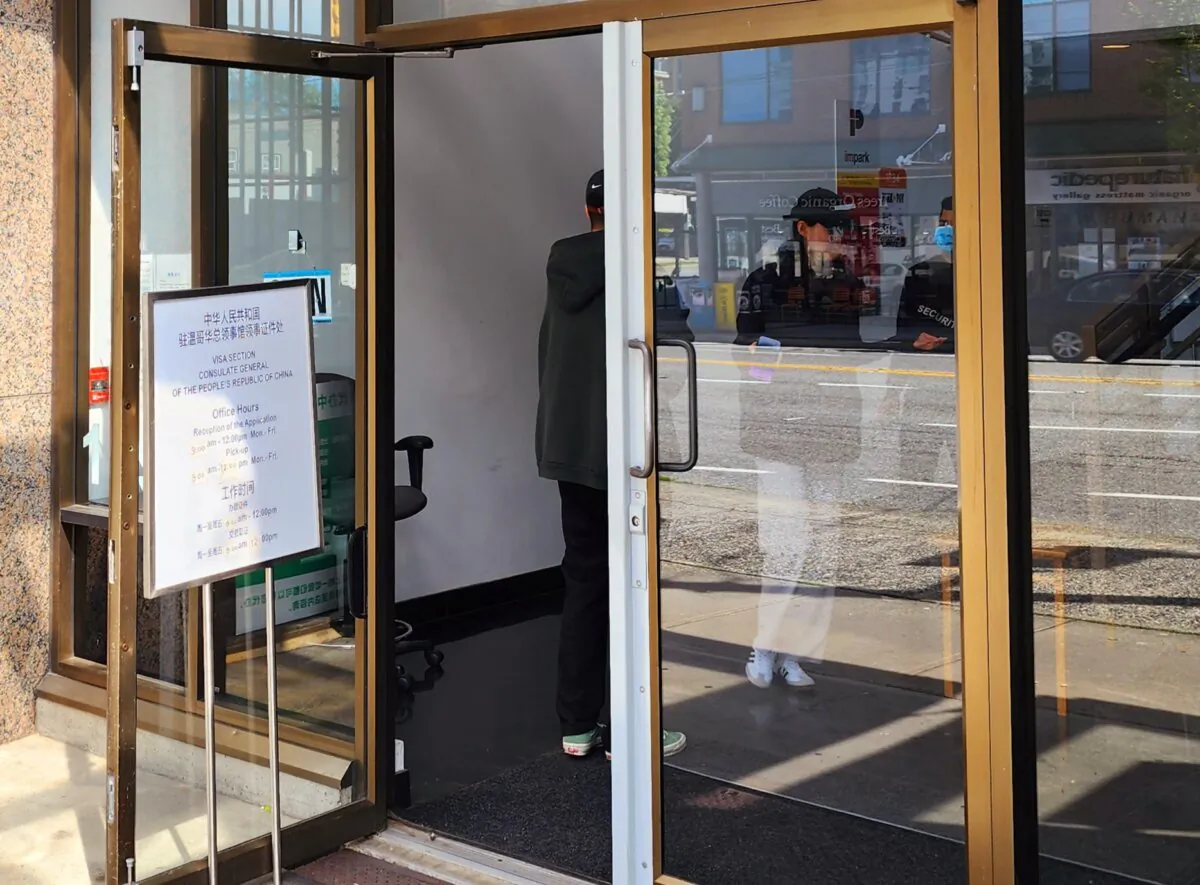
Chinese diplomats in Canada recently helped organize a roundtable discussion in Vancouver focused on promoting closer ties among Chinese businesses, financial institutions, and B.C. First Nations.
The meeting occurred as intelligence agencies in Canada say Beijing is targeting all levels of government, including First Nations, for influence.
The China-Canada Economic and Trade Cooperation Roundtable Meeting was held Sept. 3 under its “guidance,” according to a Sept. 5 statement from the embassy, which said the event was hosted by the Canada China Chamber of Commerce and arranged by the Bank of China’s Canadian subsidiary.
China’s Ambassador to Canada Wang Di “expressed the hope that the Chinese and Canadian business communities, financial institutions and First Nations communities will continue to strengthen communication and collaboration, [and] enable bilateral economic and trade cooperation,” according to the embassy’s statement.
Wang added that he hoped enhanced cooperation will “serve as a stabilizer and propeller of bilateral relations, and lay an even more solid foundation for the China—Canada new strategic partnership.”
Roughly 60 representatives of the Chinese and Canadian business community took part in the event, according to the embassy, including former federal finance minister Bill Morneau, First Nations Finance Authority President and CEO Ernie Daniels, Sen. Yuen Pau Woo, former Senator Victor Oh, Chinese Embassy Minister Counsellor Xu Qingjun, and Canada China Chamber of Commerce President Deng Jun.
The meeting included discussions on “economic and trade cooperation, including cooperation on green transition, indigenous finance and community development,” the embassy said, with participants agreeing that “economic and trade cooperation enjoys broad prospects.”
First Nations
Under treaties and other agreements, First Nations have a range of rights and interests, and are increasingly participating in major projects in Canada through equity ownership and other arrangements. In recent years, indigenous groups have acquired equity stakes in pipelines, electricity transmission projects, nuclear energy projects, and liquefied natural gas (LNG) projects.
Recent examples include a 12.5 ownership stake for 38 B.C. First Nations in Enbridge’s Westcoast natural gas pipeline system on July 20 along with a $400 million federal loan guarantee, as well as the proposed indigenous-led Ksi Lisims LNG project in northwestern B.C. which signed a binding deal with German company Uniper SE for selling 2 million tonnes of LNG per year for up to 20 years on July 29. The first deliveries are projected to arrive in Germany in 2032.
Elsewhere in Canada, a June 23 announcement from Ottawa and the government of Ontario committed roughly $715 million in financing support in order to grant seven Ontario First Nations a minority interest in the Darlington New Nuclear Project.
First Nations have enhanced mineral and natural resources rights when development takes place on reserves, including increased decision-making power and, in some cases, the authority to negotiate revenue-sharing, employment commitments, and equity ownership.
Under the Framework Agreement on First Nation Land Management, First Nations who take part have control for management of their reserve lands and resources, while modern treaties and land claims can lead to additional rights for resources and land governance.
This is in the context of a significant increase in reserve lands, with 76 additional land parcels amounting to more than 136,000 acres added to reserves across the country since Crown-Indigenous Relations Minister Rebecca Alty was appointed to her position in May 2025.
Previous Chinese Efforts
Canada–China organizations have previously sought to develop business relationships with indigenous leaders.
The Canada China Business Council organized an indigenous business mission to Beijing in November 2024 that included First Nations, Inuit, and Métis entrepreneurs and economic development representatives.
The council said China’s demand for natural resources presented opportunities for indigenous businesses and said the mission sought to establish partnerships, develop export markets, and identify sources of investment. It was the council’s third China mission focused specifically on indigenous groups.
Foreign Interference Attempts
China’s outreach with First Nations comes as Canadian authorities warn of foreign states seeking to influence indigenous governments, in addition to other levels of government in Canada.
The Public Inquiry into Foreign Interference, led by Justice Marie-Josée Hogue, concluded in its final report in January 2025 that foreign actors, most predominantly China, are seeking to interfere at “every level” of government in Canada.
“Foreign actors target institutions at every governmental level in Canada,” the report stated, adding that provincial, territorial, indigenous, and municipal governments are all needed for a “whole-of-society response to foreign interference.”
Describing China in its first report, the inquiry stated that Beijing is “the most active foreign state actor engaged in interference” and was undertaking measures including targeting of political parties, the Chinese diaspora, government officials, and political candidates in influencing levels of government including at the indigenous level.
The Sept. 3 meeting follows a May 2025 meeting between Wang and First Nations leadership in which the ambassador stated that China wanted to boost ties with First Nations including in culture and tourism, with John responding that B.C. First Nations sought closer ties on trade and people-to-people cooperation.
 Friends Read Free
Copy
Facebook
Tweet
Friends Read Free
Copy
Facebook
Tweet