
The younger of the two men accused of carrying out the deadly Bondi mass shooting at a Hanukkah event had previously been investigated by Australia’s domestic intelligence agency for links to Islamic State, Prime Minister Anthony Albanese has confirmed.
Naveed Akram, 24, came to the attention of the Australian Security Intelligence Organisation (ASIO) in 2019 due to his association with individuals later charged with terrorism offences.
He was not placed on a terrorism watchlist and was not subject to ongoing monitoring in the years leading up to the attack.
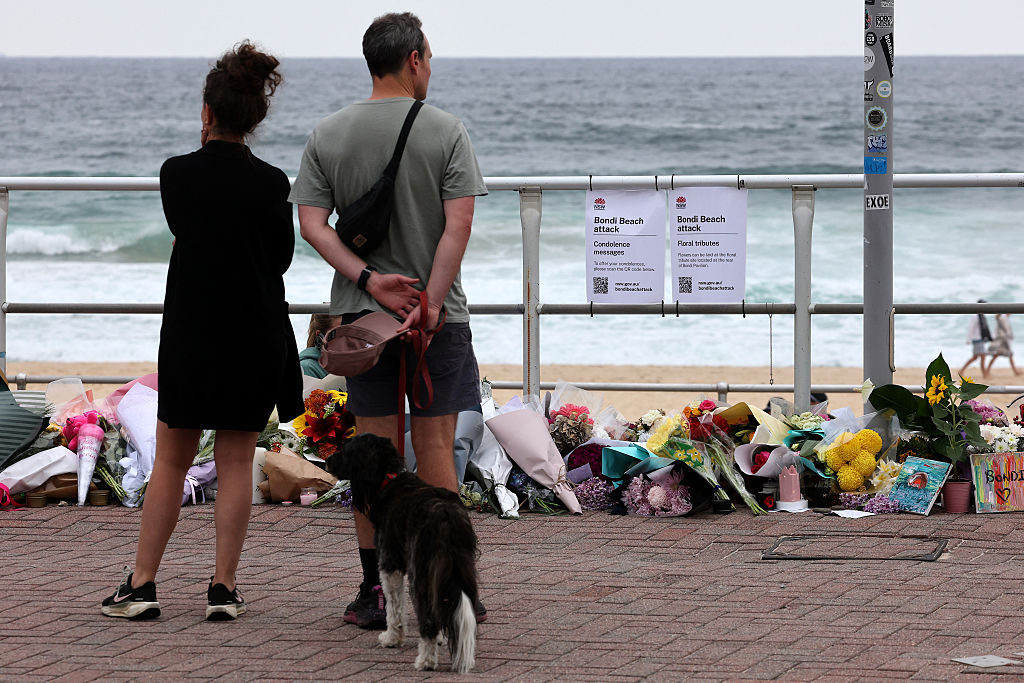
Akram and his father, Sajid Akram, allegedly opened fire at a Hanukkah celebration, killing 15 people before police intervened.
Sajid, 50, was shot dead by police during the confrontation, while Naveed was seriously wounded and remains in hospital under police guard.
The prime minister said ASIO’s earlier investigation did not identify Naveed Akram as a continuing threat.
“Now, whether he was radicalised further after that, what the circumstances are, that’s the subject of further investigation,” Albanese told ABC radio on Dec. 16.
He also noted that he was not in office when the initial intelligence assessment was made.
“I was not the prime minister in 2019,” Albanese said, adding that ASIO had interviewed Naveed Akram, his family members, and people in his immediate circle.
Home Affairs Minister Tony Burke said Naveed Akram remains in a coma and is unable to assist investigators.
Burke also defended ASIO’s handling of the case, saying intelligence agencies can only act on information available at the time.
“There was none of the evidence more than half a decade ago that this person was going to turn out the way that they did,” Burke told ABC News Breakfast.
“They will never be all-seeing and all-knowing … now in hindsight, people look back, and obviously ASIO always reviews its processes and always looks back to make sure that things are getting stronger and stronger.”
Burke also shared that Sajid Akram arrived in Australia in 1998 on a student visa, later transferring to a partner visa in 2001. He subsequently held resident return visas following overseas travel.
Naveed Akram was born in Australia.
Authorities have also confirmed Naveed Akram had been unemployed after losing his bricklaying job around two months ago when his employer became insolvent.
Early Radical Signals
Newly surfaced material has raised questions about Naveed Akram’s ideological development in his teenage years.
A video circulating on social media shows Akram as a 17-year-old preaching Islam to schoolboys.
“We need to spread the message that Allah is One, and Muhammad’s last messenger of Allah,” Akram says in the footage.
“Guys, spread the word wherever you can spread the message … Inshallah [God willing], this will save you on the Day of Judgement, when everyone will be asking, Where’s the hope with this?”
Investigators have also identified Akram as a follower of controversial Sydney-based jihadist preacher Wisam Haddad, a cleric whose influence has been linked to multiple generations of Australian extremists.
Akram worshipped at the Al Madina Dawah Centre and acted as a street preacher for Haddad’s Dawah Van organisation.
The Dawah Van lost its charity status in June after an ABC Four Corners investigation found it was radicalising young Australians while receiving government tax concessions.
Five Eyes Join Probe
Australia has enlisted its Five Eyes intelligence partners in the investigation into the deadly Bondi Hanukkah shooting, as authorities widen their search for possible international extremist links.
The Five Eyes is a long-standing intelligence-sharing alliance between Australia, the United States, the UK, Canada, and New Zealand, focused on counter-terrorism, security, and foreign intelligence threats.
Prime Minister Albanese confirmed the international outreach, saying investigators were working closely with overseas partners as part of the expanding probe.
“We are certainly reaching out to Five Eyes partners, our security partners internationally as well, to see precisely if there are any links there,” Albanese said.
The domestic investigation is being led by the New South Wales (NSW) Joint Counter Terrorism Team under Operation Arques.
The team includes officers from the NSW Police Force, the Australian Federal Police, ASIO, and the NSW Crime Commission.
Following initial examinations at the Bondi crime scene, investigators seized three firearms and two improvised explosive devices.
Further searches at two properties in Bonnyrigg and Campsie overnight led to the discovery of two additional firearms.
Police later confirmed a sixth firearm and a third improvised explosive device had also been located at the Bondi site.
Sajid Akram held a firearms licence for 10 years and owned six registered firearms.
All seized items are undergoing detailed forensic examination.
Investigators are working to establish how the weapons were acquired and whether additional devices or associates were involved.
A separate critical incident investigation into police conduct during the shooting is being led by State Crime Command’s Homicide Squad under Strike Force Belen.
That review will examine the circumstances surrounding the fatal police shooting of the older suspect and the wounding of his son.
 Friends Read Free
Copy
Facebook
Tweet
Friends Read Free
Copy
Facebook
Tweet