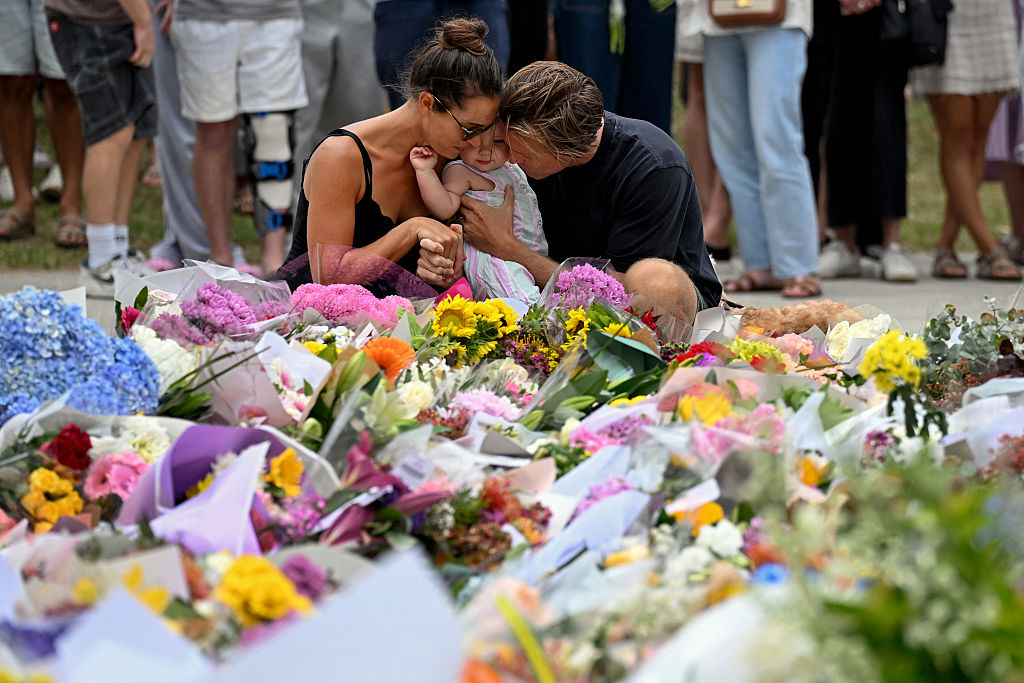

The Labor government is under significant pressure following the terrorist attack that killed 15 innocent people, with critics questioning whether it had ignored repeated warnings about rising anti-Semitism across Australia.
Since the attack, Prime Minister Anthony Albanese has faced criticism from the Liberal-National Coalition and the One Nation Party, accusing his government of failing to act decisively as concerns raised by Jewish community leaders grow.
The government was also criticised by Israeli Prime Minister Benjamin Netanyahu, who said he warned Australian leaders months before the shooting that Canberra’s support of Palestinian statehood would encourage anti-Semitism in the country.
Pressure Over Government’s Lack of Action
Opposition Leader Sussan Ley said the attack must be understood against a backdrop of fear and frustration within the Jewish community.
“Every day for the last two years, the lives of Jewish Australians have been made harder by the rising tide of anti-Semitism. … They’ve heard a lot of words, they want to see action, and they want this to be the real catharsis for action,” she said on the ABC Mornings program.
Ley pointed to warnings from ASIO’s director-general earlier this year that anti-Semitism had become the agency’s most serious concern and posed the clearest risk of loss of life.
She also criticised the lack of progress on recommendations made by anti-Semitism envoy Jillian Segal.
“The entire government, the entire cabinet, needs to be tasked with its implementation so that it does bring about change, the change that Jewish Australians and all Australians deserve to see,” Ley said.
Meanwhile, One Nation Leader Pauline Hanson blamed migration policies, accusing the government of pursuing “the wrong people.”
“For nearly three decades, I have been warning Australia about the dangers of letting people into this country who refuse to integrate and assimilate with our way of life,” Hanson said in a social media post.
“We must take a stronger stance on the people and cultures that we allow into the country.”
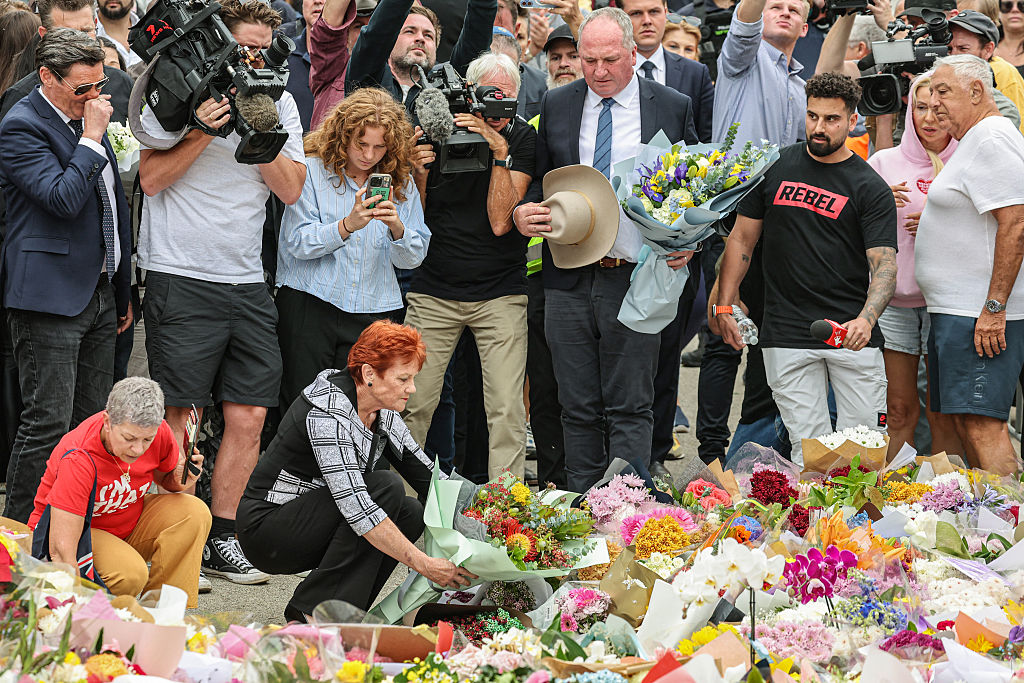
The Bondi attack follows a surge in anti-Semitic incidents across Australia since the Oct. 7, 2023, Hamas attacks in Israel.
Multiple Jewish community buildings and schools have been vandalised with graffiti, while synagogues have faced threats and intimidation.
In late 2024, a synagogue in Melbourne was fire-bombed in what police described as a hate-motivated attack.
Anti-Semitism Review Pending Implementation
Albanese appointed Segal in 2024 to develop a national framework to address anti-Semitism, with her findings delivered to the government in July.
The review outlined a 20-page plan (pdf) to tackle hostility towards Jewish Australians across education, media, immigration, and public institutions.
Recommendations included withholding public funding from universities that fail to curb anti-Semitism, increasing oversight of media platforms, and strengthening the screening of visa applicants for extremist views.
Despite its broad scope, the recommendations have not been formally adopted, with ministers indicating they remain under consideration.
On Dec. 16, Segal said the government needed to make it clear whether it intended to fully implement the plan.
“Although there has been progress behind the scenes, I think that now the community is sufficiently concerned and anxious about this that there should be a formal statement about the implementation,” she told Sky News Australia.
Independent MP’s Concern
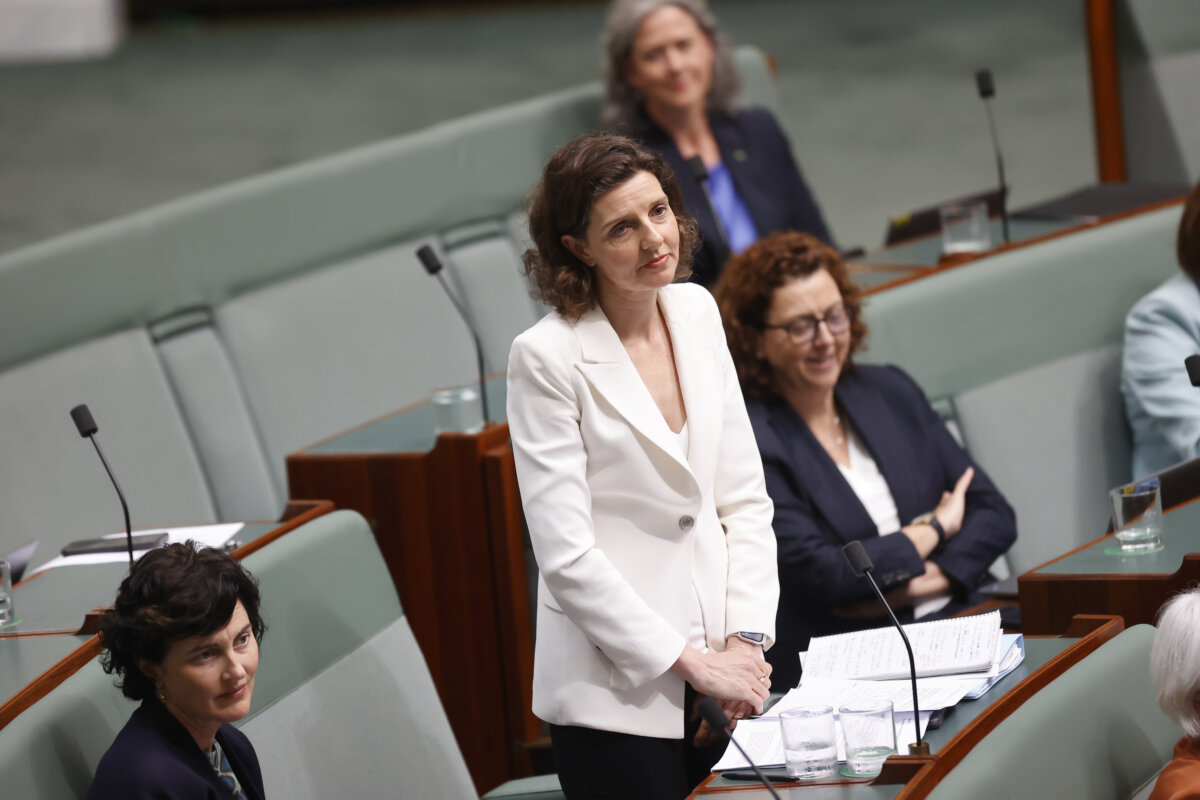
Independent MP Allegra Spender, who is known for her support of the Jewish community, said the attack reflected long-held fears within the community.
“The Jewish community long feared this. Some dismissed their fears but now we must stop being complacent about what it takes to preserve our beautiful, tolerant country,” she wrote in an op-ed for the Sydney Morning Herald.
While cautioning against reactionary responses in the aftermath of the shooting, Spender argued that laws and policing alone would not be enough to protect the Jewish community.
“The government should respond to the anti-Semitism envoy’s recommendations, but laws and policing can take us only so far,” she said.
“What really protects us all and protects the Australian culture we treasure is our commitment to take each individual for who they are and what they do.”
Spender pointed to the actions of Ahmed al Ahmed, a Syrian refugee who was wounded while attempting to disarm one of the attackers.
“That commitment saved lives on Sunday when Ahmed al Ahmed rushed forward to disarm one of the killers targeting the innocent men, women, and children who had gathered to celebrate the joyous festival of Hanukkah,” she said.
Spender said Jewish Australians she met at Bondi Pavilion described Ahmed as a hero.
Prime Minister Under Scrutiny
Meanwhile, Albanese has defended his government’s record on anti-Semitism, rejecting claims that it failed to act.
“Well, we have been rolling them [the special envoy’s recommendations] out, but quite clearly it is the case that, we adopted the IHRA [International Holocaust Remembrance Alliance] definition of anti-Semitism. I’ve made it clear that that’s my government’s position,” he told ABC radio on Dec. 16.
Albanese also stated that his government was the first to appoint an anti-Semitism envoy.
“There wasn’t an anti-Semitism envoy before our government established one. And anti-Semitism didn’t begin in 2022,” he said.
The prime minister further added that his government was the first to legislate against Nazi symbols, hate symbols, and hate speech.
He also pointed to a school-based program to tackle anti-Semitism introduced following the review’s recommendations, as well as the creation of a National Hate Crimes Register.
“We’re screening visa applicants for anti-Semitism. We’ll continue to work with the community to do what we can to stamp out. We want to eradicate anti-Semitism. That is the objective here,” Albanese said.
 Friends Read Free
Copy
Facebook
Tweet
Friends Read Free
Copy
Facebook
Tweet