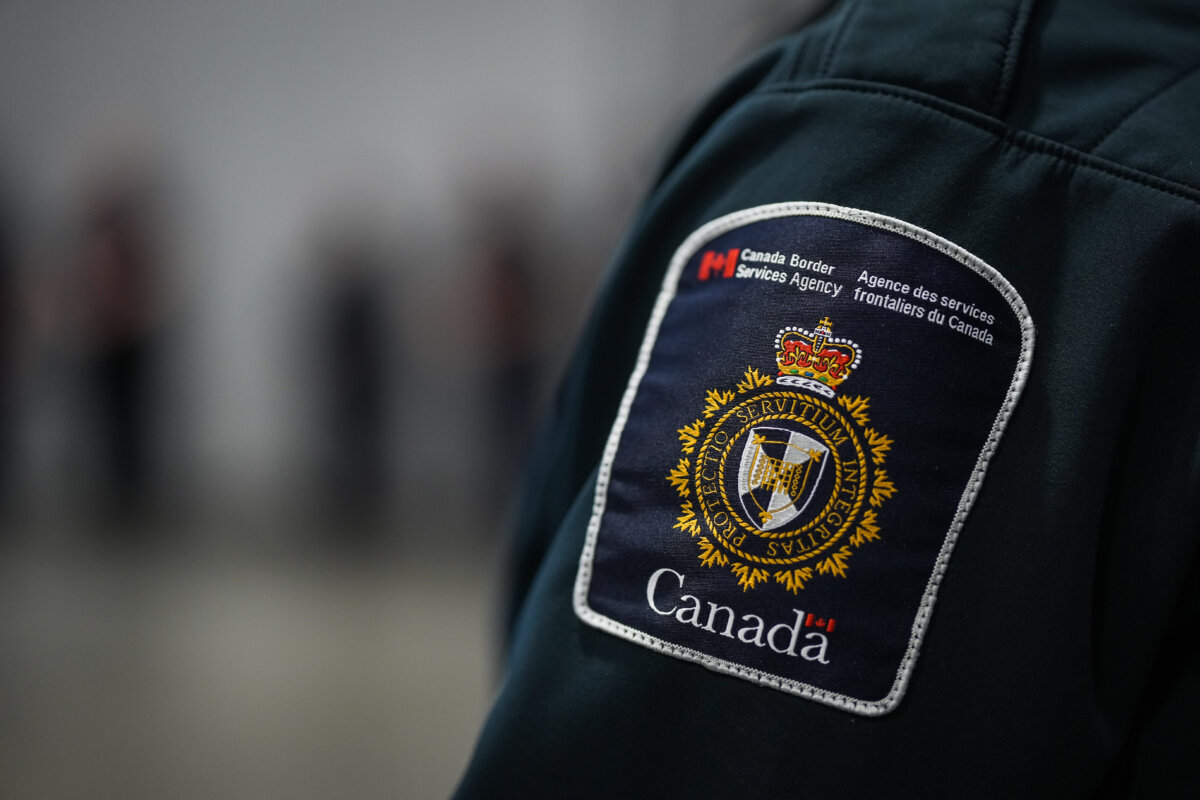

Canada’s border agency says it has opened 372 immigration investigations in an effort to “disrupt extortion networks” plaguing British Columbia, parts of the Prairies, and the Toronto area.
The Canada Border Services Agency (CBSA) began formally monitoring immigration enforcement cases potentially linked to extortion in western Canada last August before expanding its oversight to the Greater Toronto Area (GTA) in November, the agency said in a March 18 press release.
The CBSA said it is conducting multiple investigations into individuals suspected of involvement in extortion and has issued 70 removal orders on various inadmissibility grounds. Thirty-five have been enforced as of March 12.
Tory MP Michelle Rempel Garner, who serves as her party’s shadow minister for immigration, said in a statement there were more than 13,000 reported incidents of extortion in Canada in 2024, and the federal agency needs to bolster its efforts.
“While not all extortion incidents involve individuals who should be deported, the fact that CBSA has still only managed to enforce 35 removal orders does not denote progress,” she said.
CBSA president Erin O’Gorman said in the news release that extortion “empowers organized criminal groups, targets vulnerable people and inflicts lasting harm on Canadian communities.”
“The CBSA is committed to using every tool we have to counter this threat,” she said. “By increasing our removal capacity and deepening our partnerships with police, we have made significant progress toward ensuring these criminals cannot remain in Canada.”
Two CBSA investigations resulted in the recent removal of two foreign nationals who had been in Canada for some time, the agency noted in its press release.
Sukhnaaz Singh Sandhu came to Canada in 2016 as a temporary resident and was arrested last November by CBSA officers. The agency said he was detained on suspicion of “organized criminality” and the Immigration and Refugee Board of Canada (IRB) found him inadmissible under the Immigration and Refugee Protection Act and issued a deportation order.
“Sandhu remained in immigration detention on the grounds of being a danger to the public until February 3, 2026, when the CBSA removed him from Canada under escort,” the agency said.
The second deportation was in January after Arshdeep Singh was found to be a member of a criminal organization linked to extortion, arson, drug trafficking, and firearm offences, the agency said.
Singh had been in Canada since 2022 on a study permit. He was also arrested last November and the immigration board subsequently determined him to be inadmissible under the act. He was issued a deportation order and remained in immigration detention “on the grounds of being a danger to the public and flight risk” until his removal under escort on Jan. 19.
The CBSA did not disclose the country to which either individual was deported.

Surrey Extortions
Extortion-related crimes have been a major issue in Surrey, B.C., and the surrounding area for more than two years, with the origins of the criminal activities dating back to at least 2023.
The crisis saw a marked escalation throughout 2025 when 133 cases of extortion were reported and it increased again in 2026 with numerous shootings targeting individuals from the South Asian community. The CBSA said there have been 64 new cases so far this year.
The Pacific region’s first extortion-related immigration investigation began last August and a followup email from the agency said 34 removal orders had been issued in the Pacific region—which includes B.C. and the Yukon—as of March 12. A total of 25 of those people have been removed from Canada so far.
B.C. Premier David Eby spoke out during a press conference last month about the extortion issue, saying that not enough criminals are being deported. He said there are “loopholes” in federal laws that allow extortion suspects to seek refugee status.
Eby cited an example involving two temporary residents linked to extortions who were apprehended and subsequently claimed refugee status, allowing them to remain in the country for a full refugee hearing rather than being deported.
“The idea is ludicrous that somebody involved in… a terror attack in our community that is ongoing, is allowed to claim the benefits of refugee status in our country, out of concern about being returned to the world’s largest democracy, India,” Eby said.
Eby’s NDP government launched a special task force last year to address the rising number of extortions in the province, particularly near Surrey.
B.C.’s Extortion Task Force is a 40-member RCMP-led unit that includes the CBSA, the province’s Combined Forces Special Enforcement Unit, and municipal police. The team works to connect various extortion files throughout the province to pinpoint suspect groups and works in conjunction with local law enforcement to ensure the safety of victims.
CBSA Figures
The CBSA removed more than 22,500 “inadmissible persons” from Canada last year, the agency said. Around 1,000 of the individuals deported in 2025 were removed because of criminal behaviour or for national security issues or human rights violations.
It is currently removing approximately 400 inadmissible individuals every week.
The agency said it has approximately 530 officers dedicated to immigration enforcement, which includes immigration investigation, detention, hearings before the Immigration and Refugee Board, and removal.
The CBSA is supposed to hire 1,000 new officers as part of the Liberal government’s Budget 2025. The agency did not say if the hiring process has begun or how long it would take to train that number of people.
The Canadian Press contributed to this report.
 Friends Read Free
Copy
Facebook
Tweet
Friends Read Free
Copy
Facebook
Tweet