
Canada will need to pay $16 million to participate in a defence procurement agreement with the European Union, officials say.
Canada officially joined the $244 billion Security Action for Europe (SAFE) program this week. The program is a component of the ReArm Europe strategy aimed at reducing the continent’s dependence on American defence technology and financial support.
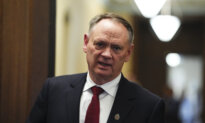
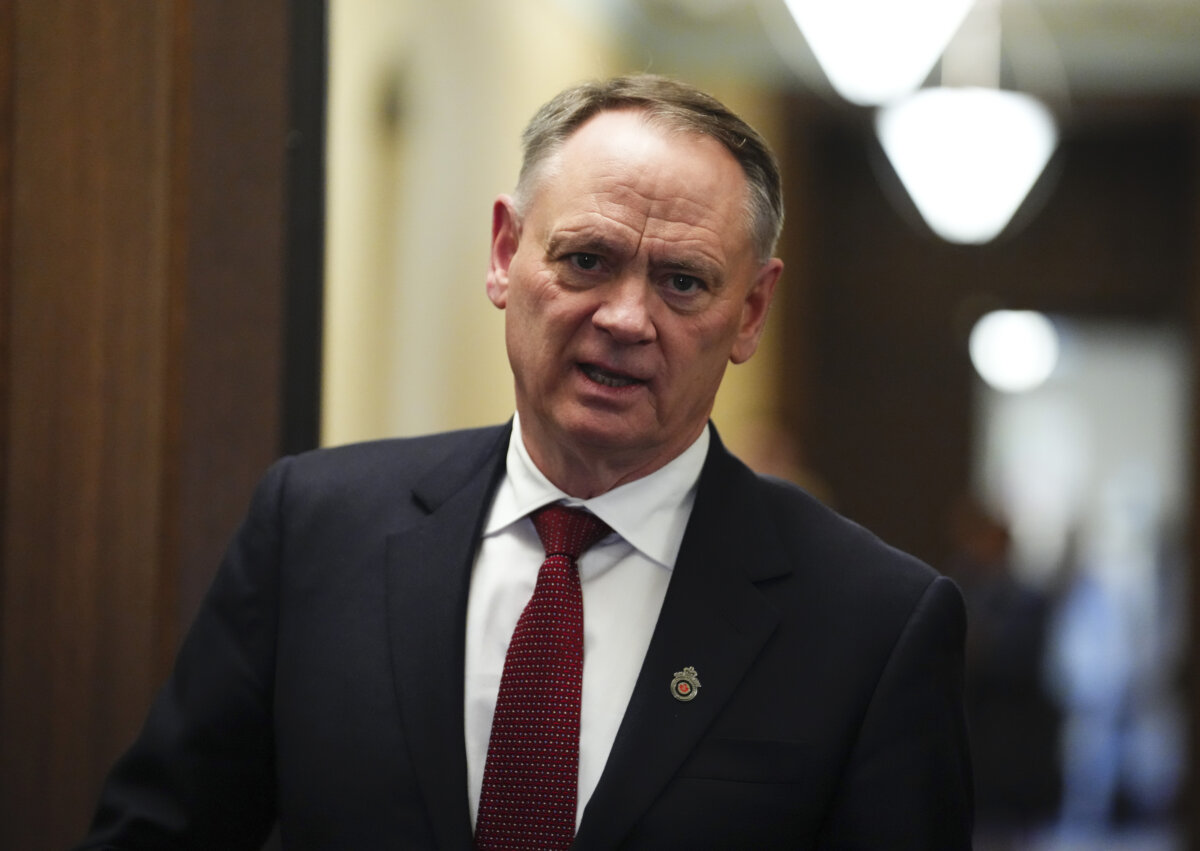
Defence Minister David McGuinty told reporters the deal had been finalized but did not provide details when questioned about the amount Canada would have to pay to join the program.
“We’ll have more to say about that in due course,” McGuinty told reporters during a Dec. 1 press conference in Ottawa. “The details will be released, and for that matter, the extent to which Canada will participate in the $244 billion marketplace… this will be better known in due course.”
EU spokesman Thomas Regnier told a Dec. 2 press briefing in Brussels that Canada’s participation in SAFE would start with a “one-off contribution” of 10 million euros—the equivalent of CA$16 million—to the EU budget. The amount will be reassessed at a later date, he said.
Global Affairs Canada later confirmed the dollar amount announced by Regnier.
“Canada will pay a 2.5 million euro upfront administrative contribution and 7.5 million euro upfront annual participation contribution,” Global Affairs said in a media statement. “An agreement in principle has been reached, but technical discussions continue in order to finalize treaty text.”
Global Affairs said the deal would support “all partners in improving defence readiness” while fostering growth “in our respective defence industries.”
Regnier said during his press conference that the fee charged to Canada or any other nation is determined by the extent of “potential contracts that (each) third country industry will receive.”
“There is a correction mechanism, so this will be reassessed in light of the amounts of contracts that the Canadian industry will get from its participation into SAFE,” Regnier told reporters. “We are following the same methodology for all potential third-country agreements that we’re negotiating under SAFE.”
Investment Questions
The EU has asked the United Kingdom to pay an amount ranging from 4 billion to 6.5 billion euros, much larger than the fee imposed on Canada, which has led University of Quebec professor Justin Massie to question how much investment the deal will offer.
“This is about 500 times less than what the British were asked to pay to join SAFE,” Massie said in a Dec. 2 X post, referring to Canada’s 10 million euro fee. “Given that the entry costs are based on the expected benefits a third-party will derive from access to the EU instrument, we should temper our expectations.”
Foreign Affairs Minister Anita Anand did not say whether that was a correct interpretation of the figures when questioned by reporters during a Dec. 3 media call from Brussels. She said that Europe is enthusiastic about Canada’s defence technology and industrial capacity.
“Everyone I spoke with was very excited to have Canadian companies be on the same footing as European companies, in order to compete for procurement contracts here,” she told reporters. “Canadian manufacturers are going to have the opportunity, therefore, to build and to export Canadian made technologies and capabilities.”
Regnier also said during his Dec. 2 press conference that the EU has a separate agreement with Ottawa, permitting Europeans to purchase products directly from Canada’s defence sector, provided that at least one-fifth of the components in these products originate from the European Union.
Anand said its agreement with the EU is part of Ottawa’s efforts to double non-U.S. trade across all sectors over the next 10 years, including in defence.
SAFE Talks
Prime Minister Mark Carney has pursued stronger connections with Europe since he took office in April amid trade tensions with the United States.
Canada and the EU entered into a defence security agreement in June while Carney was visiting Brussels. The deal allowed Canada to begin talks about participating in the EU’s rearmament initiative. Those talks were finalized on Dec. 1.
Carney and President of the European Commission Ursula von der Leyen said in a Dec. 1 joint statement that Canada joining the SAFE program represents the next step in deepening cooperation and is “symbolic of the shared priorities” of the EU and Canada.
The two leaders also said the program will provide support to Ukraine and “increase the resiliency of the Ukrainian defence industry.”
The Canadian Press and Olivia Gomm contributed to this report.
 Friends Read Free
Copy
Facebook
Tweet
Friends Read Free
Copy
Facebook
Tweet