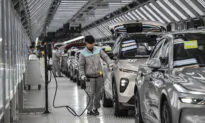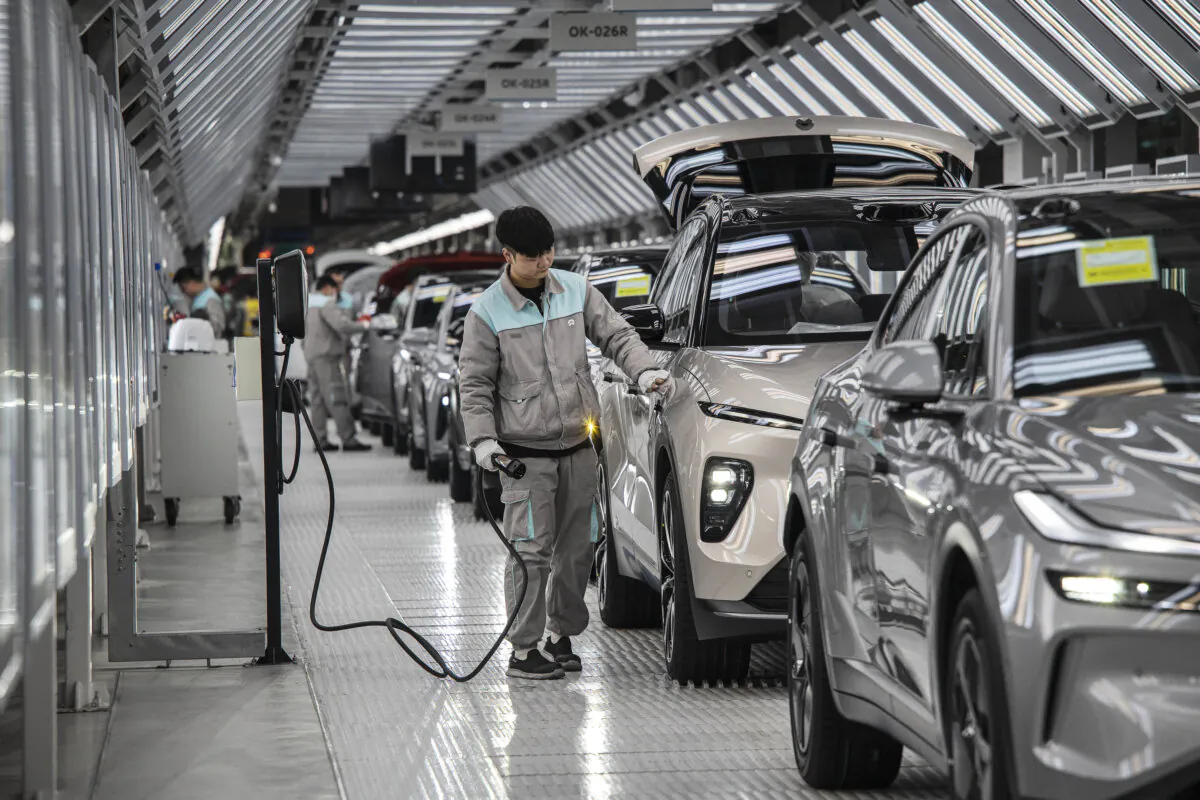

Canada’s decision to allow Chinese electric vehicles into the country could negatively affect crucial upcoming trade negotiations with the United States, automobile industry representatives told MPs.
The leaders of two industry groups representing Canadian operations of American and global carmakers testified in the House of Commons science and research committee on April 20. The committee is studying the implications of Ottawa’s deal allowing up to 49,000 Chinese electric vehicles to enter Canada at a preferential tariff rate.
Brian Kingston, president and CEO of the Canadian Vehicle Manufacturers’ Association, said his organization “strongly supports” Ottawa’s previous decision to impose a 100 percent surtax on Chinese electric vehicles in October 2024, emphasizing that Canada “must align” with the U.S. approach to China. The move by the previous Liberal government was in lockstep with the Biden administration at the time.
Kingston said now is a “sensitive time” with the upcoming review of the Canada-United States-Mexico Agreement (CUSMA) on free trade, and Canada can’t be “out of step” on China policy with its largest trading partner, the United States.
“There is simply too much at stake for the auto industry and the broader Canadian economy if we are perceived by Washington as being out of step and misaligned on how to deal with China,” said Kingston, who represents the interests of car manufacturers Ford, GM, and Stellantis in Canada.
Kingston said the United States is trying to “seal off” its market to Chinese manufacturers and he’s certain it would be an “irritant” in the trade talks if Canada goes the opposite way.
“Typically, when you head into a review of a trade deal, you’re trying to reduce irritants. We’ve introduced a vehicle-size irritant onto the table,” he said.
Prime Minister Mark Carney announced the Chinese EV deal when he was in Beijing in January. In exchange, China agreed to reduce or remove some tariffs on Canadian agricultural and seafood products until the end of the year. The tariffs had been levied in retaliation for Canada’s duties on Chinese EVs, steel, and aluminum.
Carney announced a “new strategic partnership” with China during the visit, and said bringing in Chinese EVs will help improve affordability as his government wants to increase EV uptake.
Carney’s Chinese EV deal was heavily criticized by the U.S. administration. U.S. President Donald Trump said Canada is “systematically destroying itself,” while U.S. Treasury Secretary Scott Bessent said Canada can’t become a springboard for “cheap” Chinese goods entering the United States.
David Adams, president and CEO of Global Automakers of Canada, told the House of Commons committee that Ottawa’s decision to allow Chinese EVs into Canada contradicts the initial rationale to impose a surtax in 2024. The tariffs were implemented to protect Canadian jobs and the EV supply chain from “unfair trade practices.” Ottawa had earlier accused China of over-capacity and dumping.
Adams, who represents automakers such as Honda, Hyundai, and Volkswagen, also said Canada is introducing an “irritant” with the U.S. administration ahead of the “sensitive” CUSMA review, slated for July.
China expert Charles Burton, who testified alongside the automobile executives, said Canada appears to have given up on security concerns in exchange for trade advantages. He said, however, that increasing trade with China as Ottawa plans “will not make a significant difference to the concerns that we have over what the U.S. may do to our economy.”
Security Risks
Aside from any effects on trade talks, Kingston and Adams discussed the negative impacts on jobs and the supply chain, and the security risks of allowing Chinese EVs into Canada.
Kingston noted that Ottawa was considering in 2024 a ban on vehicle hardware and software from China due to security risks, and that the recent deal is “incompatible” with that initiative.
Adams noted how the United States implemented regulations in that regard last year and said that’s something Ottawa needs to explore to safeguard privacy and national security.
Liberal MP Taleeb Noormohamed pushed back on various aspects of the witness testimonies, saying that conditions have been put in place to ensure Canada has the same types of security frameworks implemented in Europe.
“With all due respect, there are no conditions on security,” replied Kingston, saying his group has had no success in working with the government to implement a software and hardware ban.
Security experts have sounded the alarm about the potential for Chinese EVs to spy on users and their surroundings given their suite of sensors, their connectivity, and the legal requirement for Chinese companies to help Beijing collect intelligence.
A former intelligence officer with the Canadian Security Intelligence Service (CSIS) told a separate House committee last week that Chinese EVs have the potential to become the “eyes and ears” of the Chinese regime.
“In effect, each Chinese manufactured EV is an extraordinary source of valuable data, the potential eyes and ears of the PRC, and we are on the verge of importing and dispersing tens of thousands of them across Canada,” Neil Bisson testified at the industry committee on April 16.
Public Safety Minister Gary Anandasangaree previously said that Chinese EVs will be subject to the same privacy rules as other carmakers.
Privacy Commissioner Philippe Dufresne told MPs on April 16 he was not consulted on Chinese EVs.
 Friends Read Free
Copy
Facebook
Tweet
Friends Read Free
Copy
Facebook
Tweet