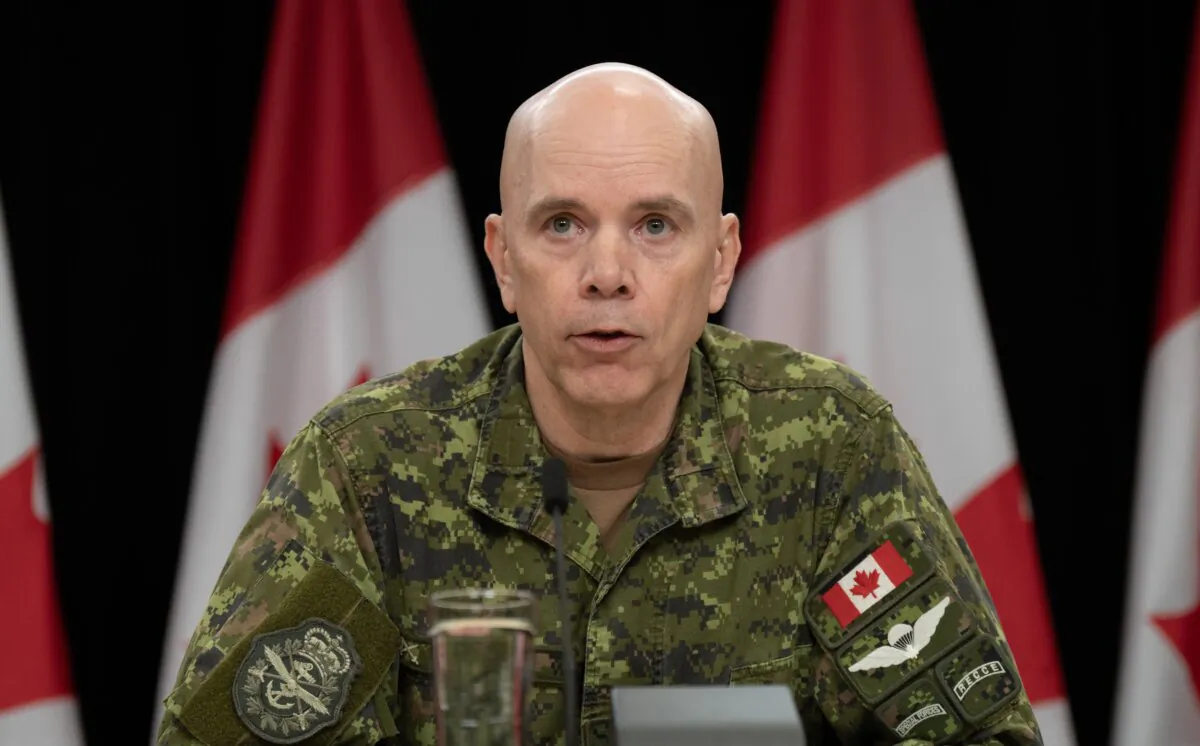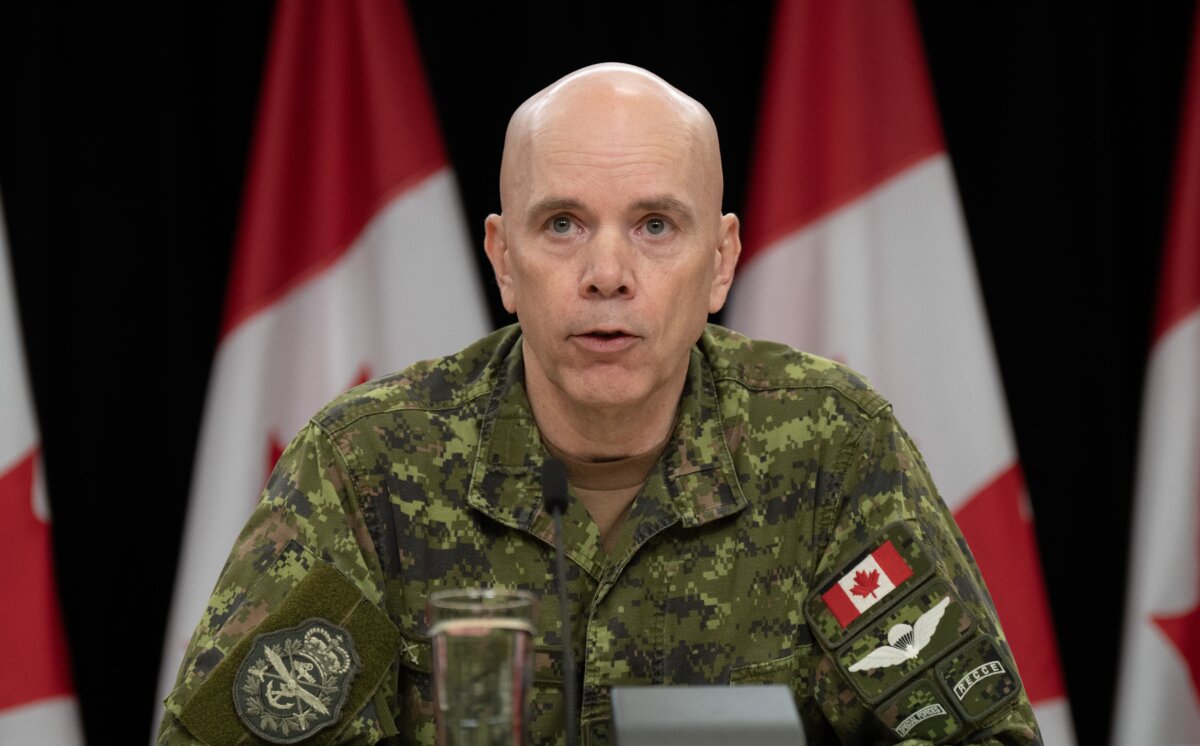

The federal government needs to be “wary” about deepening ties with China as a way of offsetting trade tensions with the United States, says retired Gen. Wayne Eyre, Canada’s former chief of the defence staff.
“We need to be very wary about pivoting to China at the expense of the U.S.,” Eyre said in an interview on CTV’s Question Period that aired on June 7, adding that the threat China poses to Canada “continues to evolve.”
“Geography matters,” he said, as Canada and the United States are neighbours and share a continent—something that is “not going away.” He also emphasized the importance of the two nations cooperating militarily.
Eyre said the federal government is “absolutely right” to diversify Canada’s network of friends, partners, and allies in light of the changing geopolitical environment, but he said it should be done “without discarding the ones we’ve invested so much in,” including the United States.
He also noted that the Chinese regime’s close ties with Russia is particularly concerning, as the two nations have “drawn even closer together.”
China is “underpinning Russian war crimes in Ukraine,” such as by providing technology and resources for explosives, Eyre said, adding that Canada needs to be “wary” that this relationship continues to strengthen, including in the Arctic.
Eyre’s remarks come as Prime Minister Mark Carney’s government has sought closer ties with Beijing in an effort to diversify trade away from the United States.
“Trading is one thing, but China is very good at integrating its elements of national power, its diplomacy, its information, its military, and its economic tools to achieve its national objectives,” Eyre said.
“We just need to go into any future relationships eyes wide open.”
Ottawa-Beijing Ties
Carney visited China in January and signed several agreements with Beijing, while declaring that the two countries were in a “strategic partnership.” Ottawa signed agreements to lower tariffs on an initial 49,000 Chinese vehicles in exchange for China removing or reducing tariffs on some Canadian agricultural and seafood products for the rest of this year. Other agreements were signed on energy, law enforcement cooperation, and finance.
In an effort to advance the stated partnership between Ottawa and Beijing, China’s foreign minister, Wang Yi, visited Canada from May 28 to May 30 and met with Carney and Foreign Affairs Minister Anita Anand.
Measures were taken to limit media coverage of Carney’s meeting with Wang, with media only allowed to briefly enter Carney’s office to capture his handshake with Wang for less than 30 seconds, and neither Wang nor Carney made any comments to reporters.
At the beginning of Wang’s meeting with Anand, on May 29, the two ministers offered public opening remarks. Anand said Carney and Chinese leader Xi Jinping have established an “ambitious vision” for a “recalibrated relationship” between Canada and China, but that each country “must address critical issues and priorities to ensure the safety and security of our people.”
Anand also told Wang that Canada aims to increase its exports to China by 50 percent by 2030, which she said would be done while “safeguarding Canada’s economic and national security interests and values.”
Wang said engagement between Ottawa and Beijing has increased dramatically in recent months, and that there have been “ups and downs” in the bilateral relationship that have provided “many important lessons.” He also said Carney has been invited to attend the Asia-Pacific Economic Cooperation summit in China in November.
Pivot Away from US
Meanwhile, during the 2025 election campaign, Carney said China was the “biggest security threat” facing Canada.
RCMP and Canadian military intelligence veteran Scott McGregor said in recent remarks that there was a “shift” when Carney took office as prime minister, with some Canadians beginning to view the United States as more of a threat to Canada than China.
“We have to find a way to bring awareness again to the real threat, which is China, and not the United States,” McGregor said during an interview with Jan Jekielek, senior editor and host of The Epoch Times’ “American Thought Leaders.”
He noted that Canada “needs the United States” to help it remove threats by the CCP because Canada is constrained by legislation and by its military capabilities. Meanwhile, he said, the United States needs Canada in defence of the continent because “Canada’s infiltration by the CCP is not something the United States wants on its border.”
Canada needs to regain unity with the United States, McGregor said, as the country relies on its southern neighbour to detect, deter, disrupt, and enforce when it comes to the threat of foreign interference.
Noé Chartier contributed to this report.
 Friends Read Free
Copy
Facebook
Tweet
Friends Read Free
Copy
Facebook
Tweet