
Canada’s new sovereign wealth fund is expected to cost $750 million a year in debt interest charges, according to figures from the department of finance.
Prime Minister Mark Carney announced Canada’s first sovereign wealth fund, the Canada Strong Fund, on April 27. The federal government will contribute $25 billion over three years to the fund and accept investment from the private sector and individual Canadians.
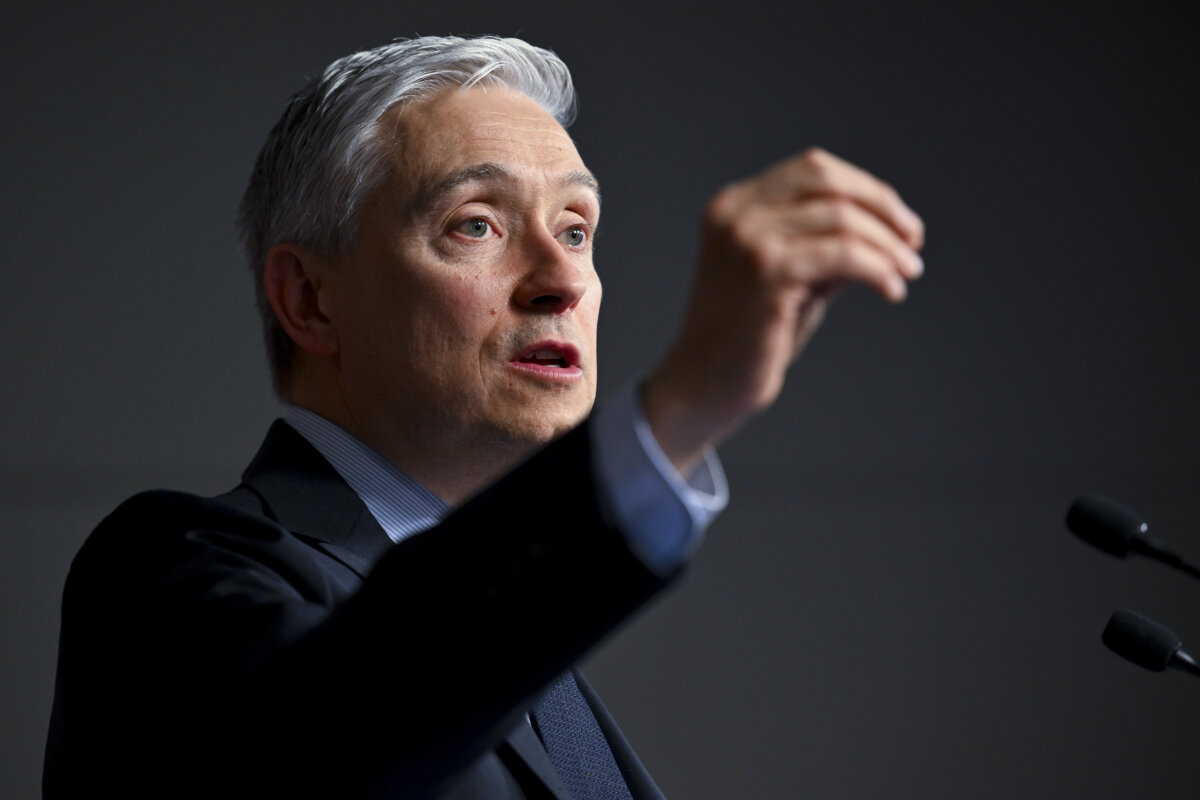
However, the government’s Spring Economic Update did not say where the initial $25 billion for the fund will come from. Finance Minister François-Philippe Champagne had suggested on April 28 that the money would be borrowed, saying Canada’s strong credit rating allows it to borrow cheaply.
In response to an inquiry from the House of Commons government operations committee on the fund’s cost, the finance department said that, based on the projected interest rates, “interest costs are estimated to be $750 million annually once the $25 billion is fully deployed.” The department’s response was first covered by Blacklock’s Reporter.
“This estimate is subject to change with future interest rate projections and as details of how the fund will be operationalized are refined over the coming months,” the finance department added.
The Parliamentary Budget Officer (PBO) said in a May 4 report assessing the Spring Economic Update that the Canada Strong Fund would involve additional borrowing and public debt charges.
The finance department’s response came after Conservative MP Tamara Jansen asked treasury board representatives during a government operations committee meeting on May 7 what the annual borrowing cost for the sovereign wealth fund will be.
“The PBO says the new $25-billion sovereign wealth fund is financed through borrowing, and the rules for how to operate are still unclear, so what is the annual borrowing cost in dollars?” Jansen asked.
Secretary of the Treasury Board Bill Matthews replied: “I don’t have an answer to that, but I’m sure we can figure that out for you.”
Jansen further pressed the representatives for answers, saying “we’re borrowing $25 billion we don’t have, adding interest costs to an already strained fiscal picture and hoping the investments outperform the debt.” She asked whether Canadians would be paying interest on borrowed money used to capitalize the fund.
The department representatives said they were unable to answer and recommended Jansen ask the department of finance instead.
When announcing the fund, Carney said it was “essentially a national savings and investment account.”
“It’s designed to grow wealth for future generations of Canadians. Many countries that are blessed with natural resources, like Norway, have sovereign wealth funds,” he said. “Canada hasn’t had one until now. The new Canada Strong Fund will give all Canadians a direct stake in building Canada strong.”
The government has said the Canada Strong Fund will fund projects related to areas such as energy, critical minerals, agriculture, and infrastructure.
Champagne said in the House of Commons on May 26 that the fund is “designed to deliver generational infrastructure and nation-building projects and ultimately to grow wealth for future generations.” He said the fund will create jobs, support innovation, and make Canada more competitive.
Meanwhile, Conservative Leader Pierre Poilievre told reporters on April 27 the federal government is running back-to-back deficits and does not have money to put into such a fund. He said countries with similar sovereign wealth funds, like Norway and Saudi Arabia, run “big budget surpluses” to put into the funds.
The Montreal Economic Institute (MEI) also raised concerns that the fund could end up costing taxpayers large amounts of money while generating limited returns.
MEI said in an April 27 statement that, unlike the Canada Strong Fund, Norway’s fund has a mandate to invest abroad as opposed to domestically, which avoids overheating the local economy and limits the potential for political interference in fund allocation.
“Better results would be achieved by tackling the heavy regulatory and tax burdens that have contributed to the current economic malaise than by creating yet another new structure,” MEI economist Emmanuelle Faubert said in the statement.
Matthew Horwood contributed to this report.
 Friends Read Free
Copy
Facebook
Tweet
Friends Read Free
Copy
Facebook
Tweet