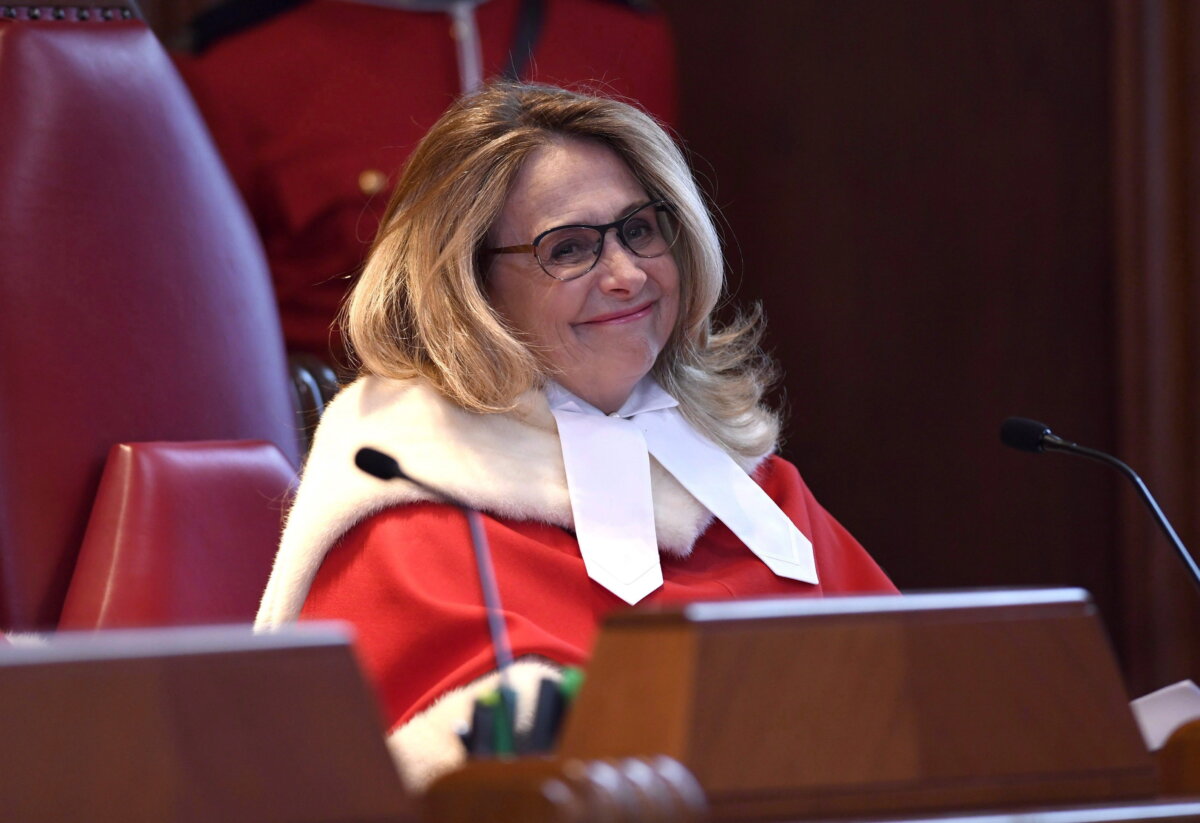

Prime Minister Mark Carney has initiated the process to fill the upcoming Supreme Court of Canada vacancy following Justice Sheilah Martin’s retirement at the end of May.
The Montreal-born judge was appointed in December of 2017 and will step down on May 30, before her 70th birthday. She is retiring well before the mandatory retirement age of 75.
Carney thanked Martin in a statement for her “leadership, excellence, and dedication on Canada’s highest court” over the past eight years. Martin trained in civil and common law before moving to Alberta to pursue a career as an educator, lawyer, and judge, later serving as a member of the Supreme Court.
Candidates for the top court have until April 27 to apply, the Prime Minister’s Office (PMO) said in a March 30 statement.
Applicants must be superior court judges or have at least 10 years standing in a provincial or territorial bar.
Candidates must be from British Columbia, Alberta, Saskatchewan, Manitoba, Yukon, Northwest Territories, or Nunavut or demonstrate a relationship with these regions through bar membership, judicial appointment, or other connections, the PMO said.
The Independent Advisory Board for Supreme Court of Canada Judicial Appointments will make a shortlist of the best applicants to submit to the prime minister, according to the statement. All shortlisted candidates must be highly qualified, functionally bilingual, and “representative of the diversity of our country.”
Carney said the nomination process “will ensure the high standards” that the responsibility of such a role demands.
“The Supreme Court of Canada is a pillar of our democracy,” Carney said in the statement. “As Canada’s highest judicial body, the court – and the judges who serve on it – carry profound responsibilities and the values of integrity, independence, and the rule of law.”
The vacancy comes as the provinces are asking for a greater say in the selection of judges in the superior courts, courts of appeal, and the Supreme Court.
Alberta Premier Danielle Smith, Ontario Premier Doug Ford, Saskatchewan Premier Scott Moe, and Quebec Premier François Legault sent a letter to Carney on March 23 requesting the appointment process be changed.
The federal minister of justice has the option to consult with provincial counterparts before choosing a candidate for the bench, but it is not required under the federal judicial appointments process.
The premiers are requesting provinces be granted an official role in the appointment process. It’s a move they say would align with the principles of federalism.
“The current model does not address the significant deficit of federal legitimacy of the superior court appointment process,” the premiers said in their letter to Carney.
Increasing involvement of the provinces would also better reflect the diversity of each province and territory, and increase public confidence in the administration of justice, they said.
Justice Minister Sean Fraser dismissed the premiers’ suggestions when speaking to reporters about the matter on March 24.
“We haven’t changed our point of view that we believe that the judicial appointments process is functioning,” Fraser said during a press scrum. “We welcome provincial governments’ participation in that process and proactively reach out after we receive recommendations through the judicial advisory committees to test with our provincial counterparts whether they’ve got information about the reputation of the people we’re considering.”
 Friends Read Free
Copy
Facebook
Tweet
Friends Read Free
Copy
Facebook
Tweet