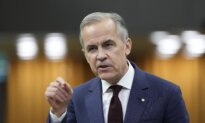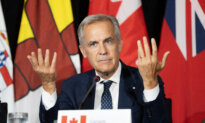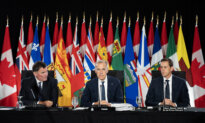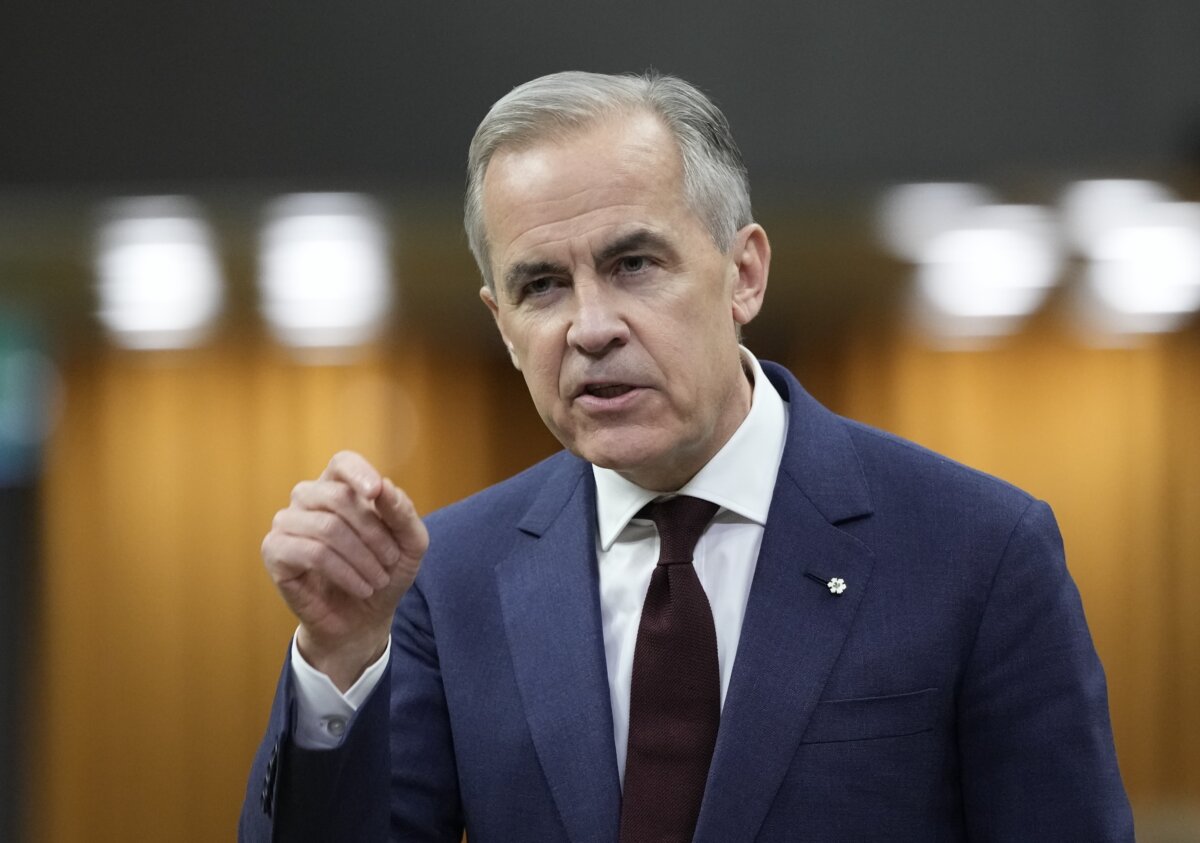

Prime Minister Mark Carney has announced the reworking of the Advisory Committee on Canada-U.S. Economic Relations, which includes adding former Conservative Leader Erin O’Toole as a new member.
The committee will “serve as a forum for expertise and strategy on all aspects” of the Canada-U.S. relationship, the Prime Minister’s Office (PMO) said in a statement on April 21, adding that it will include leaders from major sectors of Canada’s economy and people with experience in business, investment, and trade.
“This new Advisory Committee ensures that government is drawing on the best advice and the broadest perspectives to advance Canada’s economic interests,” Carney said in a statement.
Former Prime Minister Justin Trudeau first established the 19-member Council on Canada-U.S. Relations in January 2025. It included former Quebec Premier Jean Charest, Automotive Parts Manufacturers’ Association President Flavio Volpe, former Alberta Premier Rachel Notley, and Canada-U.S. Ambassador Kirsten Hillman.
Carney’s new committee has 24 members, and includes new additions like O’Toole and Lisa Raitt, a former industry minister under the Conservative government of Stephen Harper.
When Canada, the United States, and Mexico were negotiating the current free trade agreement during Donald Trump’s first term, Trudeau had formed a a cross-partisan council that included representatives from labour, business, and indigenous groups. At the time, Trudeau appointed former interim Conservative leader Rona Ambrose and former Harper-era cabinet minister James Moore to the council.
Former Nunavut Premier P.J. Akeeagok, former Liberal cabinet ministers Ralph Goodale, and Canadian Chamber of Commerce CEO Candace Laing have also been added to Carney’s committee, which includes representatives from Canada’s banking, energy, fertilizer, railway, automotive, entertainment, and lumber sectors.
O’Toole, who led the Conservatives from 2020 to 2022 and now serves as president of ADIT North America, said on X that he was “honoured to serve Canada” on the committee.
“Canada must pursue a fair deal with the United States from a position of strength,” O’Toole said. “I will fight for Canada’s entrepreneurs working hard to pay their employees through tariffs and for innovators trying to keep their intellectual property and jobs in Canada.”
Canada-U.S. Trade Minister Dominic LeBlanc will chair the committee, which will hold its first meeting next week. When reporters asked LeBlanc on April 21 why opposition parties were not involved with the group, he replied that “it’s not something partisan, we didn’t make a partisan calculation.”
Asked by reporters on April 21 if he would join the committee, Conservative Leader Pierre Poilievre said that he would.
“I think it’s a good idea to accept the ideas of other parties, but at the same time we need actions,” Poilievre said.
However, he said not much would be gained by Canadians talking amongst themselves about U.S. tariffs, and that discussions with Americans are the way to deal with the issue.
While Mexico began formal talks on the Canada-United States-Mexico Agreement (CUSMA) last month and the two countries are set to begin official bilateral negotiations in May, progress between Canada and the U.S. has been slower. Canada and the United States do not appear to have an official start date for negotiations.
LeBlanc recently told reporters that Canada would not be a source of delays in CUSMA negotiations, and that Ottawa was “ready to do the work to get to a deal very quickly.”
If the three countries agree to renew the agreement at talks in July, the deal would remain in force until 2032. However, the delay or denial of a renewal could mean the agreement enters a period of annual reviews. If one or more countries withdraw from the trilateral agreement altogether, the three countries could also then make bilateral agreements.
 Friends Read Free
Copy
Facebook
Tweet
Friends Read Free
Copy
Facebook
Tweet