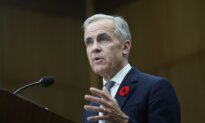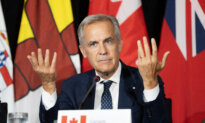

Prime Minister Mark Carney has concluded his first official visit to Asia, saying Canada has made new trade, defence, and economic partnerships with several countries, including South Korea, Thailand, Chile, China, Malaysia, and the Philippines.
Carney attended the Association of Southeast Asian Nations (ASEAN) summit from Oct. 26 to 27 in Kuala Lumpur, Malaysia, and following a stop in Singapore attended the Asia-Pacific Economic Cooperation (APEC) summit in Gyeongju, South Korea, from Oct. 31 to Nov. 1.
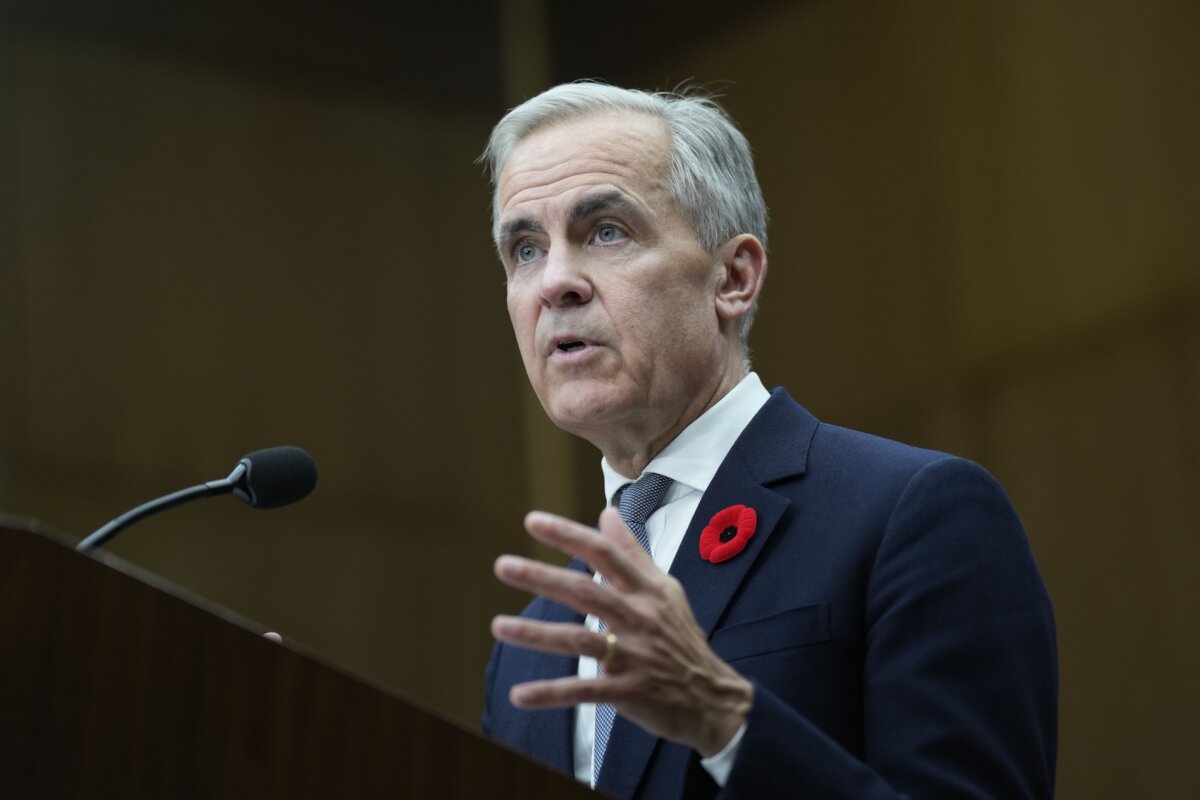
While speaking at a Nov. 1 press conference in Gyeongju before flying back to Ottawa, Carney said his trip to Asia was “very productive,” noting Canada is diversifying its international trade partners to make its economy one that is “resilient to global shocks.” He said the 21 APEC member economies account for more than 60 percent of global GDP and half of the world’s trade with nearly 40 percent of the world’s population.
Korea, Thailand, Chile
The prime minister said Canada established a new security and defence cooperation partnership with South Korea, noting that this is the first of its kind for Canada in the Indo-Pacific. The partnership aims to strengthen cooperation on security, defence, industry, and “emerging domains,” such as cyber, AI, and quantum, he said, noting that Canada will go on a trade mission to Korea next year.
Carney also said Canada and Thailand have agreed to launch bilateral free-trade negotiations that are expected to be completed over the next year. The new agreement will create opportunities for Canadian exporters of agri-food, infrastructure, clean technology, and defence, he said.
Additionally, Canada and Chile signed a renewed Canada-Chile strategic partnership framework on Nov. 1, through which Carney aims to strengthen cooperation in critical minerals, clean energy, wildfire management, and digital technologies, noting Chile is the world’s largest copper producer.
China
Carney also met with Chinese leader Xi Jinping in South Korea, which marked the first meeting between Canadian and Chinese leaders since Prime Minister Justin Trudeau visited Beijing in December 2017. The prime minster said the two leaders agreed that the meeting marked “a turning point” in the Canada-China relationship.
“We have now unlocked a path forward to address current issues and to build the enormous opportunities between our two countries, including in agriculture, energy, clean technologies, tourism, and cultural exchanges,” Carney said at the Nov. 1 press conference.
Relations between the two countries broke down in late 2018 when the RCMP arrested chief financial officer Meng Wanzhou of Chinese multinational technology company Huawei in Vancouver on a U.S. extradition request for fraud and conspiracy to commit fraud. In apparent retaliation, China detained Canadians Michael Kovrig and Michael Spavor for more than 1,000 days.
As Ottawa seeks to rebuild relations with Beijing amid strained ties with the United States, Carney’s tone appears to have changed from what it was during the election campaign earlier this year when he said China was the “biggest security threat” facing Canada.
Malaysia, Philippines
While in Malaysia for the ASEAN summit, the prime minister advanced negotiations on a new Canada-ASEAN free-trade agreement and signed a letter of intent with the prime minister of Malaysia to deepen investment in liquified natural gas, oil, nuclear, and renewable energy, the Prime Minister’s Office (PMO) said in an Oct. 27 news release. In addition, Malaysia Airlines signed a deal with Canadian aviation company CAE to purchase a Canadian-built flight simulator.
Carney also began negotiations on a new bilateral free-trade agreement between Canada and the Philippines. The two countries expect to reach an agreement next year.
Furthermore, Defence Minister David McGuinty signed a defence cooperation agreement with the Philippines on Nov. 2 to allow the two countries’ armed forces to work more closely together by participating in joint and multinational operations and exercises in each other’s territories, the defence department said in a Nov. 2 news release. The Philippines is one of Canada’s most important defence partners in the Indo-Pacific region, the Department of National Defence said.
Meanwhile, Conservative Leader Pierre Poilievre said Carney was returning from his Asia trip “empty handed.”
“Mark Carney fails to get Chinese tariffs off Canadian farmers & fish harvesters,” Poilievre said in an Oct. 31 post on social media platform X.
“Bad enough to come home empty handed from his 8-day Asian junket, but it’s worse: new Indian tariffs hit Canadian peas. The more he travels, the more tariffs we pay.”
Canada-US Trade Relations
During a televised speech on Oct. 22, Carney said Canada will double its non-U.S. exports by 2035, which he said would generate $300 billion in trade. He said the shift was necessary as Canada’s heavy reliance on the United States had become a vulnerability, particularly in light of U.S. President Donald Trump’s new trade tariffs.
Carney said the United States had “fundamentally changed its approach to trade, raising its tariffs to levels last seen during the Great Depression,” adding that the scale and speed of these changes warrant dramatic changes in Canada’s economic strategy.
Momentum had appeared to be building in trade talks between Canada and the United States following Carney’s White House visit on Oct.7, until Trump cancelled trade negotiations with Canada on Oct. 23 over an Ontario ad campaign that used portions of a 1987 address from late U.S. President Ronald Reagan praising free trade, including with Canada. Trump said the ads misrepresented Reagan’s address and was meant to interfere with an upcoming U.S. Supreme Court hearing into his administration’s use of tariffs.
In response to Ontario not pulling the ads immediately, Trump said on Oct. 25 that he would hike tariffs on Canada by 10 percent “over and above what [Canadians] are paying now.” This has yet to materialize, with Trump telling reporters in Asia that he hasn’t decided when it will take effect.
Carney returned to Canada ahead of his government’s first budget release on Nov. 4. Speaking to reporters at the Nov. 1 press conference, Carney didn’t say whether he was confident the budget would pass but noted he is “100 percent confident that this budget is the right budget for this country at this moment.”
He said the budget release marks an “important moment in the global economy” and a “critical moment” for Canada.
Whether or not his government secures the support of another party to pass the budget on Nov. 4 will decide if the minority Liberals remain in power or if a new election is called.
Noé Chartier, The Canadian Press, and Victoria Friedman contributed to this report.
 Friends Read Free
Copy
Facebook
Tweet
Friends Read Free
Copy
Facebook
Tweet