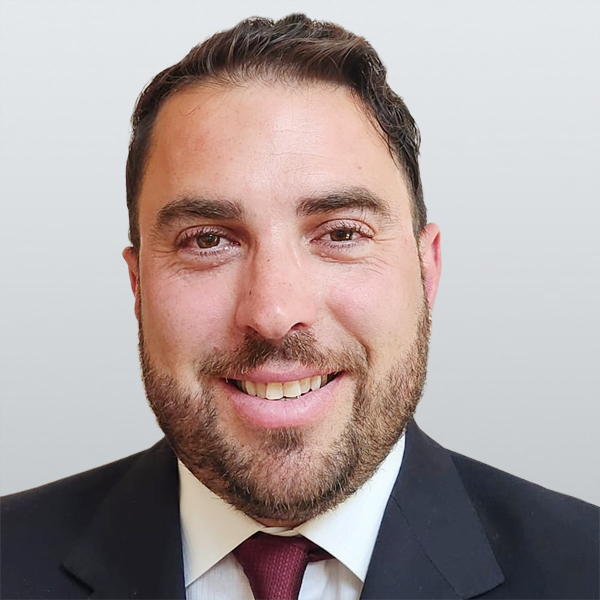
Prime Minister Mark Carney and Canada’s ethics commissioner have agreed to a conflict of interest screen to ensure that no decisions are knowingly made by the prime minister that may benefit his former employer Brookfield Corporation, Brookfield Asset Management, or Stripe, whose board he previously sat on.
The details of the conflict of interest screen were made public on July 11 by the ethics commissioner and require Carney to recuse himself from any involvement with the three companies as well as any of the companies controlled or owned by them.
According to the ethics commissioner’s disclosure, the screening process is “aimed at preventing any opportunity” for Carney to advance his own interests while in office, or those of Brookfield Asset Management, Brookfield Corporation, Stripe, or any entity under their ownership or control.
Carney previously served as chair of Brookfield Asset Management before resigning in January to run for the Liberal Party leadership.
Carney submitted information on his assets to the commissioner’s office after taking office in March, when he was given 60 days to submit all his financials and 120 days to make them public.
Canadian law requires the prime minister, cabinet ministers, and parliamentary secretaries to divest themselves of assets they control by selling them at arm’s length or placing them in a blind trust. Conflict of interest schemes were instituted for former Prime Minister Justin Trudeau as well as Fisheries Minister Dominic LeBlanc, Justice Minister Jody Wilson-Raybould, and Infrastructure Minister Amarjeet Sohi.
The ethics commissioner listed more than 560 companies in which Carney owned shares before creating the blind trust, including Brookfield Asset Management, Brookfield Corporation, and Stripe. The disclosure does not include the value of the assets prior to the blind trust, but notes that Carney’s investment account was “managed by a third party in respect of which the prime minister did not control or direct the selection of investments.”
All his investments “were placed in the blind trust and all investment decisions are taken independently from him,” said Carney spokesperson Emily Williams.
Other assets owned by Carney before creating the blind trust included Tesla, Lockheed Martin, Lululemon Athletica, Canadian Pacific Kansas City, Canadian Natural Resources, Alphabet, Philip Morris International, Boeing, Walmart, and Fox.
The conflict of interest screen will be run by Carney’s chief of staff Marc-André Blanchard along with Privy Council Clerk Michael Sabia. They are to ensure the prime minister is not aware of and does not participate in any “official matters or decision-making” related to Stripe and Brookfield, although he is still permitted to participate in conversations or decisions affecting the companies if they are “a member of a broad class of persons.”
In the disclosure, Carney said the screen will prevent him “from giving preferential treatment to any of the companies while I exercise my official powers, duties, and functions as a reporting public office holder.”
Carney drew criticism from the Conservative Party following his announcement to seek the Liberal leadership, with calls for him to publicly release a complete inventory of his assets and any possible conflicts of interest, going beyond the standard disclosure submitted to the ethics commissioner.
The Conservatives accused Carney of having numerous potential conflicts of interest in real estate, pension funds, and the renewable energy sector, as well as taking actions that benefited the U.S. economy more than Canada in his Brookfield leadership role.
In March, Michael Barrett, Conservative shadow minister for ethics and accountable government, said Carney’s Brookfield’s assets increased in the U.S. and declined in Canada after Carney became chair in 2020.
“Just as Carney moved his headquarters to America, while he was chair, Brookfield was investing more and more in the United States and pulling back in Canada,” said Barrett. “Perhaps this is one of the reasons Carney is so hostile when asked these questions.”
After becoming prime minister in March, Carney was asked by a reporter if he would publicly disclose details of his assets before placing them in a blind trust. Carney refused, saying he was in compliance with conflict-of-interest rules and all ethical requirements.
“I have served in the private sector. I have stood up for Canada. I have left my roles in the private sector at a time of crisis for our country. I’m complying with all the rules,” Carney said.
The Canadian Press contributed to this report.
 Friends Read Free
Copy
Facebook
Tweet
Friends Read Free
Copy
Facebook
Tweet