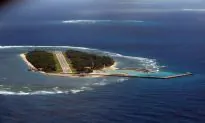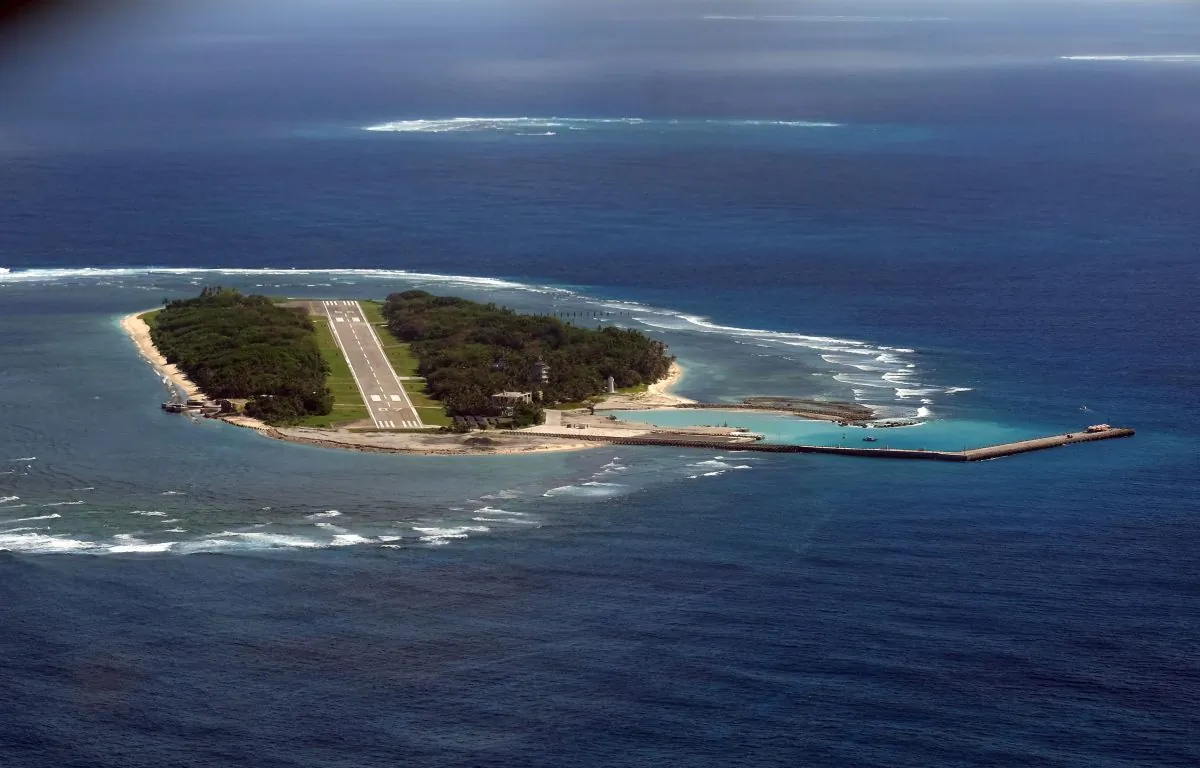

TAIPEI, Taiwan—Two Chinese ships intruded into the restricted waters of a Taiwan-controlled island in the South China Sea on June 11, Taiwan said.
Taiwan’s coast guard called the incursions into waters near Taiping Island another example of China’s gray-zone harassment, emphasizing that it was the first such incident in the area, according to a press release issued on Thursday. It criticized Beijing for a “malicious escalation” against the island.
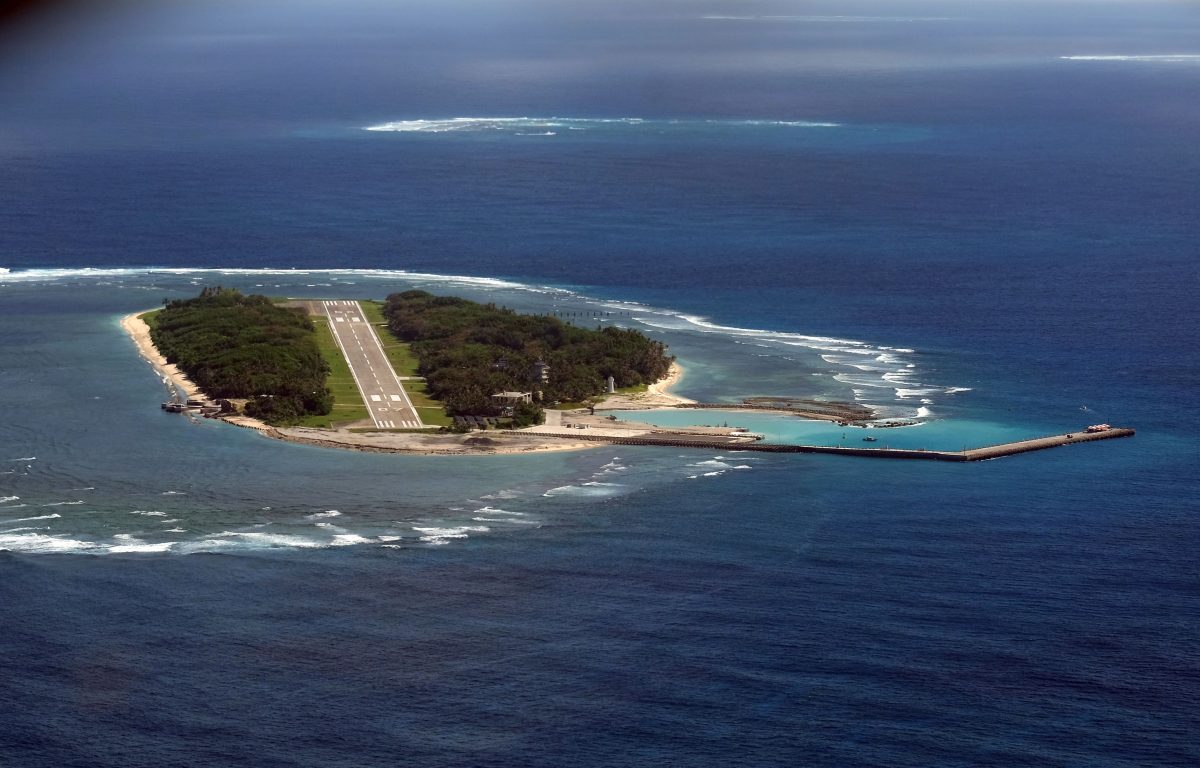
Taiping Island, also known as Itu Aba, is the largest naturally occurring island in the Spratly Islands of the disputed South China Sea. It is located about 1,000 miles southwest of Taiwan. It is controlled by Taiwan, and also claimed by China, the Philippines and Vietnam.
The intrusion lasted about 15 minutes on Thursday morning before the Chinese vessels were forced out by two Taiwanese patrol boats, according to the agency. However, before departing, the Chinese vessels came as close as 2.1 nautical miles to Taiping Island and made “abrupt and deliberate” turns twice that put Taiwanese patrol boats and personnel aboard at risk.
In a statement on June 12, Taiwan’s Ministry of Foreign Affairs criticized China for what it called a “brazen and unprecedented intrusion.” It added that the Chinese action “severely violated Taiwan’s sovereignty” and “blatantly challenged the international order and disrupted regional peace, security, and stability.”
“China’s malicious provocations and heavy-handed actions have severely contravened the United Nations Convention on the Law of the Sea, other international laws pertaining to maritime safety, and the law of the sea,” the ministry stated.
The ministry also condemned what it described as China’s recent “illegal harassment” of cargo ships that were “exercising their right to freedom of navigation” in waters off eastern Taiwan.
Escalating Tensions
The Chinese regime, which considers the democratically governed Taiwan a Chinese province, also claims jurisdiction over waters near the island.
On May 28, Japan and the Philippines announced the start of formal talks to delimit a maritime boundary between the two nations’ exclusive economic zones (EEZs), which overlap east of Taiwan, in accordance with international law.
Tokyo and Manila’s decision angered China. On May 29, Mao Ning, spokesperson of the Chinese regime’s foreign ministry, called the talks “null and void” and a “violation of China’s maritime rights.”
On June 1, the China’s coast guard announced it had deployed vessels to waters east of Taiwan for what it called “law enforcement patrols” and a “necessary operation” in response to Tokyo and Manila’s decision. The maritime move prompted criticism from Taipei, with Taiwan’s coast guard issuing a statement that said it would monitor surrounding waters and uphold the rules-based international order.
China escalated regional tension further on June 6, when its Ministry of Transport announced the start of what it called a “special maritime traffic law enforcement operation” in eastern Taiwan.
Under the operation, Chinese vessels radioed three passing cargo ships flying the flags of Singapore, Liberia, and Benin, requesting information including crew numbers and destinations, on June 7 and June 9, according to Taiwanese authorities.
On June 10, China’s state-run Xinhua reported that the enforcement operation had ended after five days, during which Chinese vessels had “inspected 198 passing vessels.”
China’s enforcement operation in Taiwan’s eastern waters also drew criticism from the House Select Committee on the Chinese Communist Party (CCP).
“The CCP campaign to intimidate and harass Taiwan relies on gray zone warfare to push boundaries,” the committee wrote in an X post on June 8. “This deliberate one-sided escalation tactic will only reinforce the U.S. and its partners’ convictions to stand with Taiwan and rebuke China’s unlawful territorial claims.”
Criticism
China’s incursions into Taiping Island’s restricted waters drew criticism in Taiwan and abroad.
In a June 12 post on X, Joseph Wu, secretary-general of Taiwan’s National Security Council, called Beijing a “shameless bully” for using the Tokyo-Manila maritime delimitation talks “as a pretext” for its action.
Bonnie Glaser, managing director of the Indo-Pacific Program at the German Marshall Fund of the United States, noted that the incident was “another first by China,” adding that it “fits a pattern of challenging Taiwan’s sovereignty claims and administrative control,” according to her X post on June 11.
Gordon Chang, a distinguished senior fellow at the New York-based think tank Gatestone Institute, pointed out in an X post on June 11 that China had “ramped up its actions against Taiwan,” not long after U.S. President Donald Trump met with Chinese leader Xi Jinping in China in May.
According to Wu, in the days after the Trump-Xu summit, Beijing deployed more than 100 vessels across regional waters, conducted joint combat readiness patrols twice around Taiwan, and dispatched the Liaoning aircraft carrier group in the Western Pacific.
 Friends Read Free
Copy
Facebook
Tweet
Friends Read Free
Copy
Facebook
Tweet