
The Conservatives and the Bloc Québécois have expressed their opposition to the 2025 budget in its current form presented by the Liberal government on Nov. 4, while the NDP says it will study and consult further before making a decision.
The Green Party’s lone MP, Elizabeth May, said she will not vote yes on the budget, but remains open to negotiations with the government.
Federal Finance Minister François-Philippe Champagne tabled the first budget under Prime Minister Mark Carney, projecting a deficit of $78.3 billion this fiscal year and a rising debt-to-GDP ratio that the government says will stabilize over the next few years.
The Liberal minority government needs votes from opposition MPs for the budget to pass. Since the budget is a confidence matter, the defeat of the budget would force Parliament to dissolve and an election to be called.
With Nova Scotia MP Chris d’Entremont leaving the Conservative caucus to join the Liberals on Nov. 4, the governing Liberals now have 170 seats in the House of Commons, but they’re still short of the minimum count of 172 needed to pass bills without opposition support.
Conservatives
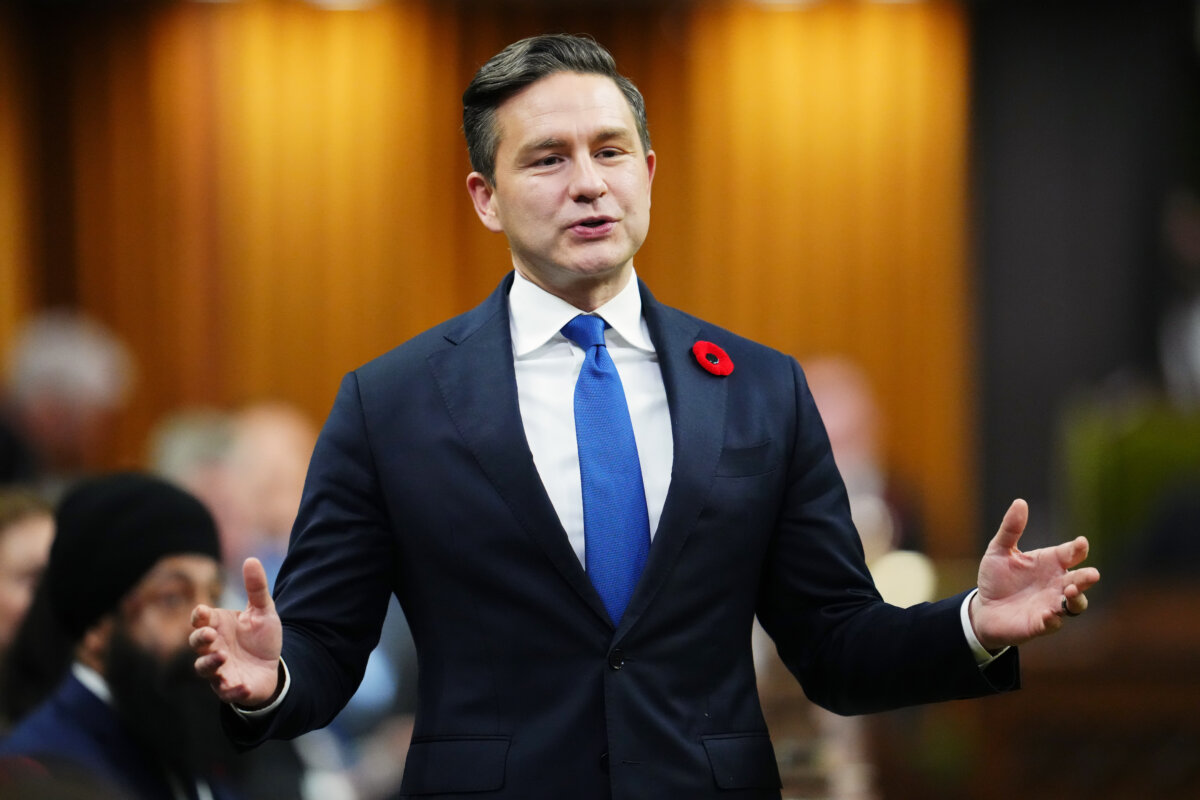
Conservative Leader Pierre Poilievre had called on the Liberal government to draft an “affordable” budget that his party could support. Days before the federal budget was released, Poilievre said he was willing to work with the Liberals “to come up with an affordable budget that will make an affordable life for Canadians.”
Following the budget’s release, Poilievre said the Conservatives will not support it, raising concerns about the projected deficit of $78 billion and the government maintaining measures such as the industrial carbon tax.
“This costly budget forces Canadians to spend more on debt interest than on healthcare transfers, more than the government collects in GST,” he said.
“That means every dollar that Canadians pay in GST will go to bankers and bondholders instead of to doctors and nurses. All while he raises the industrial carbon tax on farm equipment and fertilizer and, therefore, on food; on steel, concrete and other industrial projects needed to build homes – a big tax increase on homes and food.”
The Tories plan to introduce an amendment to the Liberal budget to remove the industrial carbon tax and cut “wasteful spending to bring down debt, inflation, and taxes.”
“We want the Prime Minister to accept our amendment to make life more affordable for Canadians, to make their paycheques stronger, and our economy more independent,” he added.
The government says more than 75 percent of the budget responds to “significant global economic shifts,” and that it’s spending on infrastructure and initiatives to draw further investments from the private sector.
The budget also projects cutting the number of public servants by 10 percent, or 40,000 positions, by the end of the 2028/2029 fiscal year. The cuts will be made through attrition, retirements, voluntary departures, and “previous savings exercises.”
The Liberal government says the industrial carbon tax is its key policy for reducing greenhouse gas emissions.
Bloc Québécois
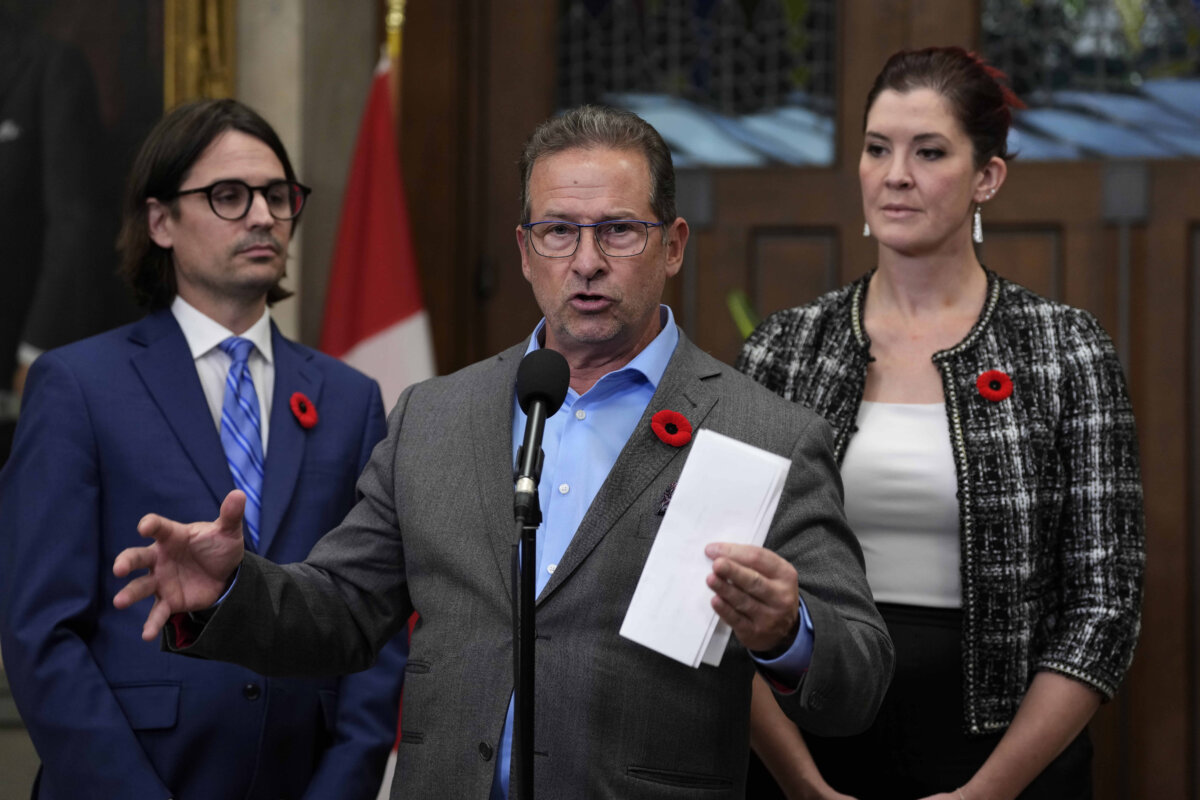
Bloc Québécois Leader Yves-François Blanchet said the budget contains nothing the Bloc had asked for and that he could “hardly see” how the party could support it with the projected $78 billion deficit.
“This is a red Conservative budget, which Mr. Harper might have signed, and there’s nothing for Quebecers in there, absolutely nothing,” Blanchet told reporters in Ottawa.
The Bloc had issued a list of 18 budget demands, six of them essential for getting its support. They included increased health and infrastructure transfers to provinces with no strings attached, and increased Old Age Security payments.
Blanchet said “there are many grey areas in this budget that, for me, are extremely concerning,” telling reporters that the 22 Bloc MPs will vote the same way on the budget.
New Democrats
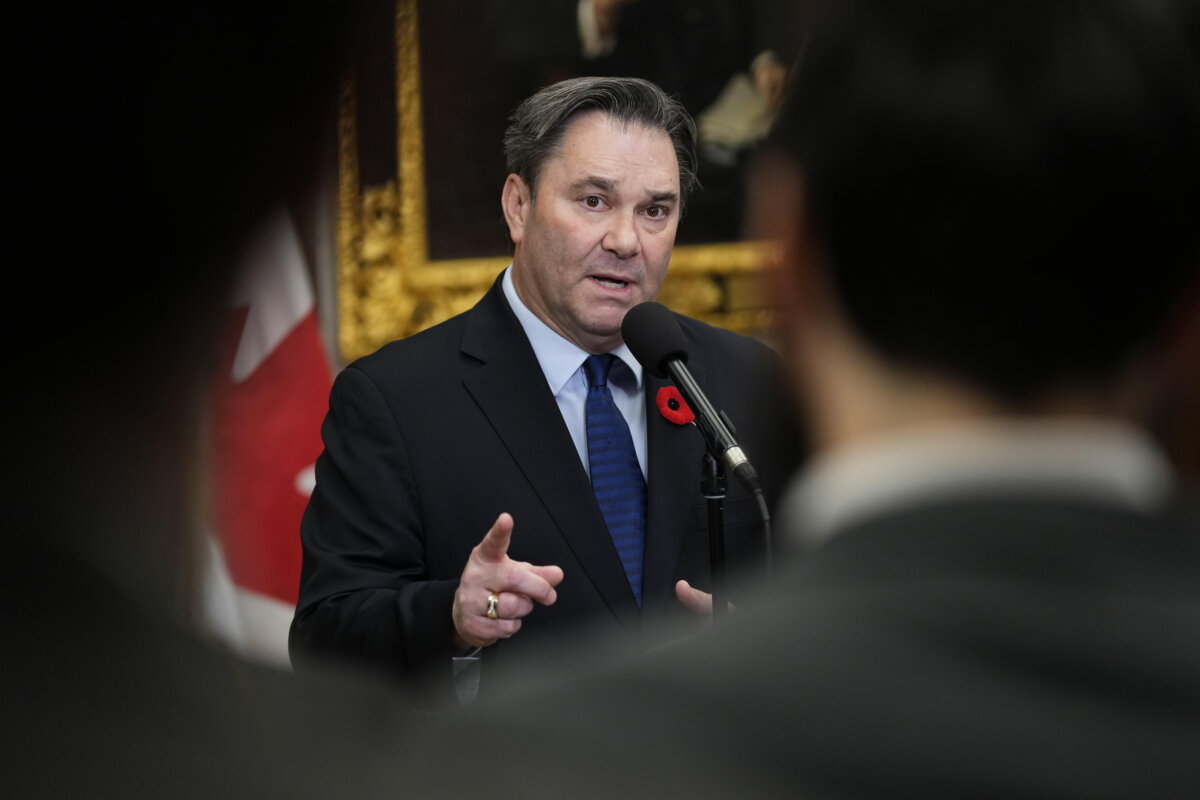
NDP Interim Leader Don Davies said the New Democrats “are going to take the time to study this budget” before deciding whether to vote in favour of it.
“We’re going to consult with stakeholders, we’re going to talk to Canadians, particularly working Canadians, and review this budget to see if this budget passes our lens of whether it works for working Canadians,” Davies told reporters in Ottawa on Nov. 4 after Champagne tabled the budget.
Before the budget’s release, Davies hadn’t ruled out supporting the government but said his party wouldn’t support an “austerity budget.” He had expressed support for federal investments to support workers, businesses, communities, and infrastructure impacted by U.S. tariffs.
Davies said “it’s hard to tell at this point” whether the budget is an “austerity budget,” while noting its “very large” deficit. He said while it included some “record investments,” there are also cuts to “public services that Canadians need.”
Asked whether he would whip his caucus on the budget vote, Davies said he “wouldn’t anticipate” what his party would do, but noted that the tradition of the party is to vote together “as one unit” on confidence measures. Members are allowed to abstain from the vote with the whip’s approval.
Green Party
The Greens’ May said she would like the government to include more support for items such as public transportation, developing an East-West electricity grid, and nature preservation before she can vote yes on the budget bill.
Matthew Horwood and Noé Chartier contributed to this report.
 Friends Read Free
Copy
Facebook
Tweet
Friends Read Free
Copy
Facebook
Tweet