
Critics have said that a new UK government definition of anti-Muslim hostility is an “assault” on free speech.
On March 10, the Labour government adopted a new non-statutory definition of anti-Muslim hostility as part of its “Social Cohesion” strategy, aimed at tackling hate crime and strengthening community relations.
The guidance, titled “Protecting What Matters,” sets out a definition intended to help institutions identify and respond what they call to anti-Muslim hatred and discrimination.
The Free Speech Union (FSU) said the initiative could represent an attempt to revive blasphemy-style laws in Britain. The FSU offers legal help to people disciplined or arrested for lawful expression.
“What we are seeing is an attempt to reintroduce Britain’s blasphemy laws, 18 years after they were abolished by Parliament, and the biggest assault on English liberty, particularly free speech, in over 800 years,” it said in a March 10 post on X.
According to the document, the definition, laid out over three paragraphs, says anti-Muslim hostility includes “intentionally engaging in, assisting or encouraging criminal acts—including acts of violence, vandalism, harassment, or intimidation, whether physical, verbal, written or electronically communicated, that are directed at Muslims because of their religion or at those who are perceived to be Muslim, including where that perception is based on assumptions about ethnicity, race or appearance.”
The definition also includes “prejudicial stereotyping of Muslims, or people perceived to be Muslim,” and treating them as a “collective group defined by fixed and negative characteristics” with the intention of encouraging hatred against them.
The government said the definition is non-statutory, meaning it does not create new criminal offences but is intended to guide policymakers, public bodies, and institutions.
Alongside the definition, ministers announced plans to appoint a “special representative” on tackling anti-Muslim hostility.
Before the publication of the guidance, the UK’s independent reviewer of terrorism legislation, Jonathan Hall, KC, told the BBC on March 10 that vague wording could inhibit legitimate debate.
“The worry will be with loose language people will feel inhibited about talking about things which are genuinely important today,” he said.
Last October, the Equality and Human Rights Commission (EHRC) said that “there is a risk that any official definition of ‘unacceptable treatment’, even if non-statutory, could have a chilling effect on freedom of expression and, if applied by public authorities, could lead to unlawful restrictions on political speech.”
Ministers denied that the definition could restrict criticism of religion.
Housing Secretary Steve Reed told BBC Radio 4’s Today program on March 10 that the definition “in no way restricts people’s freedom and people’s rights to criticize religion in general, any religion in particular or even people for practicing that religion.”
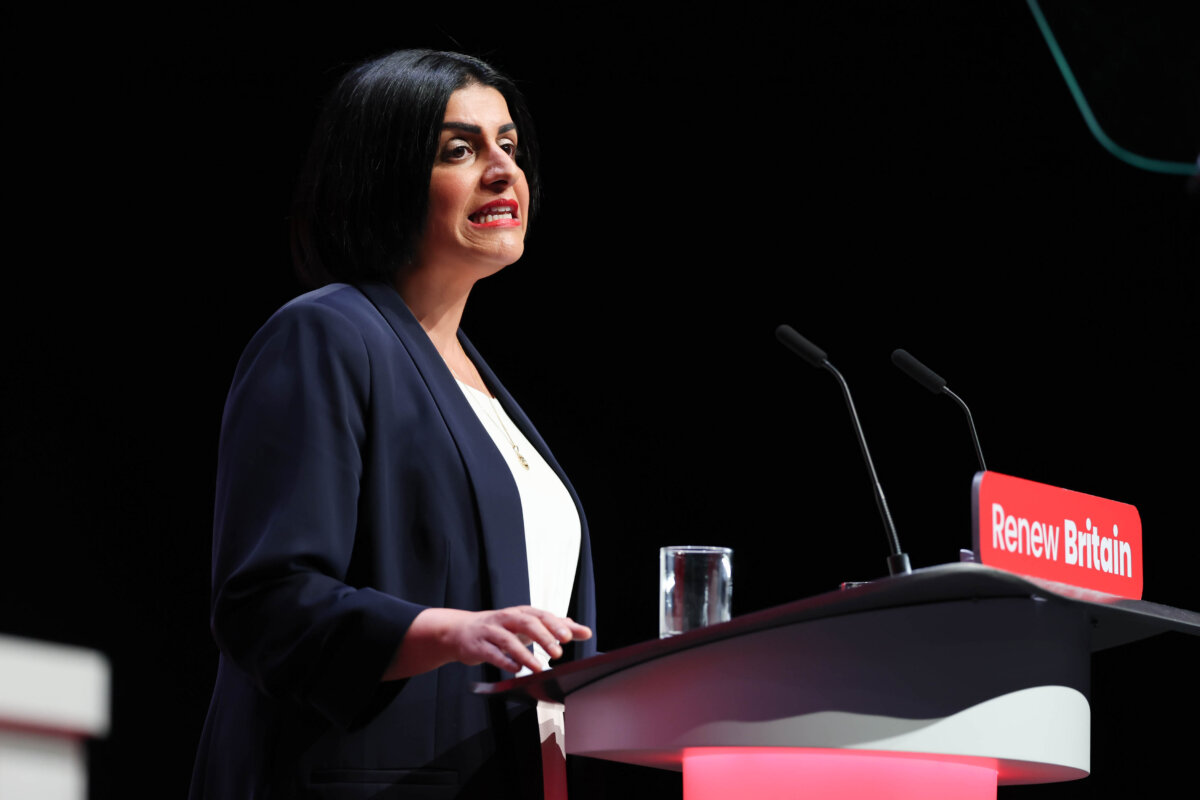
British Home Secretary Shabana Mahmood, whose parents immigrated to Britain from Pakistan, framed the issue in terms of national belonging.
In a March 9 post on social media platform X, Mahmood said that “more Labour means guaranteeing that it will always be true that those, like my parents, who sought a new and better life here, and contributed to our national life, can find, in this country, a home.”
“And that children of theirs may unthinkingly call themselves English, or a Brit, or even a Brummie, just like me,” she added.
Some Muslim organisations welcomed the guidance, saying it will help institutions respond more effectively to discrimination.
Shabir Randeree, chair of the British Muslim Trust, said the definition could strengthen responses to incidents affecting Muslim communities.
“The definition published today is welcomed and should be a step forward that will help guide institutions that have too often been too slow or too weak in their responses to incidents that a tolerant and respectful country like ours must never accept,” he said.
Under the plan, the government said it is funding the British Muslim Trust to “provide a helpline to report incidents safely and access support.”
Last month, the British Muslim Trust said in a Feb. 26 post on X that people do not need “evidence or certainty” to report incidents they believe to be anti-Muslim hate.
In the Social Cohesion strategy, it also said those who suggest English people are white Christians are “extreme right.”
It said that those in “positions of power and responsibility have a role in promoting a confident, modern patriotism” not least because “the failure to do so in recent years has created space for the extreme right to equate being English with being White, or being Christian, exploit national identity as an ethnic construct, tied to race or religion.”
 Friends Read Free
Copy
Facebook
Tweet
Friends Read Free
Copy
Facebook
Tweet