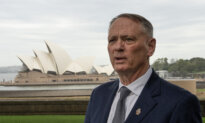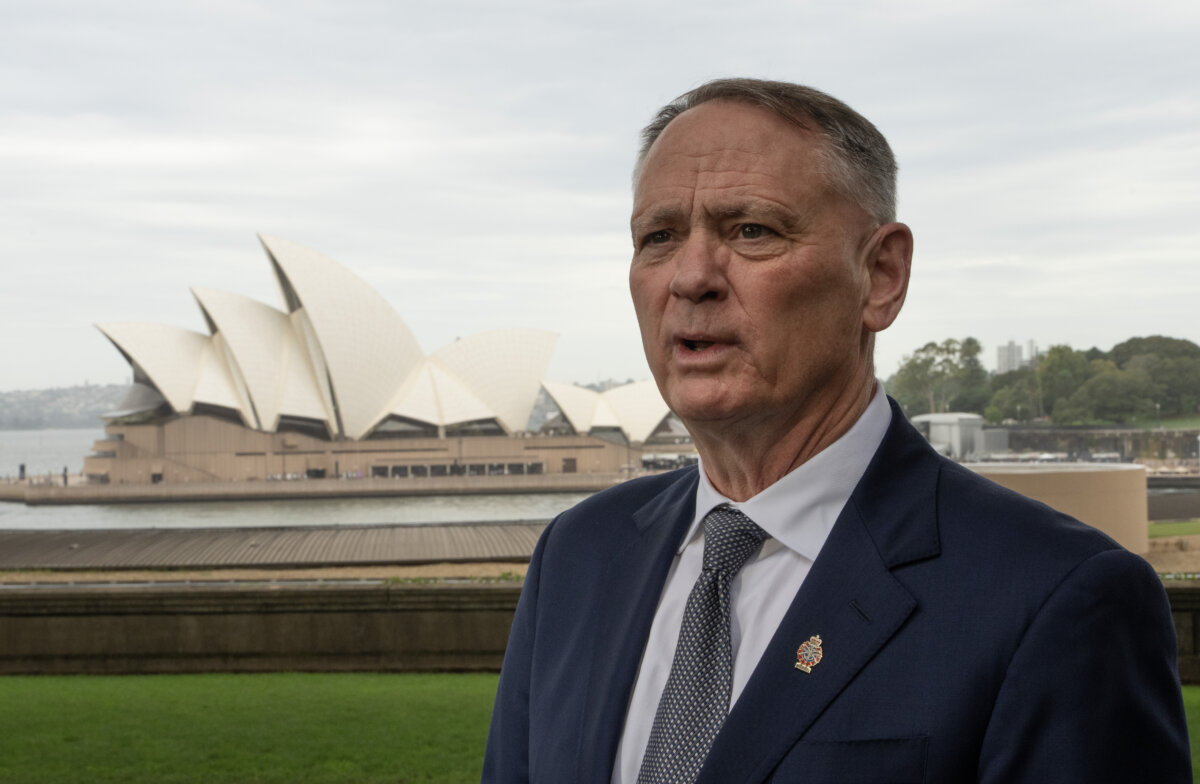
Defence Minister David McGuinty says he was made aware that a base in Kuwait hosting members of the Canadian Armed Forces was hit by an Iranian airstrike “immediately” after the strike occurred on March 1.
McGuinty’s comments on March 19 come after he suggested to reporters earlier in the day that he was not aware of the strike before Quebec media La Presse reported on it on March 12.
When asked by a reporter when he had first learned about the attack, McGuinty said he was “first informed about the situation in the Middle East while abroad with the prime minister on a global tour in the Indo-Pacific.”
The reporter then said, “So you knew about this before La Presse reported on it 11 days later.” McGuinty quickly responded, “No, I didn’t know about it before La Presse reported on it.” He said he saw the La Presse report while he was overseas.
At another press conference later that day, McGuinty read a “clarifying statement” regarding his earlier comments about the strike on the Kuwaiti base.
“I receive intelligence and security briefings regularly. I am made aware of incidents relating to [Canadian Armed Forces] members and assets around the world,” McGuinty said. “That was the case immediately following the strike, and that continues to be the case.”
He said his remarks earlier that day were “referring specifically to my awareness of a media report and not to the strike itself, which I was informed about by Canadian officials.”
The La Presse report indicated Canada’s camp at Ali Al-Salem Air Base appeared to have suffered damage in the March 1 attack, and added that no Canadian military members were injured.
The Conservatives have criticized the Liberal government for not informing the public that the Kuwaiti base was hit, with Tory MP and defence critic James Bezan saying on March 12 that Carney had “multiple occasions and press availability to disclose this fact.”
Speaking at a March 12 press conference in Yellowknife, N.W.T., Carney confirmed that no member of the Canadian military was hurt in the attack, and when pressed as to why he didn’t inform the public about the attack, he added that he’s “not the only spokesperson for the government.”
Conservative Leader Pierre Poilievre criticized Carney’s remarks in a March 13 social media post, saying, “This is not leadership.”
“You had a duty to tell Canadians about a missile strike targeting a base where Canadian Forces were stationed. Take responsibility and tell the truth,” Poilievre said.
Speaking to reporters on March 19 about why Canadians were not told sooner about the strike, McGuinty said that “this is something that we do not talk about.”
“We do not put the men and women of the Canadian Armed Forces in harm’s way or at risk. We do not share operational information, especially in the context of what was then an evolving, difficult, and fragile and expanding war,” McGuinty said.
“This has been the policy of the department and the CAF for some time. I take my lead from the operational experts inside the Canadian Armed Forces.”
McGuinty did not indicate whether he would commit to providing a closed-door briefing, as some opposition party leaders have called for.
Earlier in the week, McGuinty accused the Conservative Party of wanting to reveal information that “might compromise” the security of Canada’s military.
Kuwaiti Base
Canada operates a support hub at the Ali Al-Salem Air Base, which is also used by the U.S. Air Force.
Lt. Gen. Steve Boivin of Canada’s Joint Operations Command said earlier this month that Canada has just over 200 soldiers in the Middle East at this time, but is not involved in the U.S.-Israeli military operation in Iran.
“We’ve been focused on the force protection of our people, which means dispersing and staying in locations where the force protection is acceptable. In some cases, relocating them to a different country in the region or in some other cases redeploying them to Canada,” Boivin told media on March 5.
The Canadian Press contributed to this report.
 Friends Read Free
Copy
Facebook
Tweet
Friends Read Free
Copy
Facebook
Tweet