Australia’s opposition has called for the retroactive arrest and deportation of protesters who have publicly displayed symbols linked to designated terrorist organisations.
Opposition Leader Sussan Ley used a visit to Bondi Beach on Dec. 17 to escalate pressure on the Albanese Labor government in the aftermath of the terror attack that took the lives of 15 members of the local Jewish community.
Ley cited the mass pro-Palestine protests through Sydney and Melbourne in August where individuals carried banners with symbols linked to ISIS and the Taliban.
“They should be arrested, and if they are non-citizens, they should be deported,” Ley told reporters. “Every fair-minded Australian would agree.”
The Liberal Party leader also called for new visa screening requirements to prevent individuals with anti-Semitic or extremist views from entering the country, a move already implemented by the U.S. Trump administration.
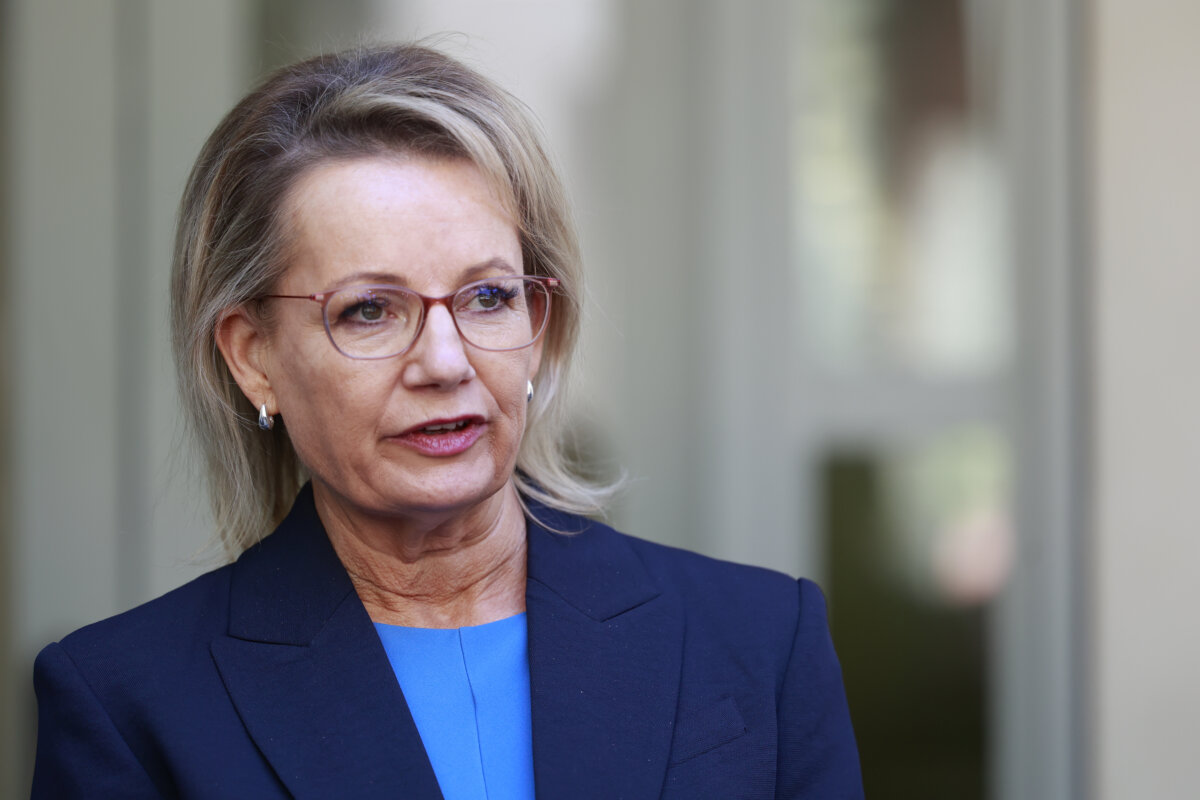
Ley questioned whether participants in extremist demonstrations were in Australia on temporary visas.
“Are these people here on some sort of temporary visa?” she asked. “Because if they are, they need to be immediately deported,” she said, drawing applause from those gathered nearby.
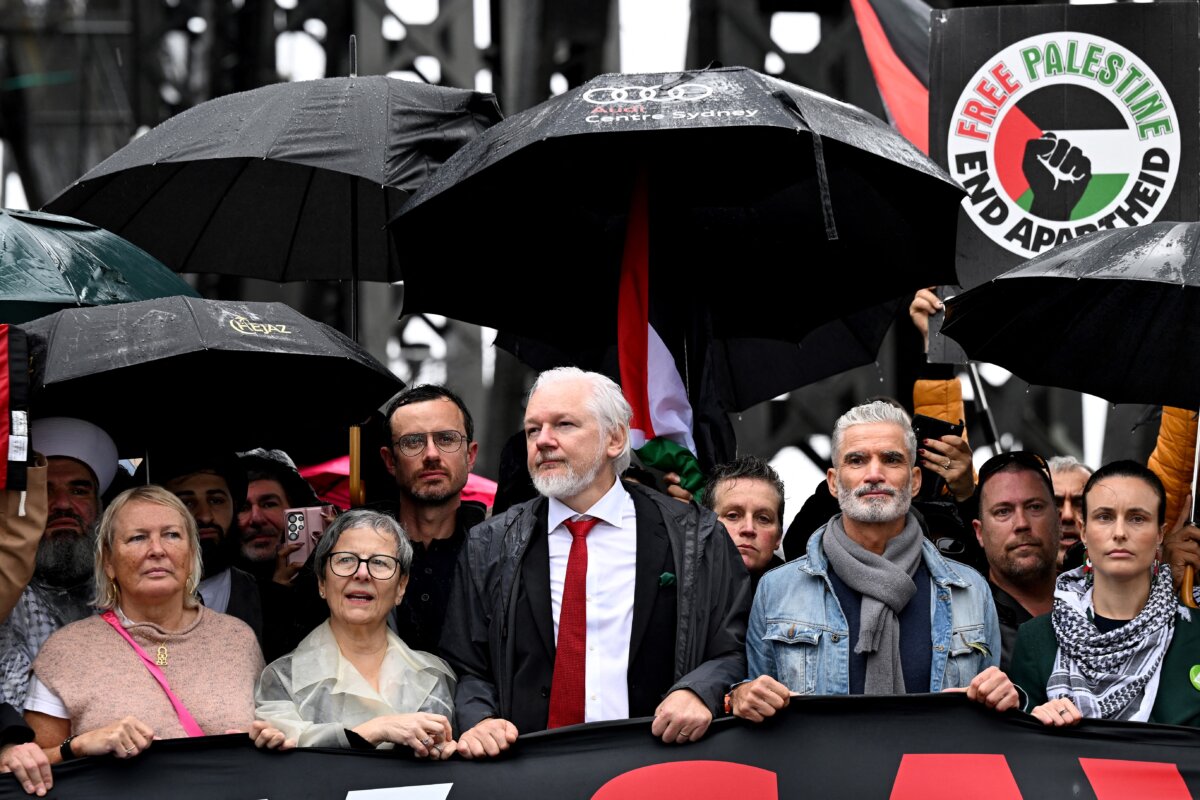
On Aug. 4, the Palestine Action Group led a large-scale protest involving around 90,000 people across the Sydney Harbour Bridge.
While the rally was largely peaceful, some participants held jihadist flags and a portrait of Iranian Supreme Leader Ayatollah Ali Khamenei, as well as chants of, “Death, death to the IDF,” and “death, death to Netanyahu.”
Coalition Sets Up Its Own Anti-Semitism Taskforce
Ley also announced the Coalition would launch its own taskforce aimed at forcing action on anti-Semitism.
The seven-member taskforce will move to close what the Coalition describes as dangerous gaps left by government inaction.
Its first priority is to drive full implementation of the anti-Semitism Envoy Jillian Segal’s report into how to combat the issue locally including renewing the definition of anti-Semitism, and putting tougher standards on university campuses.
The taskforce will also scrutinise weaknesses in counter-terrorism powers, border controls, and the monitoring of high-risk individuals.
NSW Moves on Tougher Gun Controls, Restricting Protests
At the state level, New South Wales Premier Chris Minns has recalled Parliament to attend on Dec. 22 and 23 to fast-track emergency legislation to tighten gun laws and restrict protests.
“We believe [this] is required pre Christmas to keep the community safe and ensure there’s unambiguous laws in place when it comes to public safety,” he said.
The proposed gun reforms would cap the number of firearms a person can own, reclassify straight-pull and pump-action shotguns, reduce magazine capacity, and ban belt-fed magazines.
Minns said he has not yet settled on a specific cap, noting that Western Australia’s new gun laws—which take effect on March 31, 2025—limit individuals to five firearms.
“I think even that is a lot,” he added.
The proposed legislation would also remove the NSW Civil and Administrative Tribunal (NCAT) as an avenue for appealing cancelled firearms licences.
Minns said police decisions to revoke licences are frequently overturned through the tribunal process.
“We’ll extinguish that appeal pathway,” he said.
The second set of reforms would allow police to block protests when a terrorism declaration is in force, citing risks to public safety, limited police resources, and community cohesion.
“A mass demonstration in this combustible situation with our multicultural community could light a flame that would be impossible to extinguish,” he said.
The premier said the legislation is still being drafted, with further details to be shared with the opposition and the media in coming days.
 Friends Read Free
Copy
Facebook
Tweet
Friends Read Free
Copy
Facebook
Tweet