
The European Central Bank (ECB) kept interest rates on hold on July 24, pausing its year-long easing cycle as inflation settled at its 2 percent target and signs of resilience emerged in the euro area economy.
The deposit rate stayed at 2 percent, the main refinancing rate at 2.15 percent, and the marginal lending rate at 2.4 percent, the eurozone’s central bank said in a statement following its policy meeting.
The decision was widely expected by markets after four consecutive cuts since last summer, which brought borrowing costs down from their highest levels in more than a decade.
“Inflation is currently at the 2 percent medium-term target,” the ECB said in its statement, noting that domestic price pressures were easing and wage growth was moderating. It pledged to continue taking decisions on a “data-dependent and meeting-by-meeting” basis without pre-committing to a rate path.
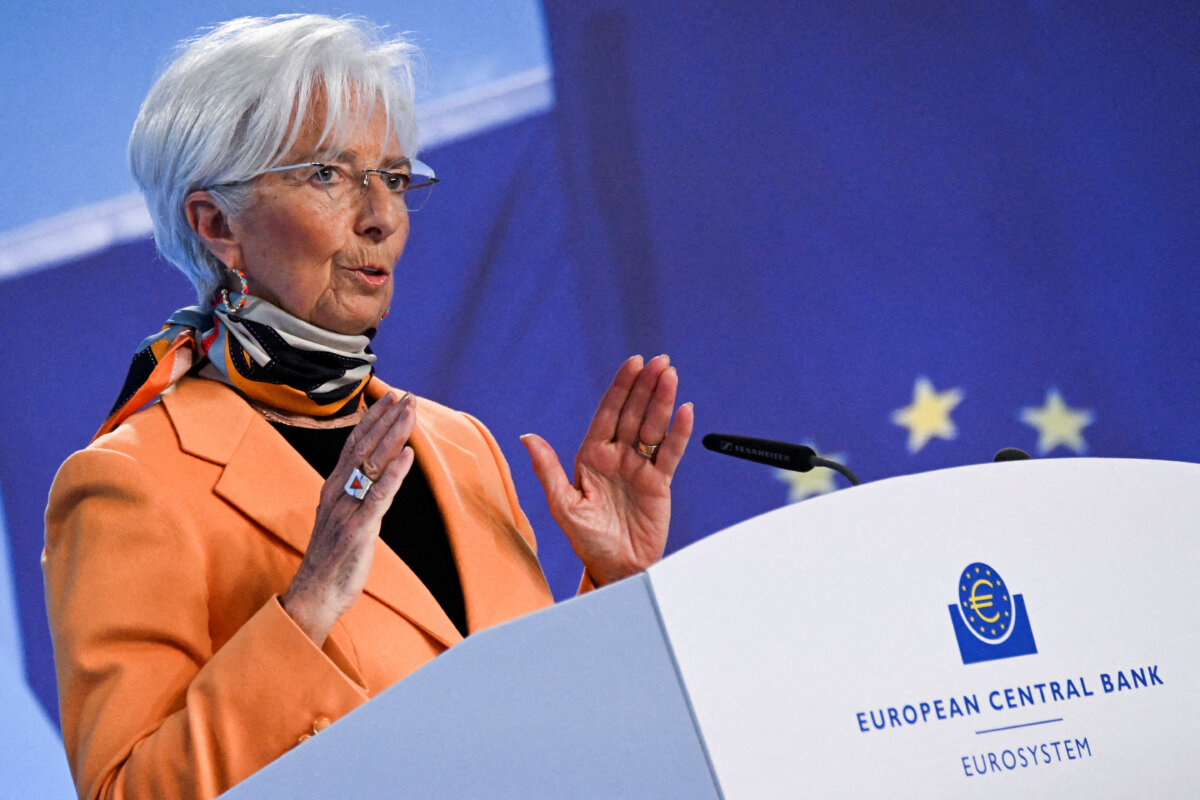
At a press conference, ECB President Christine Lagarde said the bank was encouraged by recent data showing the economy holding up, despite global headwinds. Growth in the first quarter was stronger than expected, she noted, helped by firms front-loading exports ahead of anticipated tariff hikes, and by solid private consumption and investment.
Recent surveys point to “modest expansion” in both manufacturing and services, she said.
“At [the] same time, higher actual and expected tariffs, a stronger euro, and persistent geopolitical uncertainty are making firms more hesitant to invest,” Lagarde cautioned, citing risks from escalating global tensions, volatile financial markets, and conflicts in Ukraine and the Middle East.
The ECB chief, however, described the underlying drivers of demand as broadly supportive.
Unemployment stood at 6.3 percent in May, close to the lowest level since the euro’s launch, while rising real incomes and solid household balance sheets continue to bolster spending.
Easier financing conditions, including lower mortgage rates, are fueling housing activity, and increased public investment in defense and infrastructure is expected to provide further support in the coming quarters.
Overall, Lagarde said risks to growth remain tilted to the downside. Key risks include the potential for trade tension escalation, which could drive a deterioration in financial market sentiment, along with geopolitical conflicts in Ukraine and the Middle East that could sap investment and consumer confidence.
Inflation dynamics have also shifted, she noted. Headline inflation edged up to 2 percent in June from 1.9 percent in May, mainly due to energy. Food price inflation eased to 3.1 percent, goods inflation fell to 0.5 percent, and services inflation ticked up to 3.3 percent.
Measures of underlying inflation remain consistent with the target, while forward-looking indicators point to further declines in wage growth and short-term inflation expectations.
Lagarde urged euro area governments to complement monetary policy with structural and fiscal reforms, calling it “crucial” to urgently strengthen the euro area and its economy in the present geopolitical environment.
She pressed for rapid completion of the bloc’s banking and capital markets unions, as well as a clear timetable for legislation enabling a digital euro.
Thursday’s decision follows a bank lending survey released earlier this week, showing demand for corporate credit remains subdued while housing loan demand is surging. Credit standards for firms were broadly unchanged in the second quarter, but banks tightened slightly for households—particularly for consumer loans—amid regulatory pressures and lingering economic risks.
The ECB’s decision to hold rates steady at 2 percent comes after the central bank delivered seven consecutive 25-basis-point rate cuts—and a total of 200 basis points—since September 2023, according to an ING report.
In the United States, meanwhile, the Federal Reserve has held the benchmark interest rate at around the 4.3 percent mark, after cutting it three times last year. Fed Chair Jerome Powell has said that Fed policymakers want to see how the economy responds to President Donald Trump’s tariff policies, in particular, whether they will drive up inflation.
Powell’s caution has drawn sharp criticism from Trump, who has accused the Fed chief of playing politics with monetary policy. Trump has demanded lower borrowing costs to spur the economy and bring down the interest rate that the government pays to service its debt.
 Friends Read Free
Copy
Facebook
Tweet
Friends Read Free
Copy
Facebook
Tweet