The European Union has agreed to open membership talks with Ukraine, a move that Kyiv sees as an important security guarantee for national stability once the war with Russia is over.
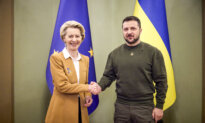
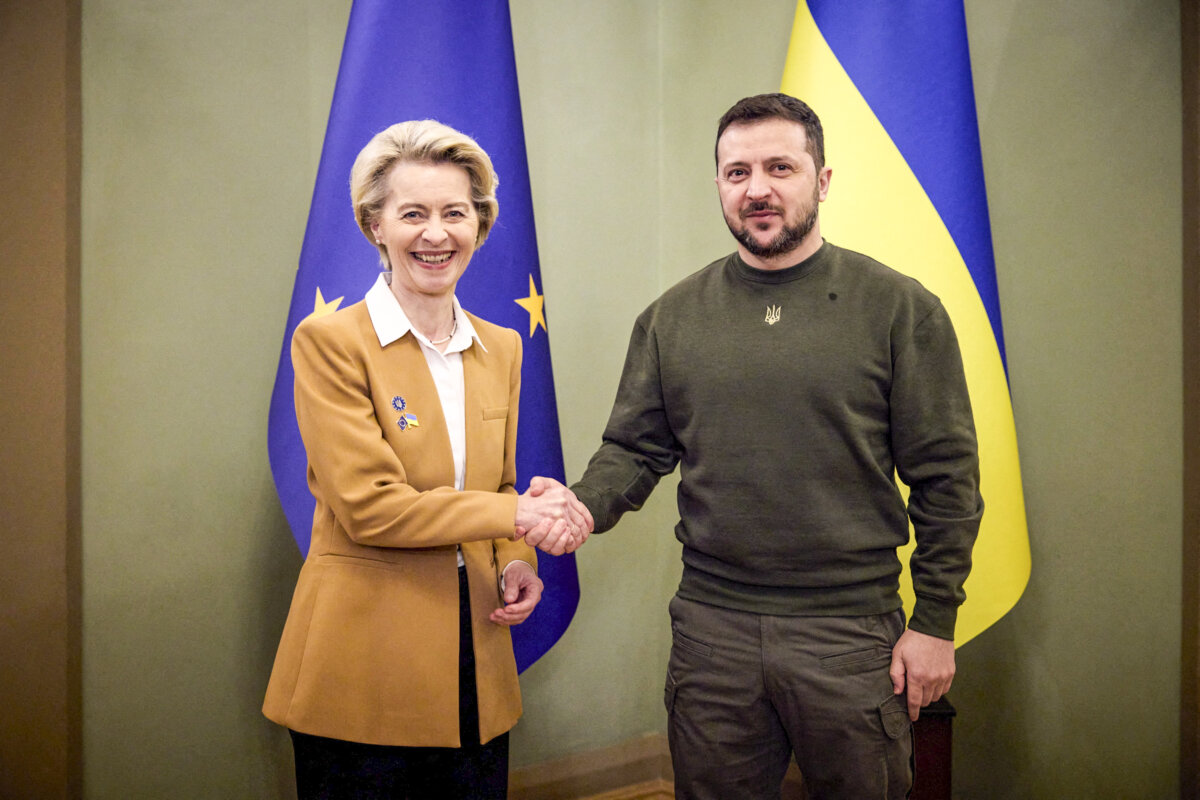
European Commission President Ursula von der Leyen and EU Council President t António Costa said in a June 12 statement that the decision represents a “major step forward.”
Von der Leyen and Costa said that all 27 member states in the bloc agreed to open accession negotiations with Ukraine. Moldova, a landlocked nation between Ukraine and EU member state Romania, was also announced to have progressed to the next stage of joining the bloc.
Candidate countries must align their laws across 35 policy areas, ranging from justice to farming and fishing.
The first areas will focus on fundamentals, covering the bloc’s “core values and principles,” including the rule of law and democratic institutions.
The EU presidents said that an intergovernmental conference will be held on June 15 to open chapters grouped into “clusters” as part of the process.
“This is a recognition of the determination, courage, and hard work shown by both countries in advancing reforms, even in the face of immense challenges,” they said.
“And a signal that the EU’s offer of peace, stability, and opportunity is unmatchable.”
They said that the enlargement of the EU strengthens peace, security, and prosperity across Europe, and that “in a world marked by growing uncertainty, a larger European Union is in our common interest.”
The process of joining the EU through accession negotiations is often lengthy and involves years of work to meet Brussels’ standards and implement internal reforms. However, in November, EU foreign policy chief Kaja Kallas said that the bloc could welcome new members by as early as 2030.
Kyiv’s EU Aspirations
Ukraine has long sought EU membership, first expressing its aspiration to join the bloc in 1993, just two years after becoming independent following the break-up of the Soviet Union.
Ukraine applied to join the world’s largest trading bloc at the end of February 2022, days after Russia’s invasion began.
The country has sought to intentionally pivot toward the West, with Kyiv maintaining that joining the bloc would solidify Ukraine’s place in mainstream European politics and ensure its security.
However, its best guarantee against aggression would be NATO membership, but the Trump administration last year said it is unlikely to happen.
Russia is also strongly against Ukraine joining NATO, citing moves toward membership as a reason for launching its invasion of eastern Ukraine in 2022. But Moscow has not objected to Ukraine’s joining the EU.
Ukrainian President Volodymyr Zelenskyy thanked partners in the EU in a June 12 post on X, saying that the opening of the first cluster “is significant political and moral support for our state and our people.”
“I thank all our people who are fighting for Ukraine, working for our state, and helping defend our national interests. And I thank all our partners in the EU and every leader personally for this strong step for the sake of Europe,” Zelenskyy said.
“Ukraine is defending itself and, in doing so, all of Europe—the idea that European nations can live united, free, and in peace.”
Negotiations for Peace
German Chancellor Friedrich Merz last month urged his EU partners to consider offering Kyiv “associate membership.”
Under those proposals, Ukraine would participate in meetings and summits but would not have voting rights. Ukraine would also have non-voting members in the European Parliament, which is represented by elected lawmakers from member states, and in the EU’s powerful executive branch, the European Commission.
Merz also proposed that EU members commit to applying the bloc’s mutual assistance clause to Ukraine “in order to create a substantial security guarantee.”
Progress in accession comes as European leaders seek to negotiate an end to the war, now in its fifth year.
Last week, the ambassadors of France, Germany, and the UK were in Moscow to meet with Russian Deputy Foreign Minister Mikhail Galuzin amid a push for a ceasefire.
British diplomat Nigel Casey, France’s Nicolas de Rivière, and Germany’s Alexander Graf Lambsdorff represent the nations that make up the E3, an informal security alliance that is one of Ukraine’s main backers in its war with Russia.
The meeting followed the E3 heads of government meeting with Zelenskyy in London on June 7, during which they backed the Ukrainian president’s calls for direct talks with Russian President Vladimir Putin to reach a ceasefire.
The Associated Press, Reuters, and Rachel Roberts contributed to this report.
 Friends Read Free
Copy
Facebook
Tweet
Friends Read Free
Copy
Facebook
Tweet