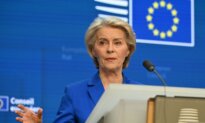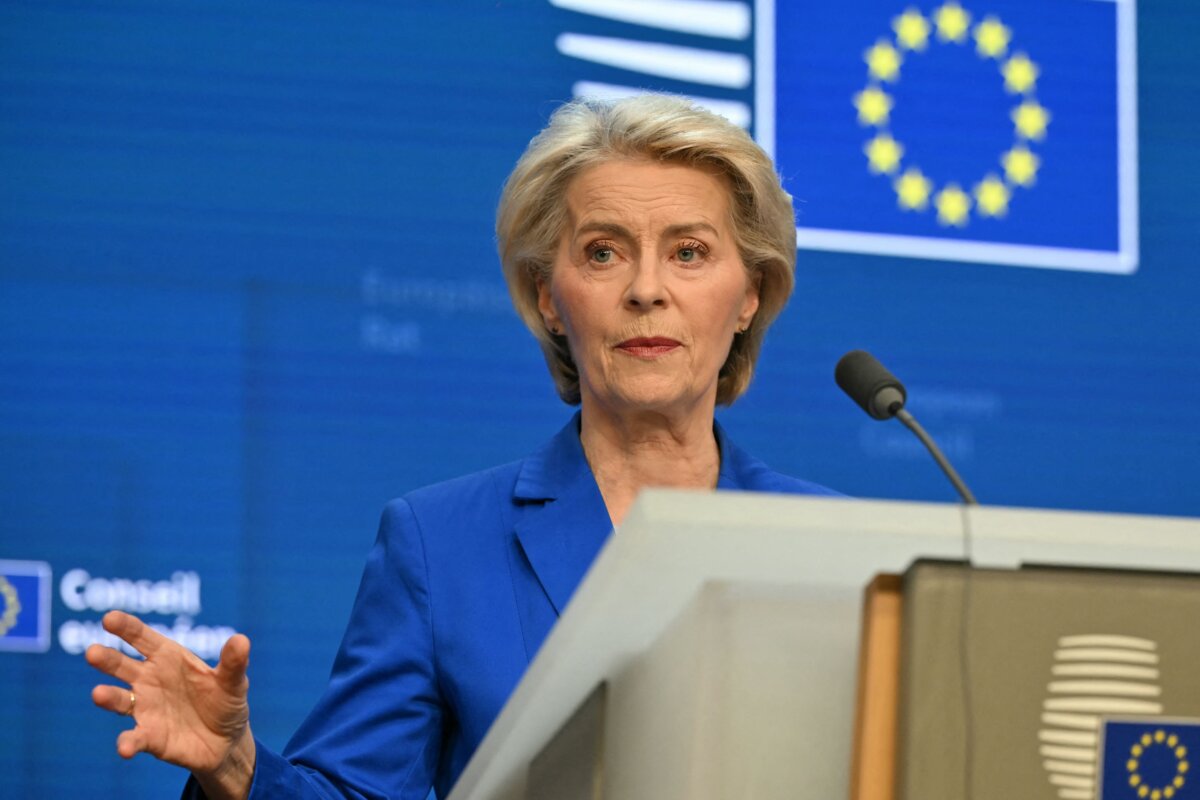

The European Union will develop new trade instruments that would empower Brussels to restrict China’s access to its single market, as progress in the auto industry cannot address Beijing’s structural imbalance, European Commission President Ursula von der Leyen said on Oct. 16.
Speaking after two days of meetings with European leaders, von der Leyen highlighted the bloc’s widening trade deficit with China, which hit €1 billion ($1.1 billion) a day last year.
“This is structural. This is unsustainable,” she said. “And we all agree that it cannot go on like this.”
The EU wants the relationship with China, its second-largest trading partner, to be fair, balanced, and mutually beneficial, according to von der Leyen. Achieving that, she said, will require substantial rebalancing.
Under pressure from Brussels, EU and Chinese trade representatives recently delivered the first results in months-long negotiations. The EU on Oct. 9 said it secured Beijing’s commitment to curb the shipment of hybrid cars to the bloc, which have surged after Brussels’s 2024 tariffs on electric vehicles made in China.
China also agreed to improve market access for several European products, from industrial goods to agri-food, and to ease export-licensing procedures for EU companies seeking licenses for rare earths and permanent magnets, according to the EU’s trade chief, Maroš Šefčovič.
Von der Leyen said progress in the EV and hybrid sectors alone cannot address the massive trade deficit with China.
“We will work on new instruments to address the structural imbalances,” she said. “That is, no more dependencies on one single supplier.”
The European Commission, the bloc’s executive arm that handles trade matters, will present a plan for the new instrument in December. Dubbed Diversify EU, the tool will be country-agnostic and help European companies de-risk faster, according to von der Leyen.
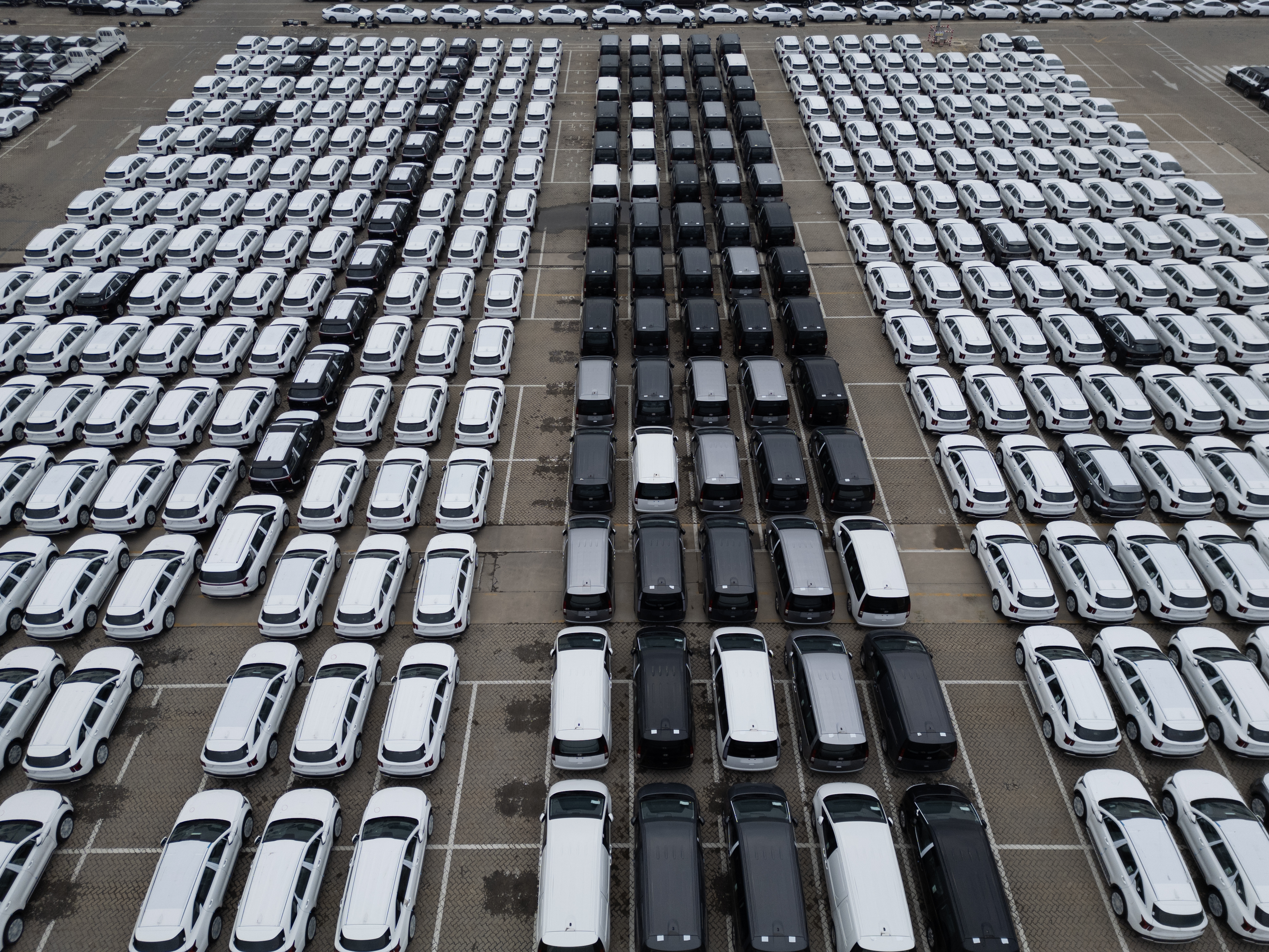 Aerial view of electric vehicles (EV) waiting to be loaded onto a ro-ro ship for export at Yantai port in Yantai, China, on April 10, 2026. (Getty Images)
In the letter and an accompanying document, the leaders of the EU’s two largest economies proposed new instruments that would allow the EU to fight back, or completely cut off nations from the bloc’s single market.
At the press conference in the Belgian capital, von der Leyen said she welcomed the proposal from France and Germany.
“Building on the Franco-German paper, we will develop a new instrument for decisive action by limiting the access to the single market where this is in the Union’s interests—fast, and immediately,” she said.
In addition, the Commission will design a “solidarity mechanism to help EU member states or industries targeted by coercion or retaliation from third countries outside the bloc,” she said.
Von der Leyen’s announcement came as concerns grew across the 27-nation bloc over a flood of cheap, subsidized products from China. EU’s homegrown businesses have felt the squeeze, with companies like Volkswagen announcing factory closures and job cuts.
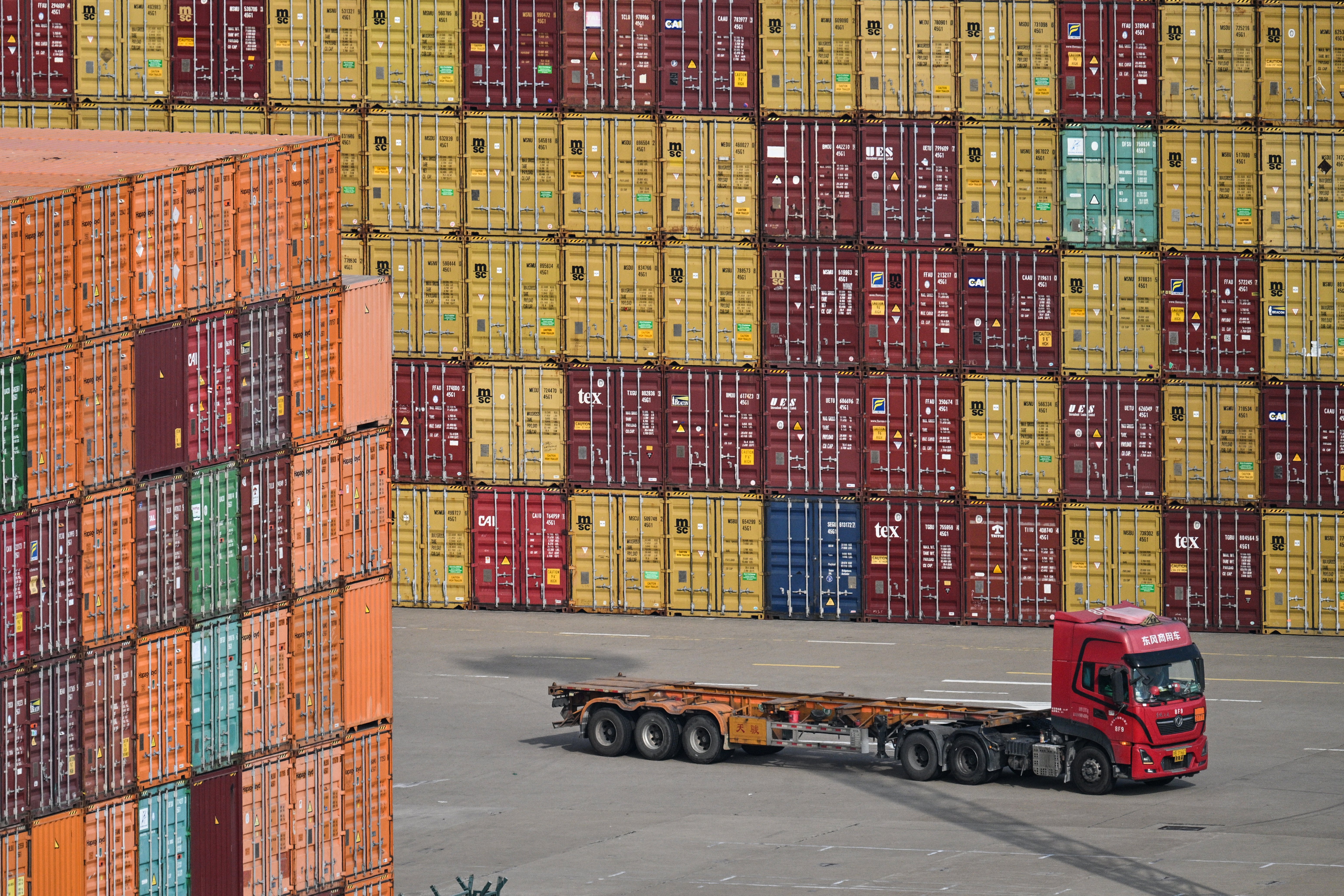 A truck drives past containers at the Port of Ningbo-Zhoushan in Ningbo, in China’s eastern Zhejiang Province on Sept. 22, 2026. (Hector Retamal/AFP via Getty Images)
Beijing has increasingly relied on exports to sustain economic growth, especially as domestic demand has been weighed down by a long-running property crisis and rising unemployment.
The Chinese regime’s Ministry of Commerce on Oct. 16 warned the EU not to undermine its “determination and capability” to defend its own interests, saying that the bloc’s pressure would not force it to make concessions.
 Friends Read Free
Copy
Facebook
Tweet
Friends Read Free
Copy
Facebook
Tweet