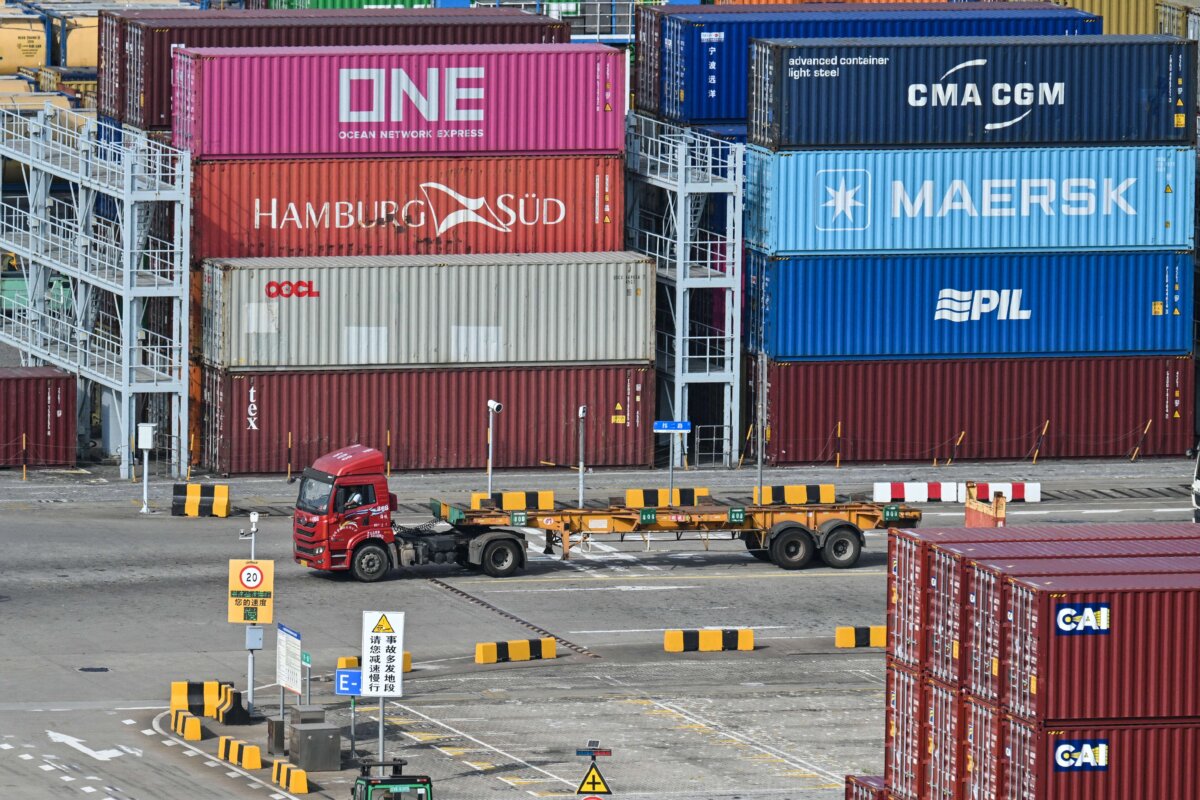

China’s trade surplus has exceeded $900 billion in the first nine months of 2026, risking backlash from countries already flooded with exports from the world’s manufacturing powerhouse.
Overall outbound shipments from China grew by 36 percent in September from a year ago, data from China’s General Administration of Customs showed on Oct. 14. It was well above the 25 percent growth recorded in August and the 25.5 percent growth tipped by a Reuters poll of economists.
The rising sales of high-technology products—such as robots, computer parts, and electronic components—amid the global race to build out artificial intelligence (AI) infrastructure helped drive up exports in the first three quarters, according to Wang Jun, vice minister of the customs agency.
September’s imports also beat analysts’ expectations and jumped 31 percent.
But exports still exceeded imports by $133 billion last month, marking the fifth straight month the surplus topped $100 billion.
As a result, China is on track to beat last year’s record surplus of $1.19 trillion.
In the first three quarters of 2026, the number had already reached $938 billion, an increase of more than 7 percent from the same period last year.
Exports are a key pillar sustaining growth of China’s ailing economy, as the years-long property crisis continues to weigh on consumption and investment.
In the second quarter, China’s economy expanded at its slowest pace in three years, though analysts and residents argued the real situation on the ground is much grimmer than the official figures indicate.
Meanwhile, China’s official statistics have long faced skepticism about their accuracy, partly because of the Chinese Communist Party’s (CCP) record of withholding information deemed harmful to its image.
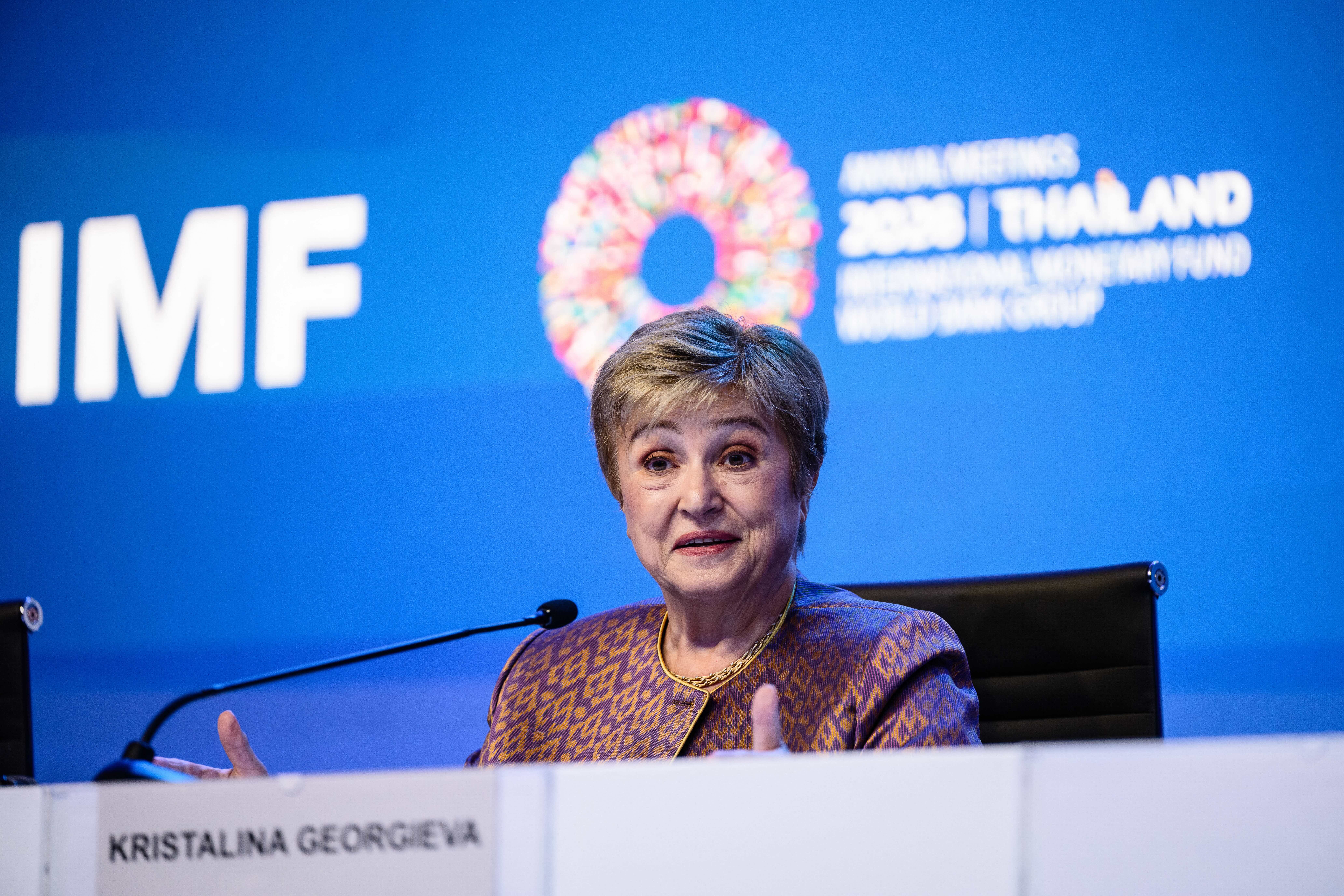 IMF Managing Director Kristalina Georgieva speaks during the 2026 IMF-World Bank Group Annual Meetings in Bangkok on Oct. 14, 2026. (Anthony Wallace/AFP)
Reliance on Export Amid Weak Consumption
International Monetary Fund Managing Director Kristalina Georgieva on Oct. 14 reiterated a call for Beijing to shift its reliance from exports to domestic consumption.
“For surplus countries, what they need to do is increase domestic consumption. That clearly applies to China’s growth model,” Georgieva told reports in Bangkok when asked about China’s imbalance.
“Shift from export more toward domestic consumption.”
The booming surplus has already stoked tensions between Beijing and its major trade partners.
After months of intense negotiations, the European Union last week secured a commitment from Beijing to curb hybrid vehicle exports.
Hybrids escaped the European Commission’s 2024 tariff hikes on Chinese electric vehicles—and their sales have since surged across the 27-nation bloc.
EU leaders are increasingly worried about the influx of cheap, subsidized products from China, which has contributed to European homegrown businesses announcing factory closures and job cuts.
China’s latest customs data showed September’s monthly trade surplus with the EU was almost $35 billion—about 52 percent more than the same period last year.
 Aerial view of domestic vehicles (EV) waiting to be loaded onto a ro-ro ship for export at Yantai port in Yantai, China, on April 10, 2026. (Getty Images)
That pushed the monthly trade surplus with Washington to $34 billion, up 49 percent from the same month a year earlier.
Top U.S. and Chinese trade negotiators agreed to extend the trade truce by two months, until next January.
After Chinese leader Xi Jinping’s September summit with President Donald Trump in Washington, the two countries announced a plan to cut tariffs on $30 billion worth of non-sensitive goods from each side.
Lynn Song, chief economist for Greater China at ING Bank, said Beijing’s trade talks with Brussels and Washington are likely to “keep the commercial environment relatively stable through the end of the year.”
“But uncertainties may hang over next year’s outlook,” Song wrote in a note.
“As China’s growth looks increasingly imbalanced, a slowdown in the tech capex cycle or new tariff shocks are the key risks to monitor moving forward for the year ahead.”
 Friends Read Free
Copy
Facebook
Tweet
Friends Read Free
Copy
Facebook
Tweet