
The European Union on Sept. 29 reimposed sanctions on Iran after the United Nations reinstated an arms embargo and other restrictions on the Islamic Republic.
“Today, the Council agreed to reimpose a number of restrictive measures in relation to Iran’s nuclear proliferation activities, that had then been suspended with the entry into force of the Joint Plan of Action (JCPoA or Iran nuclear deal) in 2015,” the Council of the EU said in a statement.
The council, where government ministers of the bloc’s 27 members meet to discuss laws and coordinate policies, said that it will freeze the assets of the Central Bank of Iran and major commercial Iranian banks.
The EU is also reinstating measures that will block Iranian cargo flights from EU airports and prohibit the service or maintenance of Iranian cargo craft if they are carrying banned materials.
In addition to the arms embargo and other measures reintroduced by the U.N., the EU’s sanctions include bans on exporting certain types of software, the sale of precious metals and diamonds, and the import, purchase, and transport of crude oil, natural gas, petrochemicals, and petroleum products.
The Epoch Times contacted the Iranian government for comment, but did not receive a response by publication time.
The return of EU sanctions followed the U.N.’s decision on Sept. 27 to reintroduce an arms embargo and other sanctions on Iran.
Resolution 2231 was passed unanimously by the U.N. Security Council in July 2015 in support of the Joint Comprehensive Plan of Action (JCPOA) agreement with Iran, to ensure the country’s nuclear program was used exclusively for peaceful and civilian purposes.
It provided for a snapback mechanism, which would restore full U.N. sanctions against Iran in the event of Tehran failing to fully comply with the terms of the agreement.
France, Germany, and the UK, which make up the E3, invoked the snapback mechanism on Aug. 28 when they sent a letter to the Security Council saying that “based on clear factual evidence,” Iran was in “significant non-performance” of its commitments under JCPOA.
Tehran has repeatedly denied pursuing nuclear weapons.
Iranian leader Ali Khamenei said in a Sept. 23 statement broadcast on Iranian state television, “We do not have a nuclear bomb and we will not have one, and we do not plan to use [a] nuclear weapon.”
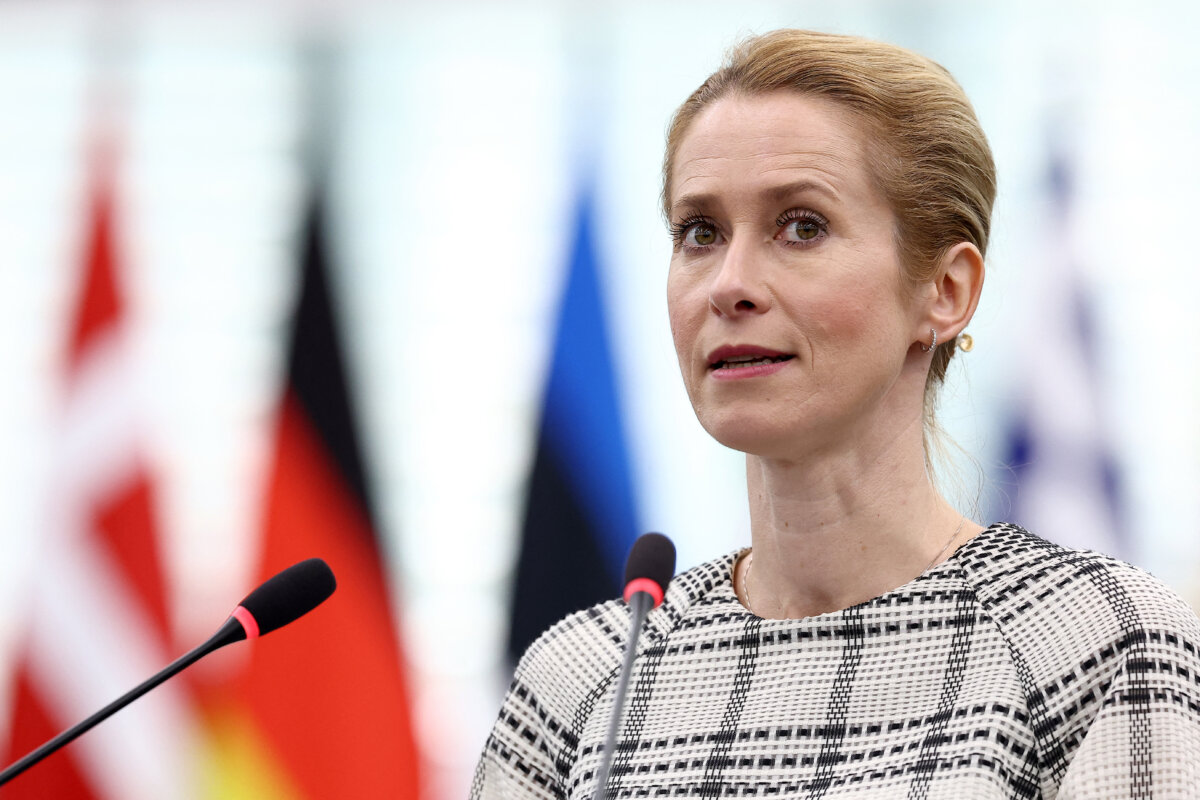
Kaja Kallas, the EU’s foreign policy chief, said in a statement on Sept. 28 that she, along with the E3 and other international partners, “had intensive diplomatic efforts with Iran ahead and during the 30-day timeframe foreseen in the snap back process which unfortunately did not result in creating the conditions for a possible extension of the UNSCR 2231.”
“The snap back of sanctions and nuclear restrictions must not be the end of diplomacy with Iran on the nuclear issue, which remains a key challenge to regional and international security. It is the position of the European Union that a sustainable solution to the Iranian nuclear issue can only be achieved through negotiation and diplomacy,” Kallas said.
She added that she will remain engaged with Iran and other parties in negotiating a diplomatic solution.
Israel said the reinstatement of sanctions on Tehran was a “major development in response to Iran’s ongoing violations, especially on its military nuclear program.”
“The goal is clear: prevent a nuclear-armed Iran,” the Israeli Foreign Ministry said in a Sept. 28 post on X. “The world must use every tool to achieve this goal.”
On Sept. 29, the Iranian Ministry of Foreign Affairs said that its foreign minister, Seyed Abbas Araghchi, had written to the E3 and the United States saying that the U.N.’s return of sanctions was “invalid and unlawful” and that the claims made were “entirely baseless and void, lacking any legal foundation.”
The ministry said it was urging governments to refrain from incorporating the measures into their domestic policies and encouraged them to “resist the misuse of international institutions.”
Jacob Burg and Chris Summers contributed to this report.
 Friends Read Free
Copy
Facebook
Tweet
Friends Read Free
Copy
Facebook
Tweet