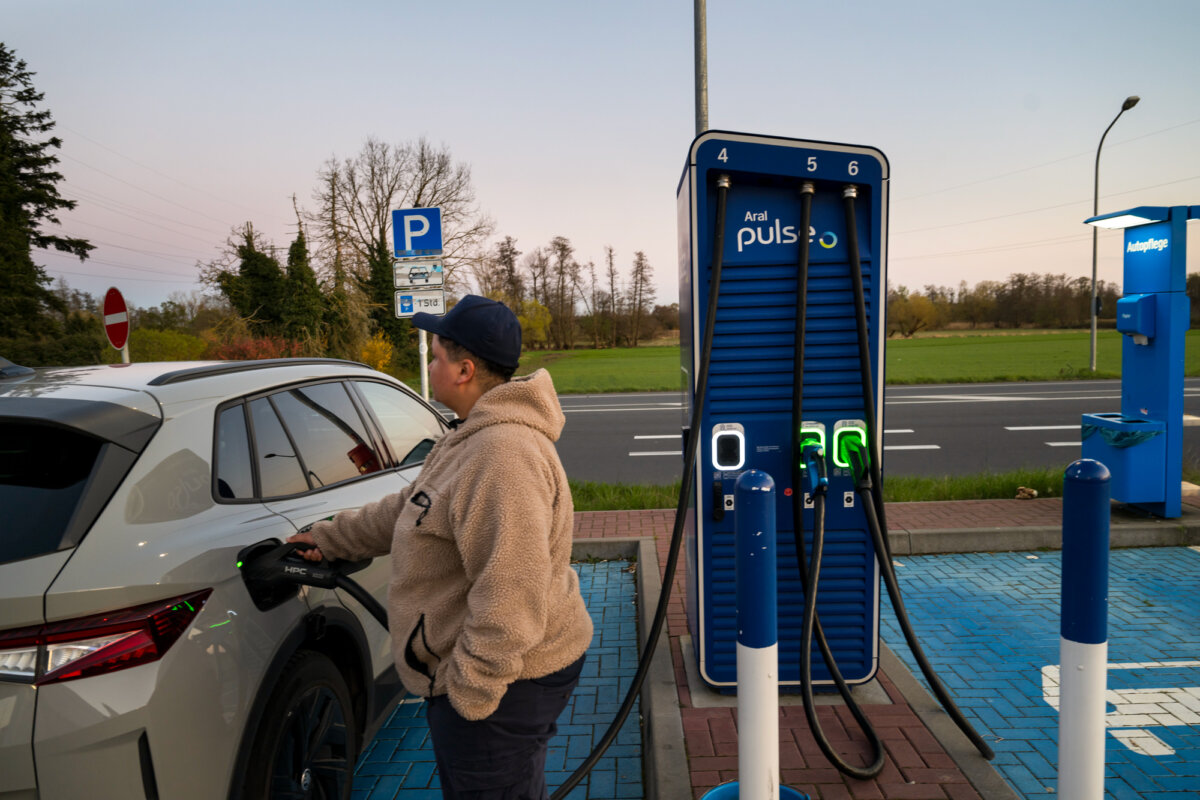

Sales of electric and hybrid vehicles continued to grow across the European Union through August, while petrol and diesel car sales fell sharply amid higher energy prices and geopolitical uncertainty.
Data published on Sept. 24 by the European Automobile Manufacturers’ Association showed that more than 1.6 million new battery-electric vehicles were registered in the EU between January and August, capturing nearly 22 percent of the bloc’s new-car market.
European policymakers and automakers have warned that the transition to electric vehicles (EVs) is taking place amid intensifying global competition, particularly from Chinese automakers.
France, Germany, and Denmark, three of the EU’s four largest EV markets, recorded strong growth in electric car sales over the period.
France led with a 74.2 percent increase, Germany followed at 53.1 percent, and Denmark at 40.9 percent. Belgium also posted growth, although at a more modest 13.1 percent.
Hybrid-electric vehicles remained the largest segment of the EU market and overall accounted for more than 36 percent of all new EU passenger car registrations. Plug-in hybrid EV sales also continued to grow, with registrations reaching 758,082 units in the first eight months of the year, driven by growth in Italy, Spain, and Germany.
Petrol, Diesel Losing Ground
While electrified vehicles continued to gain momentum, registrations of conventional combustion-engine vehicles fell across the bloc.
Petrol car registrations declined by 18.6 percent through the end of August, with all four major European markets recording double-digit declines.
Diesel vehicles also continued their long-term decline. Registrations fell by 18.6 percent, leaving diesel with a 7.3 percent share of new EU car registrations, compared with 9.4 percent a year earlier.
Commenting on the data, Christophe Barraud, head of discretionary management and research at LIOR GP, said on Sept. 24 that Europe’s EV boom brings both opportunities and risks for the auto industry.
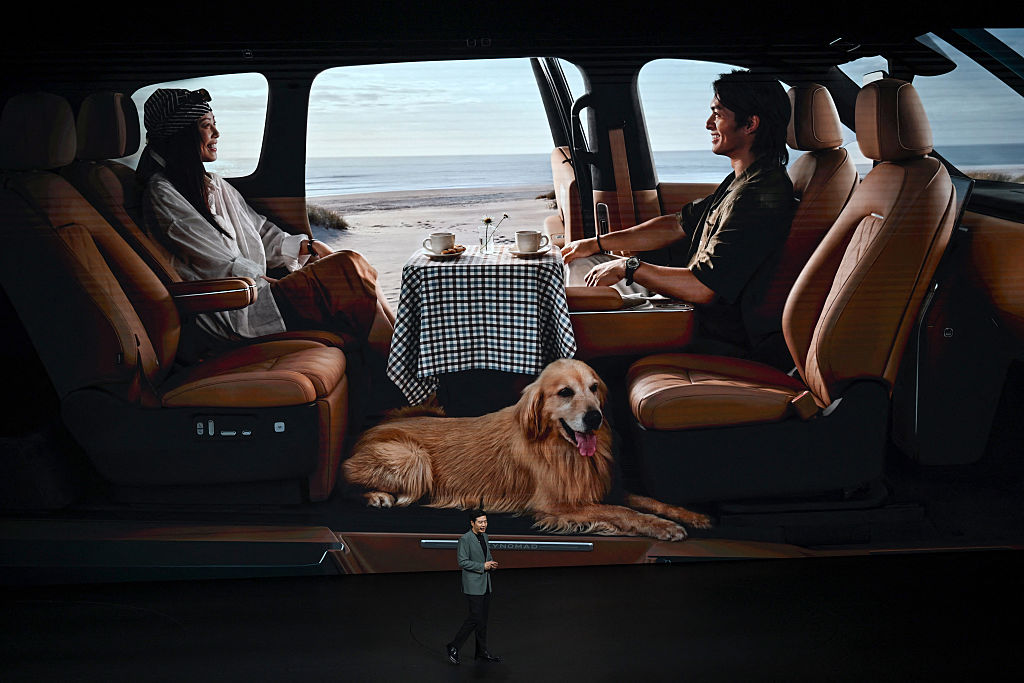 Lei Jun, chairman and CEO of Chinese electronics company Xiaomi, introduces the Xiaomi SkyNomad extended-range electric vehicle in Beijing on July 30, 2026. (Pedro Pardo/AFP via Getty Images)
“Europe spent years pushing the auto industry toward electrification, and now that the transition is finally accelerating, the companies best positioned to benefit from it are not necessarily European,” Barraud wrote in a post on X. “Quite a paradox, ain’t it?”
Intensifying Global Competition
Last year, EU officials warned that Europe’s automotive industry faced mounting challenges, including high production costs, supply chain vulnerabilities, and the risk of falling behind global rivals in battery technology.
The European Commission said overseas competitors were benefiting from government support and industrial policies, raising concerns about European automakers’ competitiveness.
The industry’s biggest automakers have echoed those concerns.
In July, Renault Group said the sector faced a significant competitiveness gap with China, citing faster development cycles, lower production costs, lower labor costs, and China’s extensive vertical integration in battery manufacturing.
BMW struck a similar tone in its 2025 annual report, saying that increasing competition—particularly in China—was making long-term planning more difficult. Volkswagen has also warned about growing competition from Chinese manufacturers, both in China and through increasing exports to Europe.
 Friends Read Free
Copy
Facebook
Tweet
Friends Read Free
Copy
Facebook
Tweet