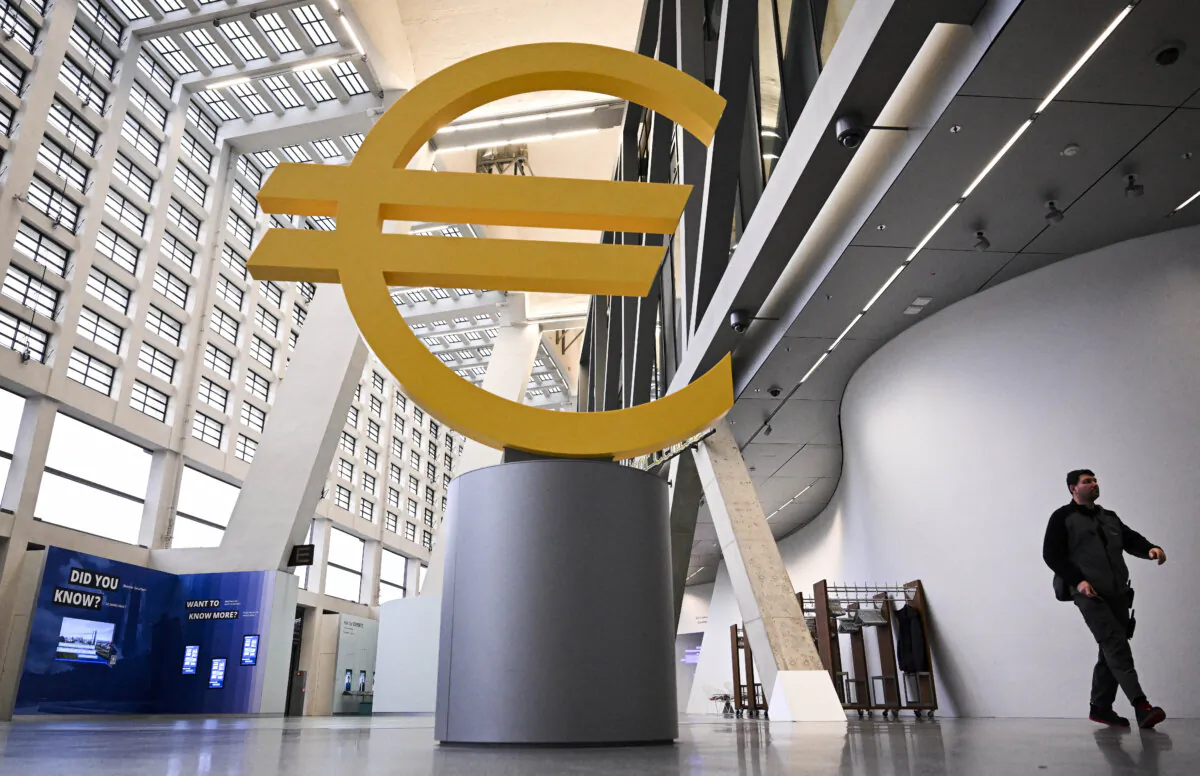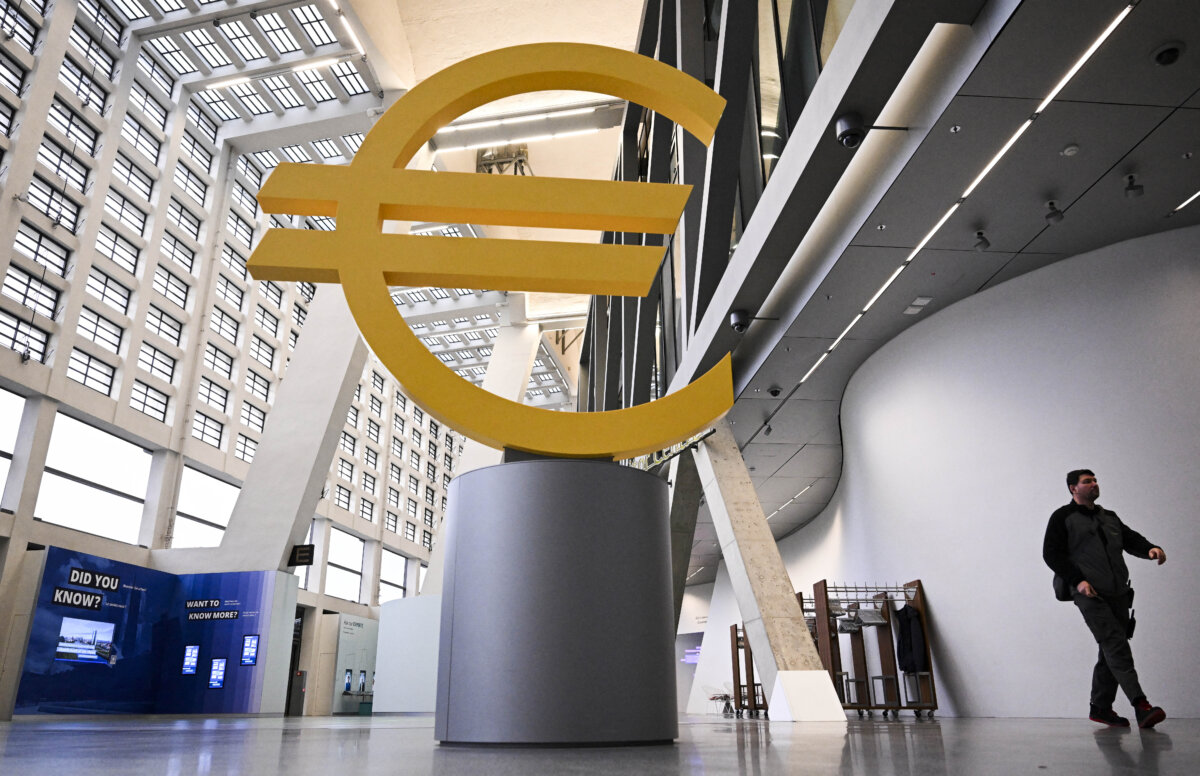

Eurozone inflation fell to the European Central Bank’s 2 percent target in December 2025, offering fresh evidence that price pressures are cooling across the bloc after years of volatility.
Annual inflation in the 20-country euro area slowed to 2 percent in December from 2.1 percent in November, according to a flash estimate published on Jan. 7 by Eurostat, the European Union’s statistics agency.
The reading brings headline inflation squarely in line with the medium-term goal of the European Central Bank (ECB) after several years of price swings driven by energy shocks, supply chain disruptions, and upward wage pressures.
Despite the drop in headline inflation, underlying price pressures remain uneven across sectors. Services continued to post the highest annual inflation rate among major components, highlighting persistent cost pressures linked to wages and domestic demand.
The inflation deceleration was led primarily by energy prices, which fell by 1.9 percent year-on-year in December 2025 after a smaller 0.5 percent decline in November. Non-energy industrial goods inflation also eased to 0.4 percent from 0.5 percent, and services inflation—a key focus for the ECB—slowed modestly, to 3.4 percent from 3.5 percent on an annual basis.
Food, alcohol, and tobacco prices rose by 2.6 percent on an annual basis, up slightly from 2.4 percent in November, reflecting renewed pressure in some food categories even as overall inflation cooled.
ECB in Wait-and-See Mode
Some economists say inflation is likely to remain contained in the near term, putting the ECB in a wait-and-see position on further interest rate moves.
“The ECB has referred to the current situation as ‘the good place’ ad nauseam and is unlikely to change that mantra as current data continues to point to a benign inflation environment,” Bert Colijn, an economist at ING, said in a note.
“For the months ahead, drivers of inflation do point predominantly to a softening. Think of the strong euro, low energy prices and the deceleration in wage growth, for example.”
At the same time, Colijn cautioned that other factors—such as business pricing behavior—bear close observation. He noted that pricing expectations among euro area businesses have ticked up in recent months, particularly in services, suggesting that core inflation may prove more durably elevated even as the headline rate eases.
“We don’t expect a significant drop below 2 [percent] in our base case, although such a scenario is not unimaginable,” he said. “Over the course of 2026, however, expect more upward pressure on inflation to return as fiscal spending is set to give a modest boost to economic growth.”
The ECB projects that inflation will run slightly below its target in 2026 and 2027 before returning to 2 percent in 2028.
“With expectations like that, expect policy rates to remain stable for the time being,” Colijn wrote, adding that the ECB is in a “luxury position” of being able to wait for more incoming data on inflation and the economy before taking further decisions on interest rates.
The latest data reinforce the ECB’s decision in December 2025 to keep interest rates unchanged. In mid-December, the central bank said it would hold the deposit rate at 2 percent, the main refinancing rate at 2.15 percent, and the marginal lending facility at 2.4 percent, while stressing that future policy decisions would depend on incoming economic and financial data.
“The Governing Council’s interest rate decisions will be based on its assessment of the inflation outlook and the risks surrounding it, in light of the incoming economic and financial data, as well as the dynamics of underlying inflation and the strength of monetary policy transmission,” the ECB said in a Dec. 18 statement. “The Governing Council is not pre-committing to a particular rate path.”
 Friends Read Free
Copy
Facebook
Tweet
Friends Read Free
Copy
Facebook
Tweet