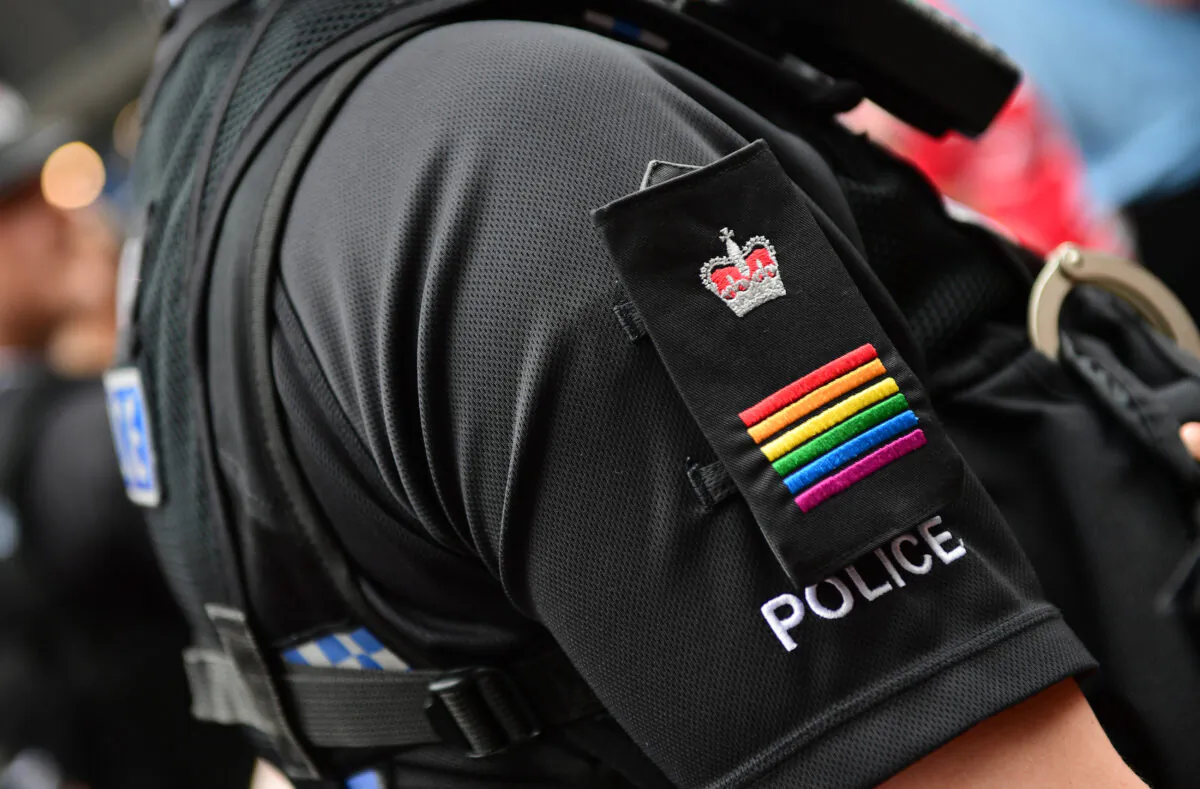
The recent arrest of well-known comedian Graham Linehan over his posts about transgender issues has brought renewed focus on how hate crime is policed in the UK.
The country enforces a patchwork of laws that restrict speech considered to be offensive or threatening, particularly when directed at protected groups.
Here’s what to know.
What Laws?
In the UK, several different laws are used to control what people can say online.
Section 127 of the Communications Act 2003 makes it an offense to send a message via a public communications network that is “grossly offensive, indecent, obscene, or menacing,” and the Public Order Act 1986 criminalizes speech or behavior that is threatening, abusive, or intended to “stir up hatred” against protected groups.
The Malicious Communications Act 1988 outlaws sending letters or messages with the intent to “cause distress or anxiety.”
What Counts as a ‘Hate Crime’?
In England, an offense called a “hate crime” is not explicitly mentioned in the law.
Instead, crimes are prosecuted under the above laws when they involve hostility toward “protected characteristics.”
The Equality Act 2010, introduced under the Labour government, was designed to protect people from discrimination.
It lays out nine protected characteristics: age, disability, gender reassignment, marriage or civil partnership (in employment only), pregnancy and maternity, race, religion or belief, sex, and sexual orientation.
High-Profile Cases
Several high-profile cases show how these laws have been applied to online speech.
Paul Chambers was prosecuted in the so-called “Twitter Joke Trial” after posting a joke about blowing up an airport in 2010. His conviction was overturned in 2012, when judges ruled that the message was not menacing.
In 2018, Scottish comedian Mark Meechan, known as “Count Dankula,” was convicted of a charge under the Communications Act for posting a joke video of his girlfriend’s pug performing a Nazi salute. His appeal was blocked by Scotland’s most senior judges in 2019.
Most recently, Graham Linehan, co-creator of TV series “Father Ted,” was arrested at Heathrow on Sept. 2 under the Public Order Act on suspicion of inciting violence in posts on X. His case is still ongoing.
How Are Cases Reported and Investigated?
Police encourage the public to report hate crimes either directly to the police, including anonymously, or through online channels such as Report-It.
Police guidance states that it “will record any crime as a hate crime where the victim or any other person perceives it was motivated by hostility or prejudice towards their identity.”
According to official figures from the Crown Prosecution Service, there were 15,144 referrals from police in the year 2024–2025, resulting in 13,013 convictions, an overall conviction rate of 86 percent.
In April, The Times of London obtained custody data that show UK police are making more than 30 arrests per day for “offensive” online communications.
It found that officers are making about 12,000 arrests per year under Section 127 of the Communications Act 2003 and Section 1 of the Malicious Communications Act 1988.
Non-Crime Hate Incidents
Police also log controversial non-crime hate incidents (NCHIs), where behavior is perceived as hostile but does not meet the threshold for a criminal offense.
NCHI is defined as a “non-crime incident which is perceived by the victim or any other person to be motivated by hostility or prejudice.”
An NCHI can show up if prospective employers carry out enhanced disclosure and barring checks, the UK’s system of criminal record checks.
Free Speech
Free speech groups have fought against what they say is the police’s hyper-focus on collating hate crimes.
The Free Speech Union, which was set up by the British journalist Toby Young, now a peer in the House of Lords, regularly helps members who are being prosecuted for section 127 or section 1 offenses.
This includes David Wootton, 40, who is appealing against a conviction for dressing up as the Manchester Arena bomber, Salman Abedi, for a Halloween party last year and posting images of himself on social media.
Harry Miller, a former policeman, co-founded Fair Cop, a group created in response to what it describes as “Big Brother” overreach by police and public authorities in England.
He brought a judicial review against the professional body for the police in England and Wales, the College of Policing, and Humberside Police after an officer visited him at work to “check his thinking” over reposting a gender-critical limerick on Twitter.
In 2021, a top court ruled that the College of Policing’s guidance on recording NCHIs violated Miller’s freedom of expression as set out in Article 10 of the European Convention of Human Rights.
Scotland
Scotland goes further than England in terms of hate laws.
Its Hate Crime and Public Order Act could empower the state to prosecute individuals for what is communicated in private as well as in public.
It defines a hate crime as behavior that is both criminal and based on prejudice. Its “stirring up hatred” offenses apply to age, disability, religion, sexual orientation, transgender identity, and variations in sex characteristics.
Free speech campaigners have described the law as the most “illiberal and censorious bill in any liberal democracy in the world.”
The Scottish government says the law simply modernizes hate crime legislation.
To police the law, Police Scotland set up designated walk-in “Third Party Reporting Centres” which include sex shops and salmon farms, for the public to report hate crimes.
 Friends Read Free
Copy
Facebook
Tweet
Friends Read Free
Copy
Facebook
Tweet