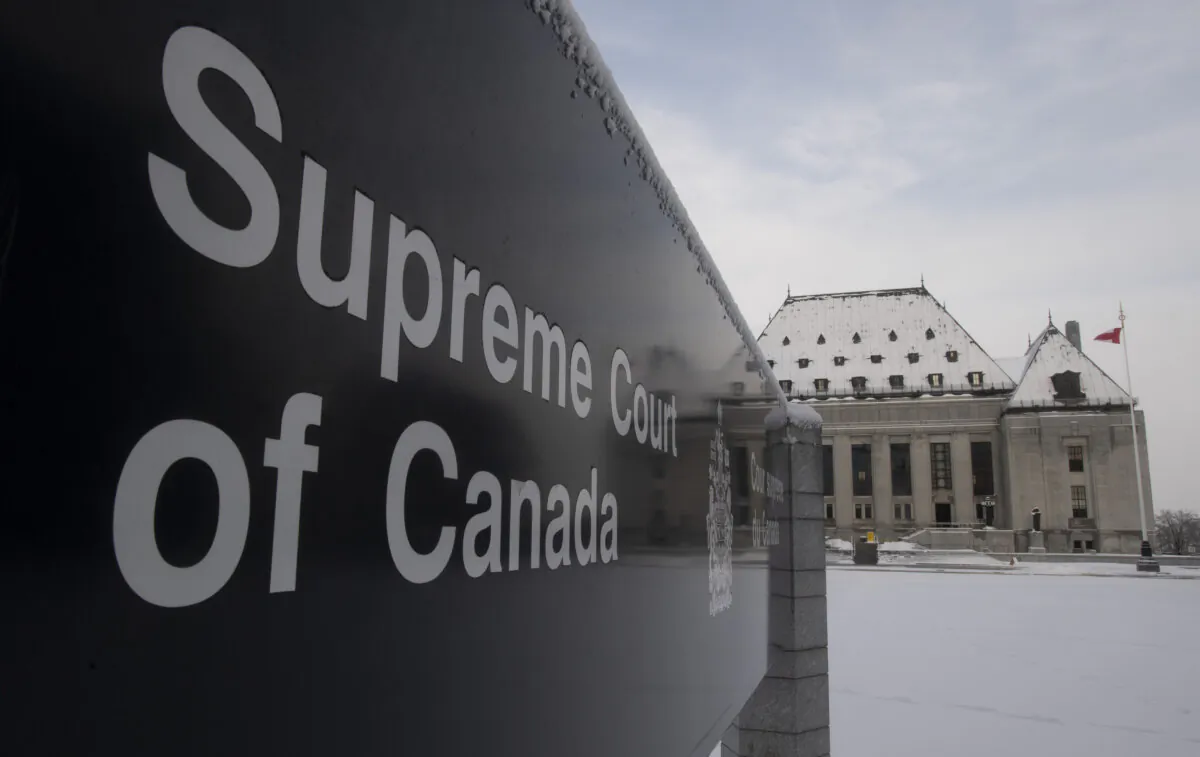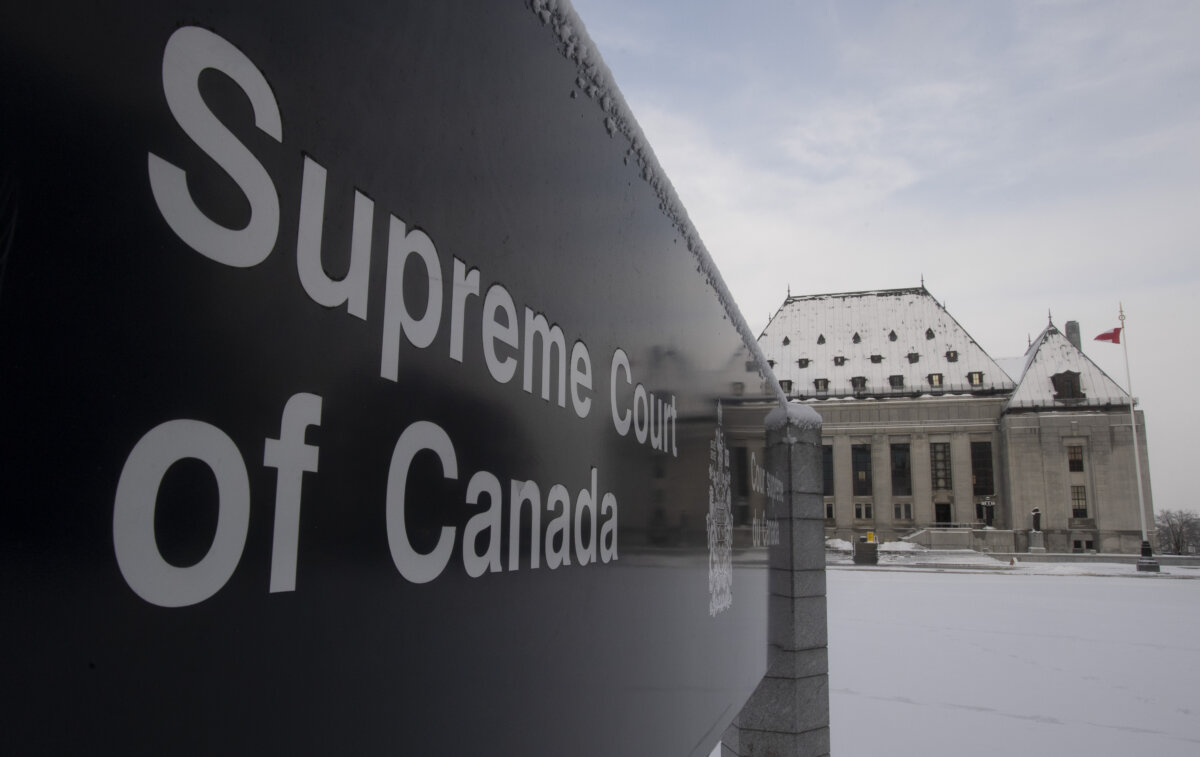

Ottawa has rejected a recommendation by an independent commission to boost judges’ salaries by at least $28,000, saying it can’t justify the increase in the current economic climate.
The federal government said it “respectfully disagrees” with all of the one-time salary increases the Judicial Compensation and Benefits Commission suggested in its report to the minister of justice this summer.
The commission recommended an increase in judges’ salaries by $28,000 for regular provincial, superior, appellate courts, and federal courts, with $30,000 for chief justices, and $36,000 for the chief justice of the Supreme Court, effective retroactively from April 2024.
The commission, which is responsible for evaluating judicial compensation, said better salaries were needed to attract high-calibre candidates to the bench at a time when vacancies were hard to fill.
The government’s response, published on Nov. 3, indicated that the recommended raises for the 1,200 federally appointed judges will not be implemented any time in the near future, but also noted that its decision is “not intended as criticism of the Commissioners and their process.”
“Rather, it reflects a significant deterioration in the Canadian financial outlook, and a carefully considered difference of perspective on the evidence presented to the Commission and how it should be weighed,” the online statement said.
Recommendations vs. Response
The report from the Judicial Compensation and Benefits Commission was sent to Justice Minister Sean Fraser and tabled in the House of Commons in July.
Commission chair Anne Giardini and fellow panel members Graham Flack and Douglas Hodson suggested the base salary of most federal judges should increase from $396,700 to $424,700, while the salaries of most chief justices should rise from $435,000 to $465,700.
The salary of the Supreme Court chief justice should increase $36,000 from $510,000 to $546,000, while the eight other justices should receive a $33,000 increase, bringing their annual salary to $505,700, the report said.
If implemented, the suggested raises would amount to at least $34 million per year more than what Ottawa already pays the judiciary.
The federal government said in its response this week that it would be inappropriate to provide judges with a salary increase while Canadians are experiencing growing economic uncertainty and the government is poised to reduce public expenditure and the scale of the bureaucracy.
Prime Minister Mark Carney asked all federal ministries and departments earlier this year to implement operating cost cuts to help meet defence spending increases and fund tax cuts. Only the Department of National Defence, RCMP, the Canada Border Services Agency, Supreme Court, and Parliamentary Budget Office have been excluded from the cuts.
The government response described current judicial salaries as “adequate,” noting that they “cannot be the source of new fiscal expenditure at a time of comprehensive expenditure review, including possible public sector job losses.”
Judges’ salaries are already adjusted annually according to the Industrial Aggregate Index (IAI), with a maximum increase of 14 percent over a three-year period, Ottawa said, noting that maintaining this increase is the only raise it will accept.
“In most years, IAI indexing provides for what can fairly be characterized as a raise,” the government said.
Judge Shortage?
Ottawa also disagreed with the commission that the current salary was insufficient to attract qualified applicants to fill vacancies.
It characterized some of the commission’s conclusions as inconsistent and said they were based on anecdotal evidence rather than data to substantiate the claim that attracting exceptional candidates was becoming increasingly challenging.
The commission’s report said the insufficient number of qualified private-sector attorneys applying for judicial positions could mean a lack of expertise on the bench and difficulties in filling vacancies over the long term.
Its report referenced a 2023 letter from Chief Justice of Canada Richard Wagner that asked then-Prime Minister Justin Trudeau to address the need for filling vacancies in both the Superior Courts and Federal Courts, at a time when the vacancy rate stood at 9 percent.
Wagner described the vacancies as “untenable” and said they were having a negative effect on the “administration of justice, the operations of our courts and the health of our judges.”
The three-panel commission also referenced a statement from Ontario Superior Court Chief Justice Geoffrey Morawetz detailing the difficulty he has had in recruiting judiciary candidates from private practice.
“An increasing number of qualified private practitioners no longer view a judicial appointment, considering its attendant responsibilities and benefits, as attractive in light of the resulting significant reduction in income,” Morawetz wrote in an affidavit to the commission.
The commission said repercussions of previous shortages are still reverberating within the justice system.
“While a shortage has been averted for now, the pressures of rising private sector incomes are such that the ability to maintain an adequate level of private sector appointments to fill judicial vacancies is of ongoing concern,” the report said. “An increase to the judicial salary is required to ensure outstanding candidates continue to be attracted to the judiciary.”
The government described the accounts referenced in the report as “potentially problematic” because they were “subjective accounts from directly affected individuals” and did not bear the hallmarks of “independence and objectivity.”
The federal judiciary has been asking Ottawa for a raise for some time. Federally appointed judges earlier this year asked for an increase of $60,000 retroactively effective from April 2024.
The Canadian Judicial Council and the Canadian Superior Courts Judges Association did not provide an immediate response to requests for comment.
 Friends Read Free
Copy
Facebook
Tweet
Friends Read Free
Copy
Facebook
Tweet