
The federal government is set to increase minimum wage to $18.15 per hour next week.
The federal minimum wage will jump up 40 cents from $17.75 starting April 1, Employment and Social Development Canada (ESDC) said in a March 24 news release.
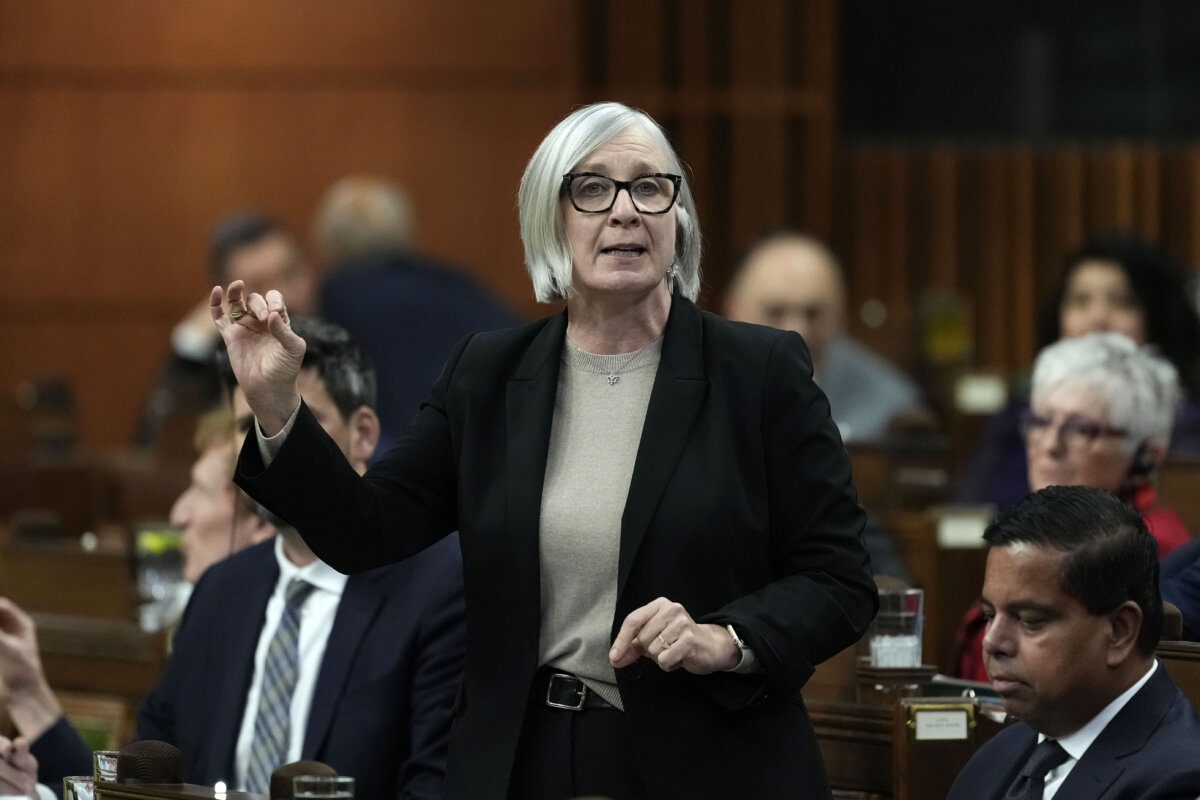
“Ensuring the federal minimum wage rises with inflation is a floor that protects workers, especially those in the lowest paid jobs in federally regulated sectors,” Jobs Minister Patty Hajdu said in a statement.
The federal minimum wage is adjusted annually on April 1, based on Canada’s annual average Consumer Price Index of the previous calendar year, as reported by Statistics Canada. The Consumer Price Index increased by 2.1 percent in 2025, ESDC said.
The wage increase represents a total cumulative increase of 21 percent since the federal minimum wage was first introduced in December 2021 by then-Prime Minister Justin Trudeau at $15 per hour. His government said the measure was “an important step forward in reducing poverty and inequality in Canada.”
It has been increased on April 1 every year since then, increasing to $15.55 in 2022, to $16.65 per hour in 2023, and to $17.30 in 2024, before reaching $17.75 in 2025.
Employers in federally regulated private sectors are required to pay their employees at least the federal minimum wage, and adjust their payrolls each year accordingly. If the provincial or territorial minimum wage exceeds the federal rate, employees in federally regulated sectors must be paid the higher of the two.
Federally regulated private sectors in Canada include airlines, banks, feed and seed mills, First Nations band councils, most federal Crown corporations, port services, postal and courier services, radio and television broadcasting, railway and road transportation services that cross provincial or international borders, telecommunications, and uranium mining and processing.
The ESDC said the wage increase “complements other new measures aimed at bringing down the cost of groceries and other essentials,” such as the Canada Groceries and Essentials Benefit and the Food Security Fund, which Prime Minister Mark Carney announced in late January.
Bill C-19, the Canada Groceries and Essentials Benefit Act, amends the Income Tax Act to increase the maximum annual GST credit amounts by 50 percent for the 2025–2026 year, and by 25 percent for the five following years.
The legislation received royal assent and became law on Feb. 12, following an expedited passage through the House of Commons. The Conservative Party backed the passage of the bill and introduced a motion in the House of Commons on Feb. 2 to speed up the bill’s deliberations. The motion was unanimously approved by MPs.
The 2026 Canada’s Food Price Report, released last December, projected the average family of four in Canada would pay an additional $994.63 for food this year compared to last year. It predicted overall grocery prices would increase by 4 to 6 percent.
Provincial Minimum Wages
The minimum wage in Ontario, Nova Scotia, Prince Edward Island, Manitoba, and Saskatchewan increased last Oct. 1.
The Ontario government increased its general minimum wage from $17.20 to $17.60 an hour, while Prince Edward Island and Nova Scotia increased theirs from $16 to $16.50.
Manitoba increased its minimum wage from $15.80 to $16, and Saskatchewan increased its minimum wage from $15 an hour to $15.35.
Several provinces and territories are also expected to increase their minimum wages this April, including New Brunswick, Newfoundland and Labrador, Nova Scotia, Prince Edward Island, and Yukon.
Quebec is set to increase its minimum wage in May, and British Columbia is expected to increase its rate in June.
Alberta has not increased its minimum wage from $15 since 2018. At the time, it was the highest minimum wage in Canada, but now ranks as the lowest rate in the country.
Matthew Horwood contributed to this report.
 Friends Read Free
Copy
Facebook
Tweet
Friends Read Free
Copy
Facebook
Tweet