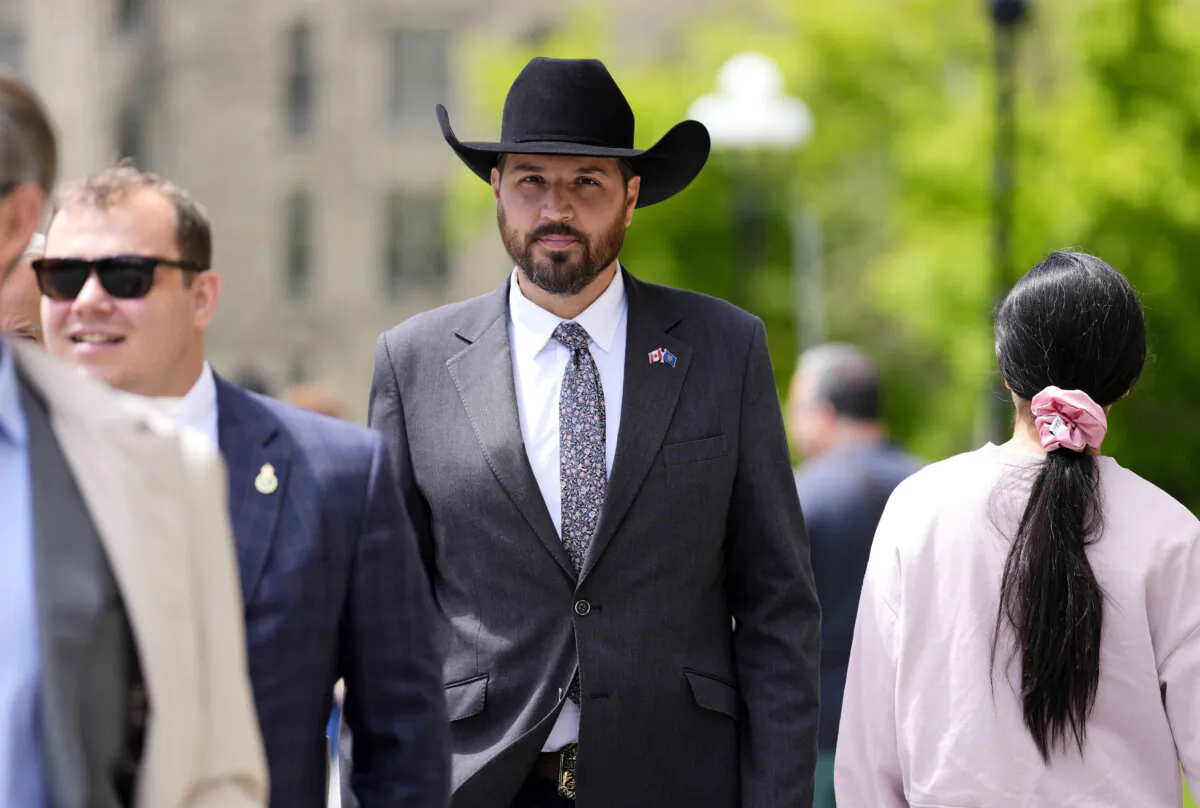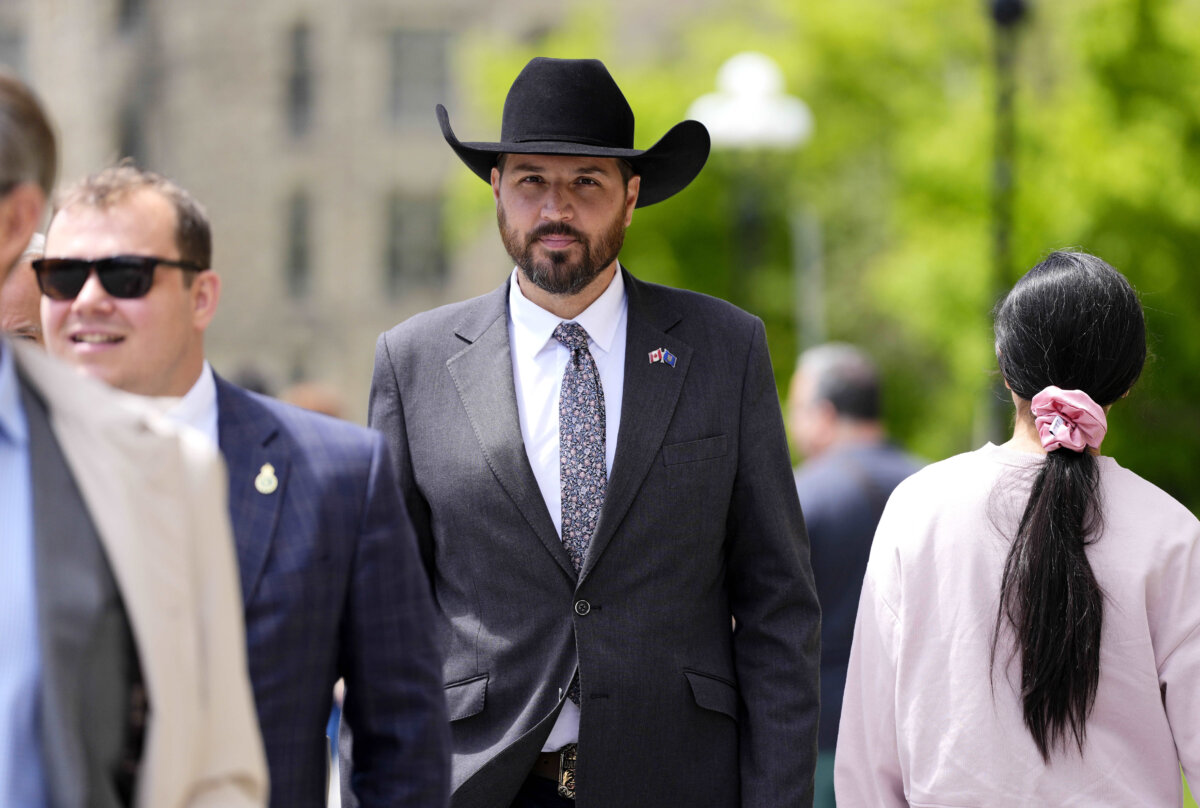

Former Conservative MP Damien Kurek will run in his former riding of Battle River-Crowfoot in the next federal election, and Tory Leader Pierre Poilievre will run in a different riding, the party says.
“Both Damien Kurek and Pierre Poilievre have publicly confirmed that Mr. Kurek will seek the CPC nomination for Battle River—Crowfoot in the next general election,” Conservative Party spokesperson Sarah Fischer confirmed in an email to The Epoch Times.
Poilievre has not said which riding he will run in during the next election.
As first reported by The Hill Times, the Conservative Party’s national council recently passed a motion confirming that Kurek, who gave up his Alberta seat in June 2025 so that Poilievre could run in a byelection in that riding, will return as the party’s candidate in the riding.
Following the April 28, 2025, federal election, Poilievre lost his Ottawa-area Carleton seat, which he had held for nearly two decades, to Liberal candidate Bruce Fanjoy. Poilievre received over 39,000 votes, while Fanjoy received almost 44,000 votes.
Following that election, Poilievre suggested that the loss of his seat was due to his stated plans to reduce the size of the federal government, which could have proven unpopular with the many government workers residing in the riding.
Poilievre went on to regain a seat in the House of Commons following an August 2025 byelection in the Battle River-Crowfoot riding, winning by over 36,000 votes, or 80.4 percent of the vote, after Kurek stepped down. Kurek became MP for the riding in 2019 and won 82.8 percent of the vote in the April 2025 election.
According to the latest Jan. 18 polling from Abacus Data, 72 percent of Conservative voters said they would keep Poilievre as party leader, while 18 percent would vote to remove him.
The poll indicated that Canadians’ overall voting intentions remain tied between the Liberals and the Conservatives, who each have 40 percent support, followed by the NDP at 8 percent and Bloc Québécois at 7 percent.
Support for Poilievre among party members is lower compared to November 2023, when an Ipsos poll indicated that 91 percent wanted him to lead the party into the next election amid collapsing nationwide support for then-Prime Minister Justin Trudeau.
The Conservative Party will hold its next national convention in Calgary from Jan. 29 to 31, where party members will vote on whether Poilievre should stay on as leader.
The Liberal Party is currently two seats shy of a 172-seat majority government. Two Conservative MPs crossed the floor in recent months to join their ranks, which boosted the party’s seat count from 169 to 171. The liberal seat count subsequently dropped to 170 when Liberal MP Chrystia Freeland resigned as an MP on Jan. 9, a few days after being appointed as an economic development adviser to Ukrainian President Volodymyr Zelenskyy on Jan. 5. Freeland also resigned as Carney’s special representative for the reconstruction of Ukraine after her appointment by Zelenskyy.
 Friends Read Free
Copy
Facebook
Tweet
Friends Read Free
Copy
Facebook
Tweet