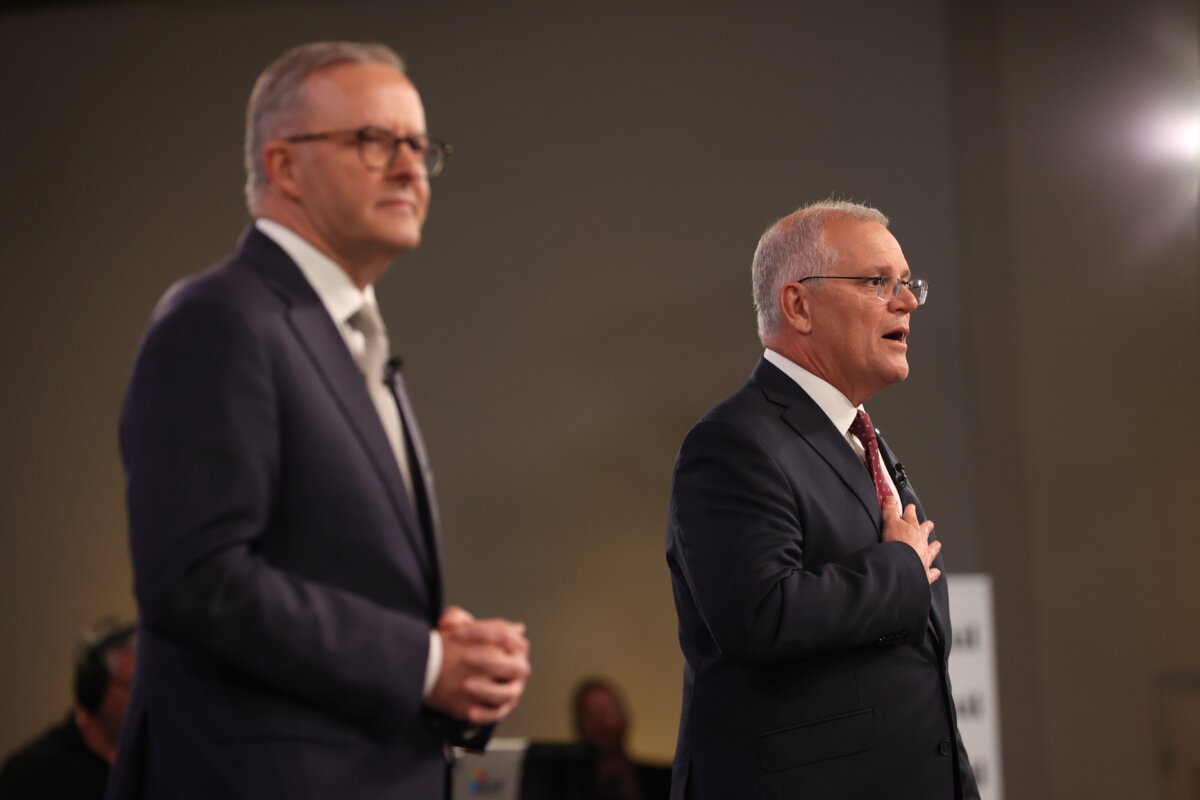

The issue of anti-Semitism has become a source of contention between Australian Prime Minister Anthony Albanese and his predecessor Scott Morrison as the government rushed its new hate speech legislation through parliament earlier this week.
The debate started with Albanese pointing the finger at the former Morrison government during a heated parliament Question Time on Jan. 20.
“Let me be very clear-all governments should have done better,” he said.
“That is my point. The idea that anti-Semitism began two years ago with the change of government is false, and it’s declared to be false by the comments of those opposite in senior positions.
“Despite the surge in anti-Semitism on their watch, did the Morrison government appoint a special envoy to combat anti-Semitism? No. Did they establish a joint operation, bringing together the AFP and ASIO to combat acts of antisemitism? No.
“Did they introduce Australia’s first ever hate speech laws? No. Did they legislate a crackdown on preachers and leaders that promoted violence? No.”
Albanese also remarked on his government’s landmark ban on the Nazi salute and hate symbols, its criminalising of doxxing, the launch of a nation hate crime database, sanctions on the Terrorgram network, initiatives with the eSafety Commissioner, a royal commission into anti-Semitism, as well expelling the Iranian ambassador following information the regime had funded anti-Semitic attacks in Australia.
Morrison Says Labor Ended Liberal Government Initiatives
Just hours later, Morrison responded with his own laundry list of moves to combat anti-Semitism while labelling the prime minister’s remarks as “delusional and cheap.”
“Earlier today the prime minister sought to deflect from his own leadership failings on anti-Semitism by seeking to shift blame to my government from 2018-2022,” he wrote on social media.
Morrison said Australia’s relationship with Israel had been at a “high water mark” during his term, having productive relationships with Israeli prime ministers.
Morrison also pointed out that his government introduced the IHRC definition of anti-Semitism, registered Islamist groups as terror organisations, backed Israel at the United Nations, and recognised Jerusalem as its capital.
“We equipped our Home Affairs Department to combat terrorism in vulnerable communities, we funded new and expanded Holocaust museums and increased security funding for Jewish community facilities,” he said.
However, Morrison said a lot of things had changed after the Labor government came into power.
“Following Mr. Albanese’s election in May 2022, his government ended 75 years of bipartisan policy regarding Israel and the issue of Palestinian statehood, reversed policies including our programs in Home Affairs to deal with security threats in vulnerable communities, and kicked key security agency heads off the National Security Committee,” he said.
“His empty and ambivalent response to the Oct. 7 terrorist attacks on Israel abrogated his responsibility for national leadership and created a dangerous vacuum that was filled by the worst streams of anti-Semitism this country has ever seen, producing a five-fold increase in anti-Semitic incidents, culminating in the extremist Islamist attack at Bondi on Dec. 14.”
Morrison said the Albanese government’s response to the Dec. 14 attack was a source of devastation for Australian Jews and embarrassment for all others.
“Hamas never praised the actions of my government, but they did praise Mr. Albanese’s government,” he said.
Australian Jewish Association’s Response
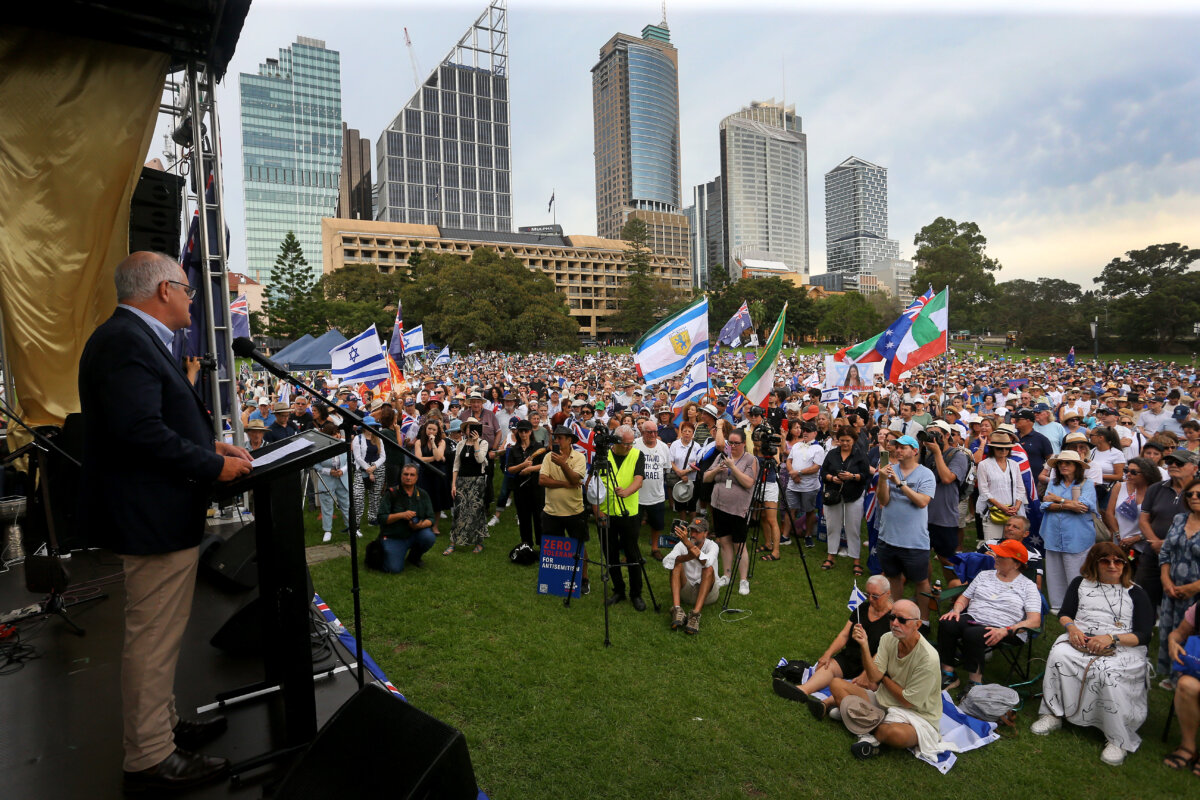
Morrison’s comments were echoed by Australian Jewish Association CEO Robert Gregory, who said nothing comparable occurred under the government of Morrison or any other prime minister.
“The Bondi Beach massacre, the fire-bombing of Melbourne’s Adass synagogue, and the targeting of Jewish buildings in Sydney happened under Labor’s watch,” he told The Epoch Times.
“These anti-Semitic attacks didn’t occur in isolation. The Albanese government contributed to an environment of hostility with reckless moves such as revoking the visas of Israeli and Jewish visitors and upending Australia’s foreign policy with moves like the recognition of a state of Palestine.”
Surge in Anti-Semitic Incidents
Meanwhile, a report (pdf) released by the Executive Council of Australian Jewry (ECAJ) in Dec. 2025 revealed that reported incidents of anti-Semitism in Australian have experienced “unprecedentedly high levels” for a second consecutive year.
“The overall total remains at about three times the total of any year prior to the worldwide wave of anti-Semitic incidents that followed the Hamas-led terrorist attacks in Israel on Oct. 7, 2023,” it said.
ECAJ noted a lower total for anti-Semitic incidents in 2025 than in 2024 when attacks on Jews hit a record number, but said serious attacks like arson and vandalism had increased.
“In the 10 years prior to Oct. 2023 (October 2014 to September 2023) the average annual number of anti-Jewish incidents was 342,” the report stated.
“In the two years since Oct. 7, 2023, and the subsequent surge in anti-Semitism, there has been an average of 1,858 incidents per year.”
 Friends Read Free
Copy
Facebook
Tweet
Friends Read Free
Copy
Facebook
Tweet