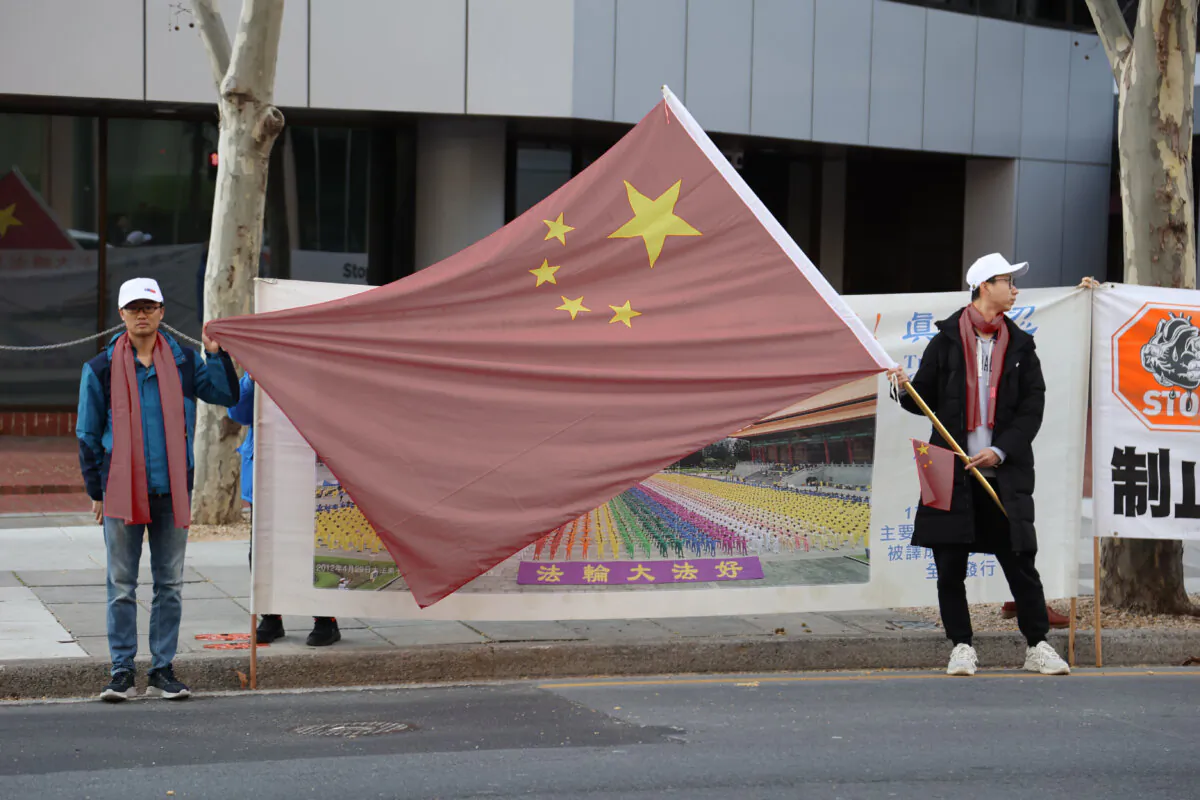

A former spy says the Chinese Communist Party (CCP) has ambitions to gain “full control” over overseas Chinese communities amid global warnings of an uptick in transnational repression.
His comments follow the arrest of a Chinese woman by the Australian Federal Police (AFP) last week accused of spying on a Canberra-based Buddhist group at the behest of the CCP.
“This case shows that even smaller marginal groups are not exempt from the CCP’s surveillance,” said Eric (surname withheld), a former spy for the CCP’s Ministry of Public Security who defected to Australia in 2023.
“China not only suppresses specific groups and individuals, such as Falun Gong practitioners and dissidents; in reality, the scope of its surveillance and repression is broad, targeting the entire Chinese community,” he said in an interview with The Epoch Times conducted in Chinese.
“Eliminating dissent, exerting full control over the Chinese diaspora, and further influencing local politics have long been its objectives.”
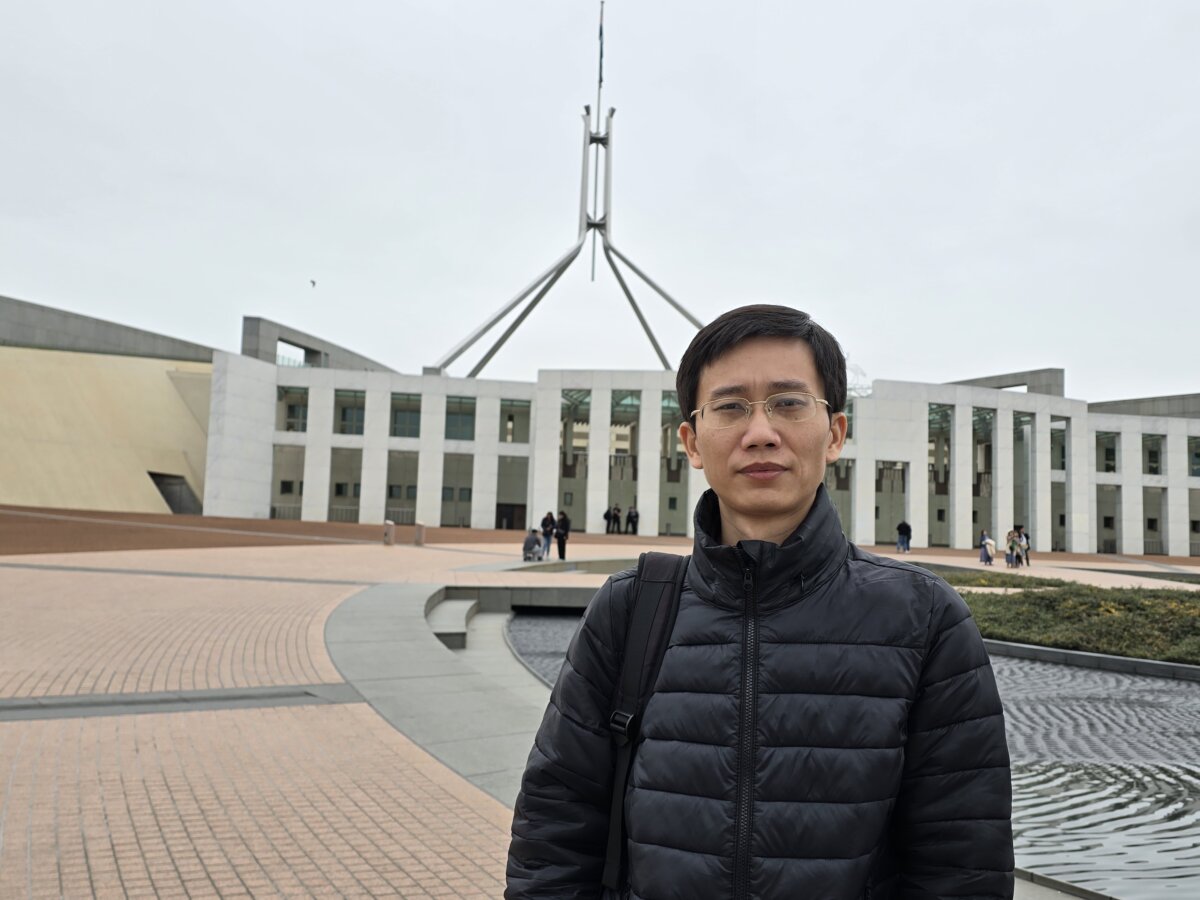
“Even the CCP’s own so-called ‘democratic parties,’ which are merely political window dressing, are subject to tight surveillance all the same.”
Eric spent 15 years acting on orders from China’s secret police to target overseas dissidents.
On Aug. 2, the AFP revealed the Australian permanent resident, alleging she was directed by the CCP’s Public Security Bureau to covertly gather information on the Canberra branch of Guan Yin Citta, a Buddhist association.
The woman, whose name was suppressed, appeared in the ACT Magistrates Court on Aug. 4 and has been charged with one count of reckless foreign interference—an offence that carries a maximum penalty of 15 years in prison.
This marks the first time a foreign interference charge has been laid in relation to an Australian community group, and only the third time such a charge has been used since related federal laws were introduced in 2018.
A Victorian man, Duong Di Sanh, was charged in November 2020, and a New South Wales man, Alexander Csergo, was arrested in April 2023, both cases involving foreign interference charges connected to the CCP.
Global Pushback Against Transnational Repression
The AFP’s arrest came shortly after FBI director Kash Patel’s visit to Australia and New Zealand, and the opening of a new FBI office in Wellington to ramp up counter-CCP efforts.
The action also follows global condemnation of “transnational repression (TNR)” by the G7 nations, namely Canada, France, Germany, Italy, Japan, the United Kingdom, and the United States.
“TNR is an aggressive form of foreign interference whereby states or their proxies attempt to intimidate, harass, harm or coerce individuals or communities outside their borders.” read a joint statement in June.
“TNR undermines national security, state sovereignty, the safety and human rights of victims, and principles of international law. It has a chilling effect in our countries. TNR often impacts dissidents, journalists, human rights defenders, religious minorities, and those identified as part of diaspora communities.”
That statement comes after revelations of a 2022 leadership meeting involving CCP leader Xi Jinping, who ordered the massive party mechanism to reboot its overseas efforts to take down the spiritual practice Falun Gong.
Xi’s orders also targeted entities started by Falun Gong practitioners, like Shen Yun and The Epoch Times, which have been integral in shining a global spotlight on the CCP’s persecution against the practice in China.
What has ensured has been a sprawling series of seemingly isolated incidents including bomb threats, lawfare, paid protests, and disinformation across the Western world.
Chen Yonglin, former CCP diplomat who defected in 2005, had previously warned that over 1,000 spies were operating in Australia.
“As for those operating through the United Front Work Department, that’s a different story. That number reaches thousands, or even tens of thousands,” Chen claimed, in an interview with The Epoch Times.
“Many of them are undercover in Australia. Some only come when an operation is happening, and then leave once it’s over. Those who are long-term undercover [here] are often very cautious and meticulous in their actions.”
In response to the arrest, the CCP leadership claims it is not familiar with the incident.
“China never interferes in other countries’ internal affairs, and, meanwhile, firmly opposes any disruption to the normal people-to-people interactions, exchanges, and co-operation between China and relevant countries under the pretext of foreign interference,” said Guo Jiakun, a spokesperson for the CCP Foreign Ministry, in the party-controlled media Global Times.
“China will follow this case closely and protect the lawful rights and interests of Chinese nationals.”
What is Guan Yin Citta?
Guan Yin Citta, a Buddhist group regarded by many as a new religious movement, was founded by the late Lu Junhong, who was born in Shanghai and studied opera before moving to Australia in 1989 to pursue a business degree. Lu used to host Chinese radio shows discussing Buddhist teachings in Sydney. He became an Australian citizen in 1995 and passed away in 2021.
In mainland China, the group is labeled as an “evil cult” (xie jiao), a term the CCP has long employed to justify its suppression of religious groups it sees as threatening.
While Guan Yin Citta is not officially listed as a banned “xie jiao,” it faces persecution from the authorities, with followers being arrested and interrogated.
A 2019 confidential document, published by “Bitter Winter,” disclosed a CCP plan to “investigate, purge, and research” Guan Yin Citta activities in China. Despite Lu’s death in 2021, the crackdown persisted.
The Epoch Times contacted Guan Yin Citta’s Sydney branch for comment but did not receive a response by press time.
Naziya Alvi Rahman and Alfred Bui contributed to this report.
 Friends Read Free
Copy
Facebook
Tweet
Friends Read Free
Copy
Facebook
Tweet