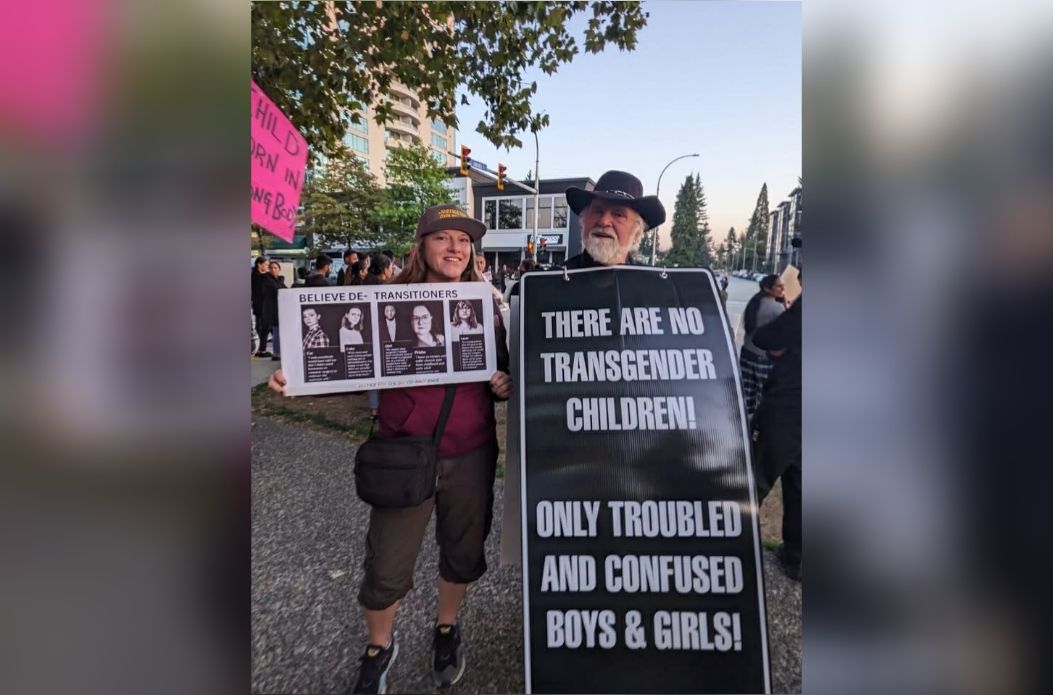

Former B.C. school board trustee Barry Neufeld is headed to the B.C. Supreme Court to challenge a $750,000 penalty imposed by a human rights tribunal for speaking out against gender identity curriculum, a process his lawyer expects to take several years.
Neufeld told The Epoch Times in a statement that he is seeking a judicial review of last week’s “unjust decision” by the B.C. Human Rights Tribunal, which ordered the former Chilliwack school trustee to pay the fine to members of the Chilliwack Teachers Association who identify as LGBT.
The outcome of the high-profile case has been criticized by some, including Conservative Leader Pierre Poilievre, who called it “insane and Orwellian,” and British comedian and “Monty Python” star John Cleese, who said he is removing B.C. from his Canadian tour schedule this year after reading the tribunal’s decision.
Meanwhile, the B.C. human rights commissioner and the BC Teachers’ Federation have praised the tribunal’s ruling, calling it a “huge win” for LGBT rights.
Neufeld’s lawyer James Kitchen told The Epoch Times that neither the tribunal’s decision nor the penalty came as a surprise to him, but said the $750,000 amount “sets a precedent.”
“The tribunal was not impartial, but that’s to be expected,” Kitchen said in an email. He noted that one of the tribunal members is an advocate for “Gender Ideology,” and said that if the tribunal intended to render an impartial decision, that member should not have sat on the panel.
Kitchen said he and his client discussed a judicial review and appeals before the tribunal hearing even started. He told The Epoch Times he expects the case to go before the B.C. Supreme Court near the end of the year.
Kitchen said he plans to challenge most of the tribunal’s findings, though he is not optimistic about the prospects of success at this stage. He noted that the outcome “really depends on the judge” overseeing the case, and added that he is “not holding my breath” for a favourable ruling.
Kitchen said he intends to pursue the battle for as long as necessary, which he anticipates will lead to the B.C. Court of Appeal. He said the process is likely to take two to three years.
Neufeld told The Epoch Times in a Feb. 23 statement that he is hopeful free speech organizations will apply to the court to intervene on his behalf.
“I would really like to see an LGB group and a group representing de-transitioners intervene as well, since members of those groups who I called to testify on my behalf at the BCHRT hearing were denied doing so,” he wrote.
Neufeld said arguing the case before the courts will be “expensive” but added that he is hopeful he will be able to raise the necessary funding with the help of the Rights and Freedoms Fundraising Society (RFFS).
Ruling
The Feb. 18 tribunal ruling came more than eight years after the BC Teachers’ Federation and Chilliwack Teachers’ Association lodged a human rights complaint about Neufeld’s public commentary on SOGI (sexual orientation and gender identity) curriculum being taught to children. The complaint was filed on behalf of their members, especially those identifying as LGBT, from October 2017 to 2022.
The tribunal ruled that Neufeld—who was a trustee for more than 25 years—had violated the Human Rights Code by publishing content that it deemed “discriminatory” and exposed LGBT people “to hatred or contempt.”
The tribunal scrutinized Facebook posts made by Neufeld, as well as a widely circulated email, a speech he made at a gathering, and comments at a school board meeting and in the media that were critical of gender identity teachings. One of Neufeld’s posts said that “letting little children choose to change gender is nothing short of child abuse.”
The tribunal said Neufeld denied his statements were derogatory and argued he was “simply targeting a set of ideas,” but the tribunal disagreed in its ruling.
The 143‑page decision concluded that six of Neufeld’s “publications” exposed gay and transgender people “to hatred or contempt” and that an additional 24 were discriminatory.
Despite the long process and the unfavourable ruling, Kitchen said Neufeld “is doing well” and “takes it all in stride.”
Free Speech Debate
Neufeld’s case was raised during question period in the House of Commons on Feb. 23 by Conservative MP Andrew Lawton.
“A British Columbia school board trustee was fined $750,000 for the egregious crime of saying there are two genders,” the Ontario MP said, criticizing the ruling of the B.C. Human Rights Tribunal. He added that he believes such decisions reflect broader concerns about the federal government’s approach to online harms legislation.
The proposed Online Harms Act, known as Bill C-63, died on the order paper in January 2025 when Parliament was prorogued, meaning it did not become law. The bill sought to address seven categories of online content, including the non-consensual sharing of intimate images, child sexual exploitation, bullying, the promotion of self-harm, hate speech, incitement to violence, and terrorism-related content.
The federal government has since indicated it is taking a “fresh look” at online harms legislation and may introduce revised measures in the future.
Lawton asked whether the government would abandon what he described as a “censorship agenda” and commit to protecting freedom of expression.
Responding on behalf of the government, Liberal House Leader Steven MacKinnon said the government does not have a censorship agenda and emphasized its commitment to protecting children from online exploitation.
Separate from the Online Harms Act, Bill C-9, known as the Combatting Hate Act, is a federal proposal introduced in 2025 that would amend the Criminal Code to strengthen provisions related to hate propaganda and hate-motivated offences. The bill proposes changes to the legal definition of “hatred” in certain contexts.
Conservative MPs and several organizations, including the Canadian Constitution Foundation and the Canadian Centre for Christian Charities, have raised concerns about the bill’s potential impact on freedom of expression, including whether it could affect some religious or political speech.
The bill passed second reading in the House of Commons and was referred to committee in late 2025, where it remains under study.
The Canadian Press contributed to this report.
 Friends Read Free
Copy
Facebook
Tweet
Friends Read Free
Copy
Facebook
Tweet