
Energy Minister Tim Hodgson said there is much appetite for Canadian liquefied natural gas (LNG) in Germany and that it could be satisfied from the West Coast.
The Liberal government has previously not been favourable to shipping LNG to Europe, and there is currently a lack of infrastructure giving access to the Atlantic Ocean. It would take years before such infrastructure is up and running.
Hodgson, when speaking to media on Aug. 27 about his Germany trip, said this is not an obstacle to sending LNG to Europe, given that German companies are prepared to buy the fuel from Canada’s West Coast.
“That was something that was a really important learning experience for me,” Hodgson said about the possibility. He said “many” of the potential buyers have operations in North America, Asia, and Europe and can do cargo swapping.
“So German companies today are looking at buying West Coast LNG and swapping it for deliveries into Europe so that they can take advantage of our production on the West Coast to supply German needs in the Atlantic.”
Hodgson provided a sense of the interest from German buyers after the Prime Minister’s Office made a brief mention of it in a statement on Aug. 26. It said Canada would begin discussions to supply LNG to German buyers.
“What you do to decide whether there’s need of a project is talk to your customers,” Hodgson said, noting his experience in the private sector. “What we heard loud and clear from German LNG buyers and LNG users is they believe there is demand and they want to buy our products.”
Former Prime Minister Justin Trudeau had said in 2022, during the visit of then-German Chancellor Olaf Scholz to Canada, that there had “never been a strong business case” to ship LNG to Europe. He noted the distance between the gas fields and the shipping terminals as an obstacle.
Scholz had visited some months after Russia had invaded Ukraine, which caused an energy shock in Germany given its dependency on Russian gas.
Aside from Germany needing to find alternative sources of energy, Hodgson noted how the country has changed its approach to LNG. He said that the German government and LNG users and buyers believe it’s a “transition fuel” but that the transition is now expected to last longer than anticipated.
Similar to Canada, Germany has embarked on an energy transition mission dubbed the “Energiewende” to replace nuclear power and hydrocarbons with low-carbon and renewable sources.
“They will need materially more than they thought a few years ago, and they will need it for longer than they believed a few years ago,” Hodgson said about LNG, given geopolitical uncertainty and the electricity needed to run artificial intelligence systems.
“That was a message we heard consistently from German buyers of LNG and users of LNG, and from the German government.”
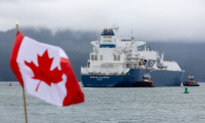
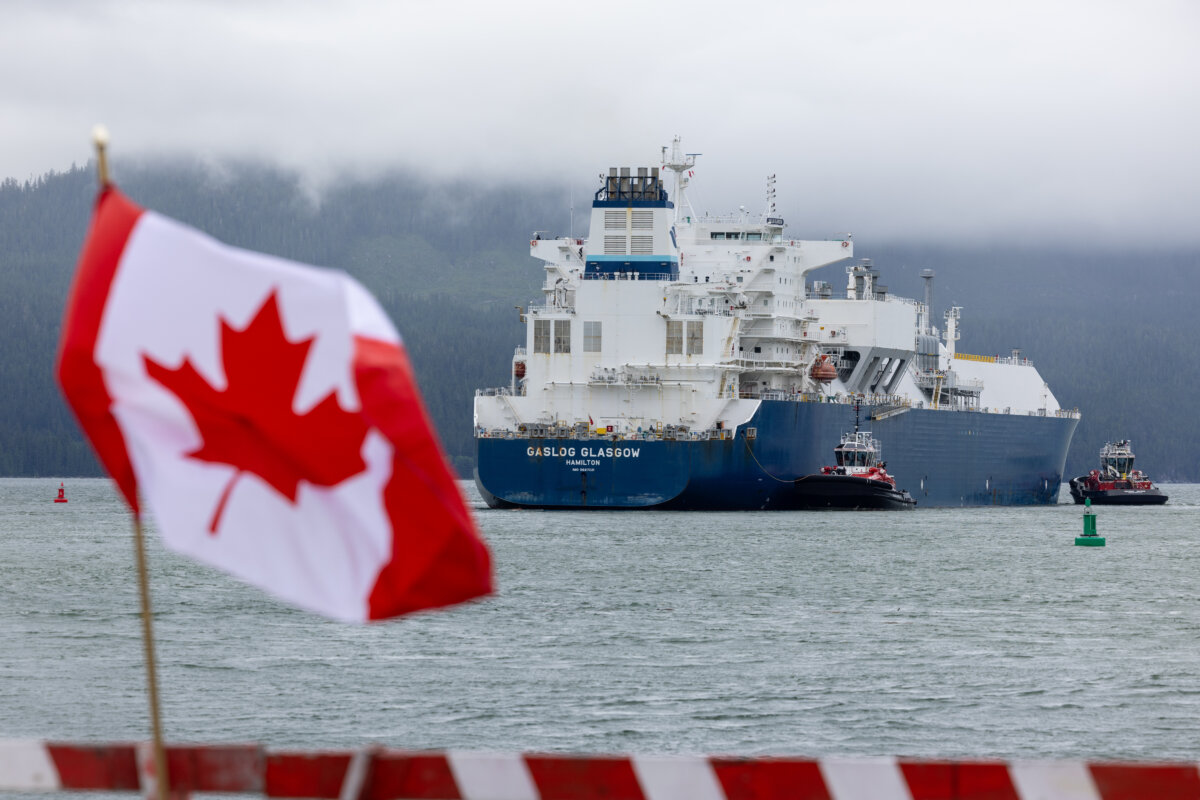
All export projects for Canadian LNG are located on the West Coast of British Columbia. Most of those are still under construction, while LNG Canada located in Kitimat loaded its first cargo for global markets on June 30.
New infrastructure projects to facilitate trade via the Atlantic are expected to be announced soon. Prime Minister Mark Carney said on Aug. 26 he will announce in the next two weeks the projects related to the expansion of the Port of Montreal and the Port of Churchill in Manitoba.
The building of new port infrastructure will “open up enormous LNG, plus other opportunities,” he said.
These announcements appear to be part of Carney’s plan to launch major projects deemed to be in the national interest, which would be fast-tracked via the Building Canada Act (Bill C-5) adopted by Parliament before the summer break.
Hodgson said the related federal major projects office is set to be launched this week.
Conservatives have supported the rapid adoption of Bill C-5 as an approach better than the status quo, but they say it doesn’t go far or fast enough to boost economic growth.
“I’m glad that Mr. Carney has noticed my proposal from three years ago to develop the Port of Churchill,” Tory Leader Pierre Poilievre said on Aug. 27. “But what I find incredible is that he has been in power for 170 days, and not only is there not a single shovel in the ground on any of these projects, there’s not even firm proposals for these projects.”
He noted how it took Germany 194 days in 2022 to build a new LNG terminal as it rushed to find alternatives to Russian gas.
The Conservatives say a number of Liberal laws should be repealed to speed up project construction, while the Building Canada Act only allows some politically selected projects to circumvent those laws.
 Friends Read Free
Copy
Facebook
Tweet
Friends Read Free
Copy
Facebook
Tweet