
Russia could launch a limited attack against a NATO country at any time, a top German military officer said on Nov. 7.
“If you look at Russia’s current capabilities and combat power, Russia could kick off a small-scale attack against NATO territory as early as tomorrow,” Lt. Gen. Alexander Sollfrank said.
“Small, quick, regionally limited, nothing big—Russia is too tied down in Ukraine for that.”
Sollfrank, who leads Berlin’s joint operations command and oversees defense planning, said that despite that Moscow’s forces are unable to overwhelm Ukraine, Moscow retains substantial air force capabilities and its nuclear arsenal remains completely unaffected by the war.
Additionally, at sea, although the Kremlin’s Black Sea Fleet has suffered significant losses, the rest of the Russian Navy remains at full strength, he said.
Whether or not Russia would choose to mount an attack on a NATO nation would be based on Moscow’s military strength, track record, and leadership, Sollfrank said, adding that his analysis led him to conclude that “a Russian attack is in the realm of the possible.”
Sollfrank’s comments come as Russia has been blamed for incursions into European airspace in recent months, notably in Poland and Estonia, although Moscow has denied NATO’s accusations of repeated airspace violations.
This prompted NATO to launch a major air operation, dubbed “Eastern Sentry,” in September with the stated aim of defending its eastern flank.
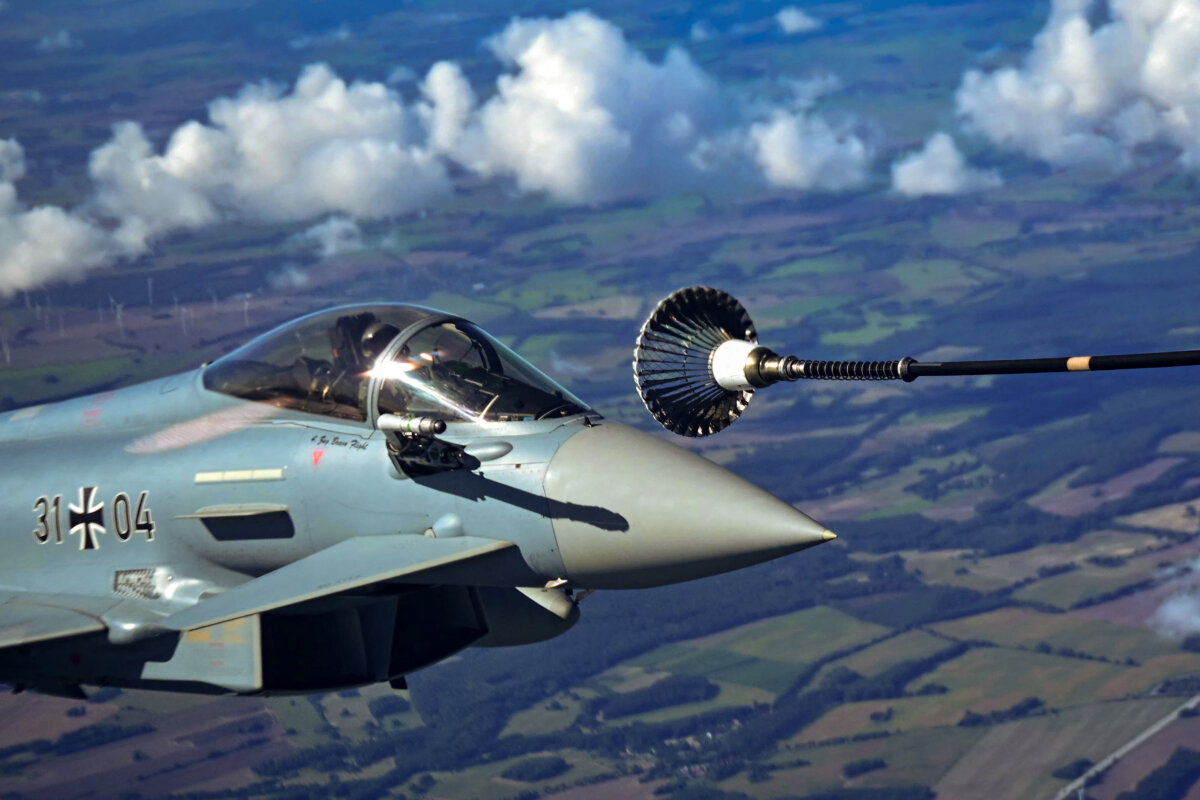
As part of the operation, Danish, French, German, and British jets are now flying sorties across the region.
Last month, Alexus Grynkewich, a U.S. Air Force general serving as NATO’s Supreme Allied Commander Europe, said that Moscow appeared to have been deterred by the response but that Moscow is expected to continue testing boundaries.
“We do see indications that the Russians are trying to be more careful, that they recognize that they came close to or crossed a line in a couple of cases, particularly when you consider the drone event in Poland,” he said.
“We’ll have a deterrent effect, but they’re going to continue to try to move and take hybrid approaches to how they challenge the alliance.”
However, despite these moves by NATO, air traffic was suspended at Brussels and Liege airports in Belgium on Nov. 4 because of drone sightings, days after the government stated that it had received reports of unmanned aerial vehicles flying near a Belgian military base that houses U.S. nuclear weapons.
Belgian Minister of Defense Theo Francken said on Nov. 3 that drones, reported to be flying near a military base used to house U.S. nuclear weapons, could be part of a spying operation.
Meanwhile, the European Commission has also proposed four flagship defense projects, including a drone wall and fortification of Europe’s eastern border, as part of measures to boost the bloc’s defense by 2030.
The commission, the executive branch of the European Union, stated that these projects will “reinforce Europe’s ability to deter and defend across land, air, sea, cyber, and space while contributing directly to NATO capability targets.”
The new Preserving Peace—Defence Readiness Roadmap 2030 is necessary to deter “Russian aggression, prevent war and preserve peace,” European Commissioner for Defense and Space Andrius Kubilius said in a statement announcing the plans on Oct. 16.
The plans outline four defense strategies: the European Drone Defense Initiative, the Eastern Flank Watch, the European Air Shield, and the European Space Shield.
Reuters and Victoria Friedman contributed to this report.
 Friends Read Free
Copy
Facebook
Tweet
Friends Read Free
Copy
Facebook
Tweet