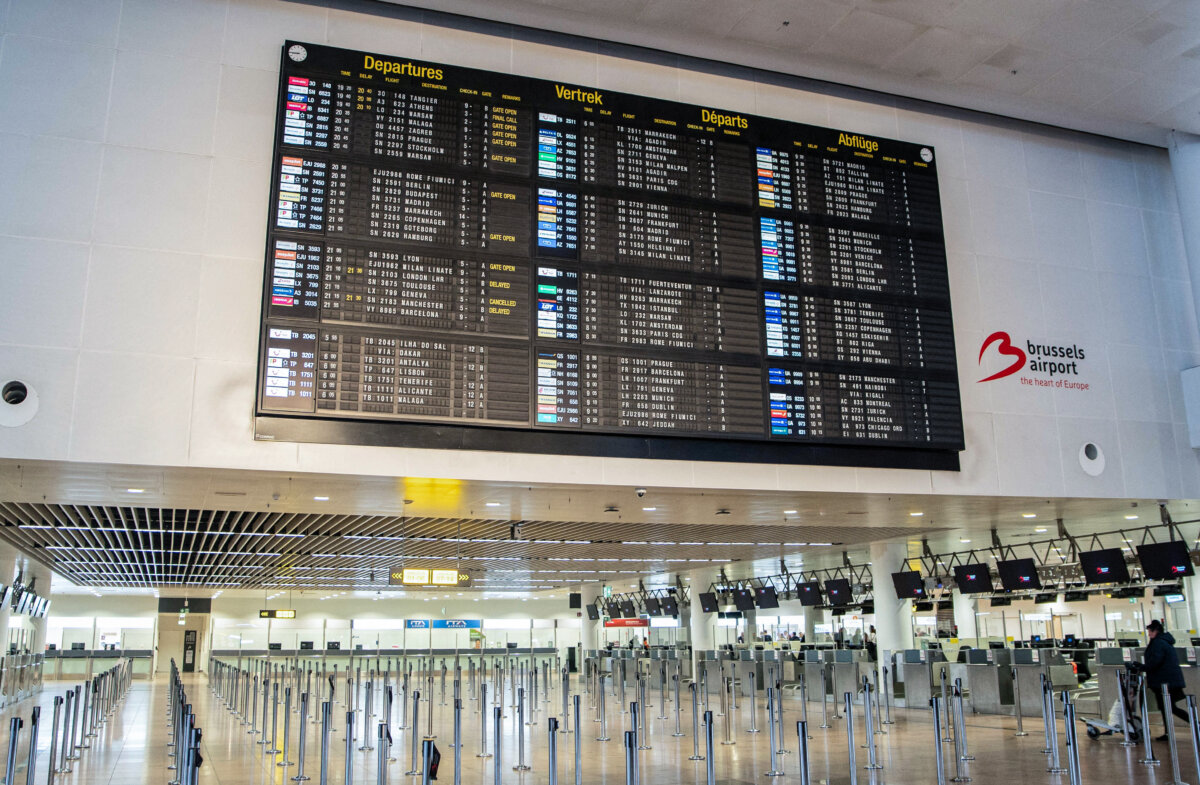

Air traffic was suspended at Brussels and Liege airports on Nov. 4 because of drone sightings, days after the government stated that it had received reports of unmanned aerial vehicles flying near a Belgian military base that houses U.S. nuclear weapons.
Kurt Verwilligen, spokesman for Belgian air traffic safety control service Skeyes, said that air traffic at Brussels Airport was halted shortly before 8 p.m. local time for safety reasons.
Brussels Airlines stated that 15 flights were unable to take off, while eight flights were unable to land and had to be diverted to other airports.
Liege Airport also halted operations because of drone sightings, an airport spokesperson said.
Drones were also spotted over two Belgian military bases, Kleine-Brogel and Florennes, according to Belga News Agency.
In response to the incidents, Belgian Security and Interior Minister Bernard Quintin said in a post on X that he had asked Prime Minister Bart De Wever to convene a National Security Council meeting “as soon as possible.”
“A recurrence of drone incidents has a direct impact on our country’s security,” Quintin said on Nov. 4. “We must act in a calm, deliberate, and coordinated manner.”
The National Security Council meeting is due to take place on Nov. 6, according to the news agency.
UAVs Over Military Base
Belgian Minister of Defence Theo Francken said on Nov. 3 that drones, reported to be flying near a military base used to house U.S. nuclear weapons, could be part of a spying operation.
Francken said during an interview on La Première radio that drones were sighted over the Kleine-Brogel military base for three days beginning on Oct. 31.
He said that the first day involved “small drones to test radio frequencies,” while “on Saturday and Sunday [it involved] large drones for observation and destabilization.” The minister also said he believed that those piloting them sought to “create panic in Belgium.”
“It looks like an espionage operation. By whom, I don’t know. I have some ideas, but I’m going to be cautious,” he told the public broadcaster.
Russia has been blamed for incursions into European airspace in recent months, notably in Poland and Estonia. Moscow has denied NATO’s accusations of repeated airspace violations.
Francken would not immediately attribute blame for the incidents.
Francken also addressed the state of Belgium’s defense strategies, saying its drone-repelling capabilities are four years behind where they should be.
“We’re chasing the threat,” Francken told La Première. “We should have bought anti-aircraft systems [to combat drones] five or 10 years ago. NATO has been saying this for years. I’ve been minister of defense for nine months. … We’re four years behind. I’ve been trying to accomplish a great deal for the past nine months.”
Europe Prepares for Hybrid Warfare
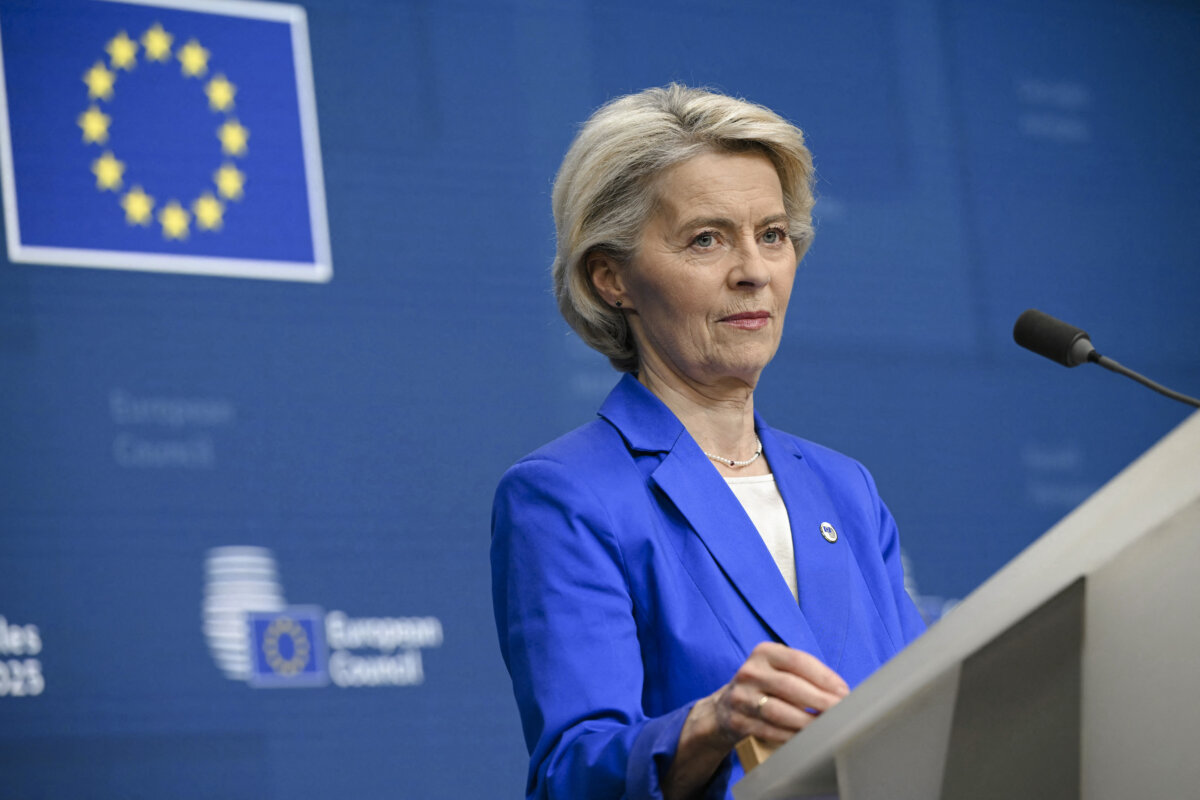
Last month, the European Commission stated that Europe must prepare to combat new forms of warfare, including sabotage of undersea cables, cyberattacks, and drone incursions, which Commission President Ursula von der Leyen labeled “hybrid warfare.”
NATO describes hybrid warfare as a fusion of conventional and unconventional means, including subversion or destabilization of the adversary and attacks conducted in ways that make identifying those responsible difficult.
Hybrid warfare often occurs in the gray zone, the threshold below conventional war, which can include cyberattacks, attacks on critical infrastructure, and espionage.
“We must not only react; we must deter because if we hesitate to act, the gray zone will only expand,” von der Leyen said.
On Oct. 16, von der Leyen unveiled proposals for four flagship defense projects, including a drone wall and fortification of Europe’s eastern border, as part of measures to boost defense by 2030.
Reuters contributed to this report.
 Friends Read Free
Copy
Facebook
Tweet
Friends Read Free
Copy
Facebook
Tweet