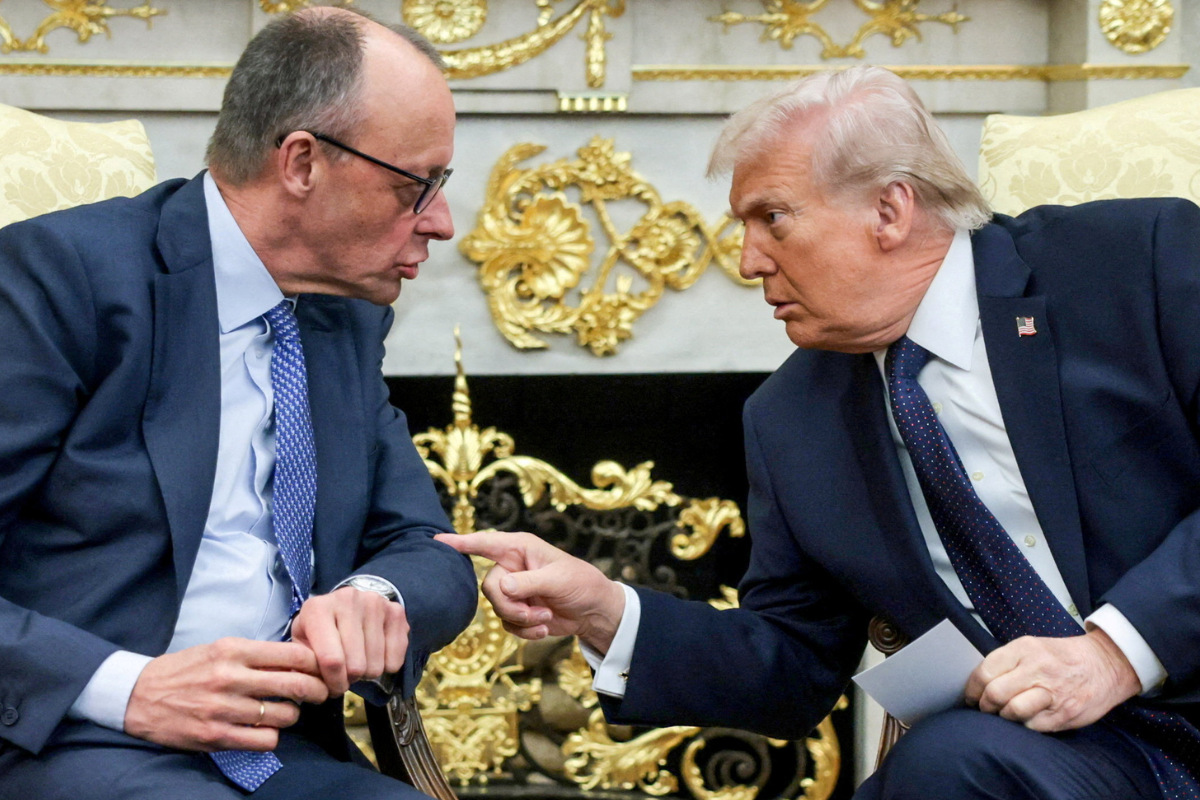

German Chancellor Friedrich Merz has called for the European Union’s budget system to be streamlined to prioritize spacing on defense and make the bloc more competitive.
Mertz’s speech, delivered on Thursday, comes ahead of a major debate over the 2028–2034 $2.2 trillion EU budget.
Calls for increased security spending are set to compete with those for subsidies for sectors such as farming and regional development, which have traditionally received a large slice of the bloc’s spending.
The European Parliament, which makes decisions on EU spending plans, together with EU governments, voted in April to increase the budget beyond what the European Commission proposed last year, setting up a showdown with those member states that are reluctant to pay more.
Merz made his remarks at an award ceremony in the city of Aachen, where this year’s Charlemagne Prize went to former European Central Bank Chief Mario Draghi, who in 2024 urged the EU to become more competitive.
‘Streamlined Structures’
“A sovereign Europe needs a ‘Draghi-proofed’ budget,” Merz, who leads the center-right Christian Democratic Union, said of the economist and politician, who served as the Italian premier from 2021 to 2022.
“Streamlined structures, investments in competitiveness and defense, a focus on European funds for European policies—all of this is necessary because resources are limited.”
French President Emmanuel Macron in February called for joint borrowing to allow the bloc to compete with the United States and China, which the German government opposes.
Berlin also opposes other proposals from the Commission, including levies on tobacco and on large companies’ turnover.
“Some believe we can evade this painful task by taking on new debt—European debt—by financing regular spending through debt,” Merz said. “Germany cannot follow this path, if only for constitutional reasons.”
More than two-thirds of the entire EU budget is currently directed toward subsidies, Merz said, while some countries are spending more money on servicing their debt than on defense.

‘A 20th-Century Budget’
“We cannot meet the challenges of the 21st century with a 20th-century budget. Fundamental modernization is therefore essential,” he said.
“Moreover, the reality is that excessive debt threatens sovereignty and limits our ability to act.”
Greek Prime Minister Kyriakos Mitsotakis was also present at the ceremony. His country bore the economic brunt of the euro zone debt crisis when Draghi, as the European Central Bank chief, delivered his promise to do “whatever it takes” to save the Euro.
The row over the EU budget comes against a backdrop of wider anxiety about Europe’s long-term economic position.
Over the past decade, European leaders and business groups have repeatedly warned the bloc risks falling behind both the United States and China in technology, energy prices, and industrial investment.
A 2024 report led by Draghi warned that Europe faced a “slow agony” of declining competitiveness unless it increased investment and simplified regulation.
An agreement on the new EU budget requires backing from all 27 member countries and sign-off from the European Parliament.
Tensions Over NATO
Mertz’s speech came amid ongoing tensions between the United States and its European NATO partners over the future of the defense alliance, and in the wake of allies’ initial reluctance to lend support to the U.S.–Israeli war against the Iranian regime and efforts to keep open the Strait of Hormuz, through which around a fifth of the world’s energy passes.
U.S. President Donald Trump said last month that he was considering pulling out of NATO, while his secretary of state, Marco Rubio, questioned the purpose of a defense alliance in which he said support appeared to go only one way—defending Europe—without reciprocal support for Washington’s security efforts.
Tensions between Germany and the United States over defense heightened when Merz said last month that Washington had been “humiliated” by the Iranian regime over attempts to hold peace talks to end the war.
Earlier this month, Merz downplayed talk of a dispute with the United States, after the U.S. Department of War announced on May 1 that it would be reducing its presence in Germany by more than 5,000 troops.
Reuters and Victoria Friedman contributed to this article.
 Friends Read Free
Copy
Facebook
Tweet
Friends Read Free
Copy
Facebook
Tweet