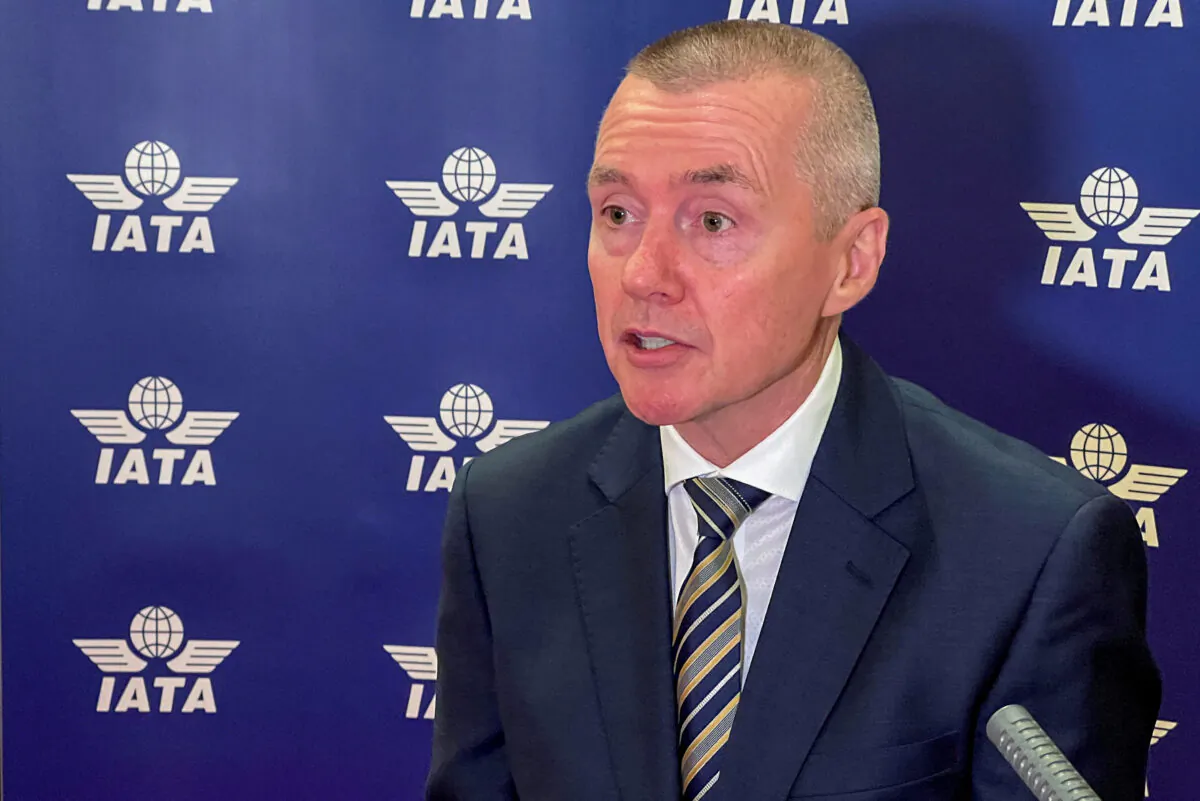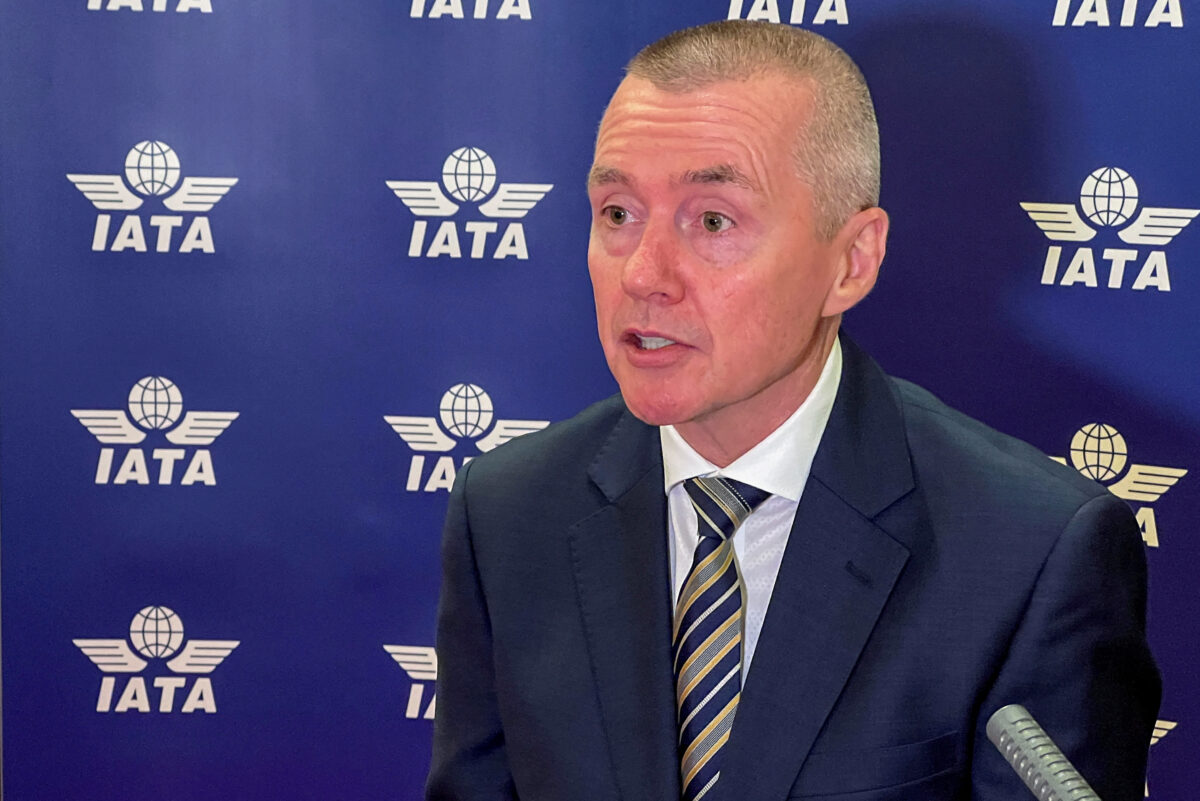

The head of a body representing global airlines said on April 8 that it would take months for jet fuel supplies to recover, even if Iran were to fully reopen the Strait of Hormuz.
Willie Walsh, director general of the International Air Transport Association, told reporters in Singapore on April 8 that he expected crude oil prices to fall but that jet fuel costs were likely to remain slightly elevated because of refinery disruptions.
Jet fuel is one of the airline industry’s biggest expenses, typically accounting for about 25–30 percent of operating costs.
“If it were to reopen and remain open, I think it will still take a period of months to get back to where supply needs to be, given the disruption to the refining capacity in the Middle East,” Walsh said.
The aviation sector has been hit globally amid the conflict in the Middle East, which has disrupted major airport hubs, led to thousands of flight cancellations, and driven up fuel costs.
He said the situation is “not a crisis anywhere close to” the COVID-19 pandemic.
“In COVID, capacity reduced by 95 percent because borders closed. We’re nowhere near that,” he said.
He said the situation was more comparable to the 2008 financial crisis or the aftermath of the Sept. 11, 2001, attacks.
“Post-9/11, the recovery took about four months. In 2008–2009, it was probably 10 to 12 months,” he said.
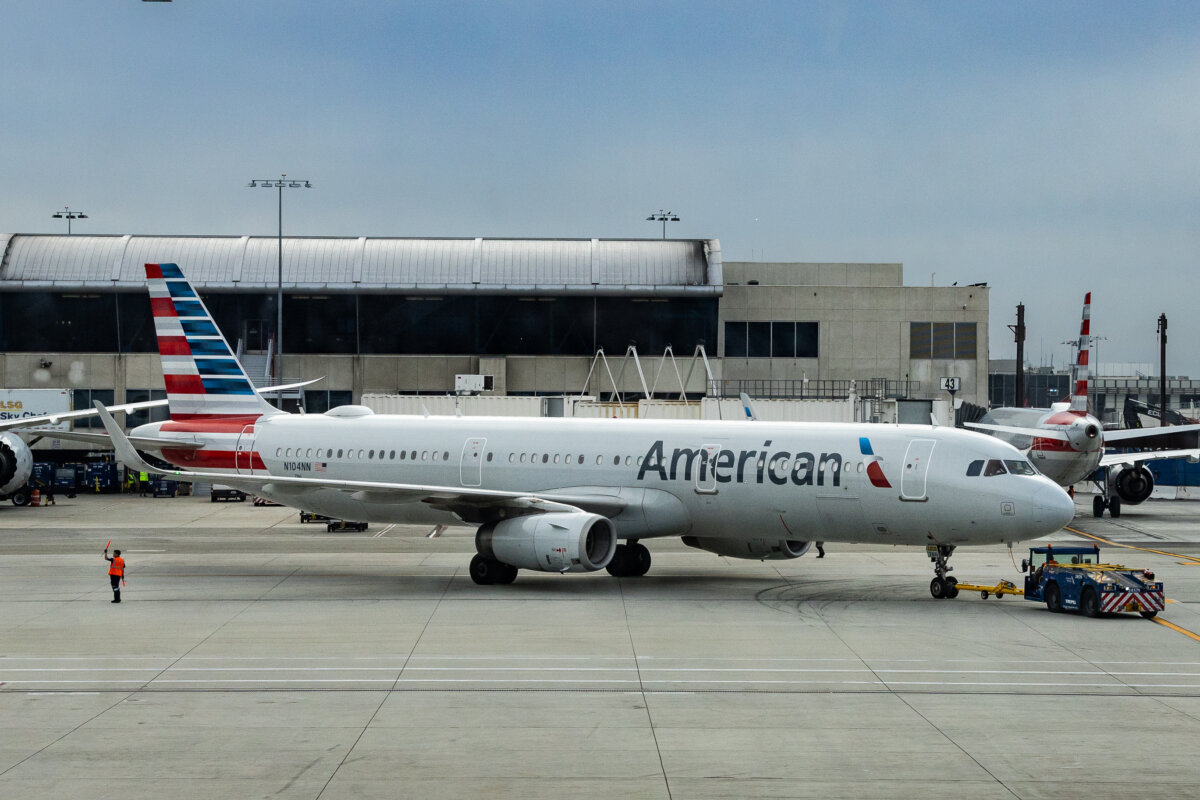
Walsh said he expected that the hit to capacity for Persian Gulf carriers, which last year accounted for 14.6 percent of international capacity, would be temporary.
“Some of that capacity will be replaced by airlines outside of the region … but there’s no way they can replace the [entire] capacity that was provided by the Gulf carriers,” he said, adding that data from April and May would provide a clearer picture of the scale of disruption.
“I fully expect the Gulf hubs to recover and recover quickly.”
Oil prices held above $110 per barrel on April 7 as markets braced for potential escalation in the Middle East after U.S. President Donald Trump set a deadline for Iran to reopen the Strait of Hormuz.
Brent crude futures rose by 1 percent on April 7 to $111.53 per barrel. U.S.-traded West Texas Intermediate (WTI) gained 2.8 percent to $115.61.
Trump later said in the evening that he would suspend pending attacks on Iran.
On April 8, oil dropped by more than 14 percent, falling below $94 for a barrel of Brent crude, according to OilPrice.com. WTI dropped by 17 percent to roughly $96.
Trump’s announcement came about an hour and a half before his 8 p.m. ET deadline and after Pakistan’s request that he halt the attack.
“Based on conversations with Prime Minister Shehbaz Sharif and Field Marshal Asim Munir, of Pakistan, and wherein they requested that I hold off the destructive force being sent tonight to Iran, and subject to the Islamic Republic of Iran agreeing to the COMPLETE, IMMEDIATE, and SAFE OPENING of the Strait of Hormuz, I agree to suspend the bombing and attack of Iran for a period of two weeks,” Trump wrote in a post on Truth Social.
Iranian Foreign Minister Abbas Araghchi followed up on Trump’s announcement with a statement on behalf of Iran’s Supreme National Security Council, thanking Pakistani officials for their work to reach a cease-fire.
“If attacks against Iran are halted, our Powerful Armed Forces will cease their defensive operations,” the statement said. “For a period of two weeks, safe passage through the Strait of Hormuz will be possible via coordination with Iran’s Armed Forces and with due consideration of technical limitations.”
Pakistan served as a mediator amid the conflict.
In an April 8 statement, Israeli Prime Minister Benjamin Netanyahu’s office said that the agreement suspending hostilities between the United States and Iran would not affect the ongoing conflict between Israel and Hezbollah in Lebanon.
“The two-weeks ceasefire does not include Lebanon,” the Israeli prime minister’s office said in a post on X.
Reuters, Sam Dorman, Troy Myers, Joseph Lord, and Ryan Morgan contributed to this report.
 Friends Read Free
Copy
Facebook
Tweet
Friends Read Free
Copy
Facebook
Tweet