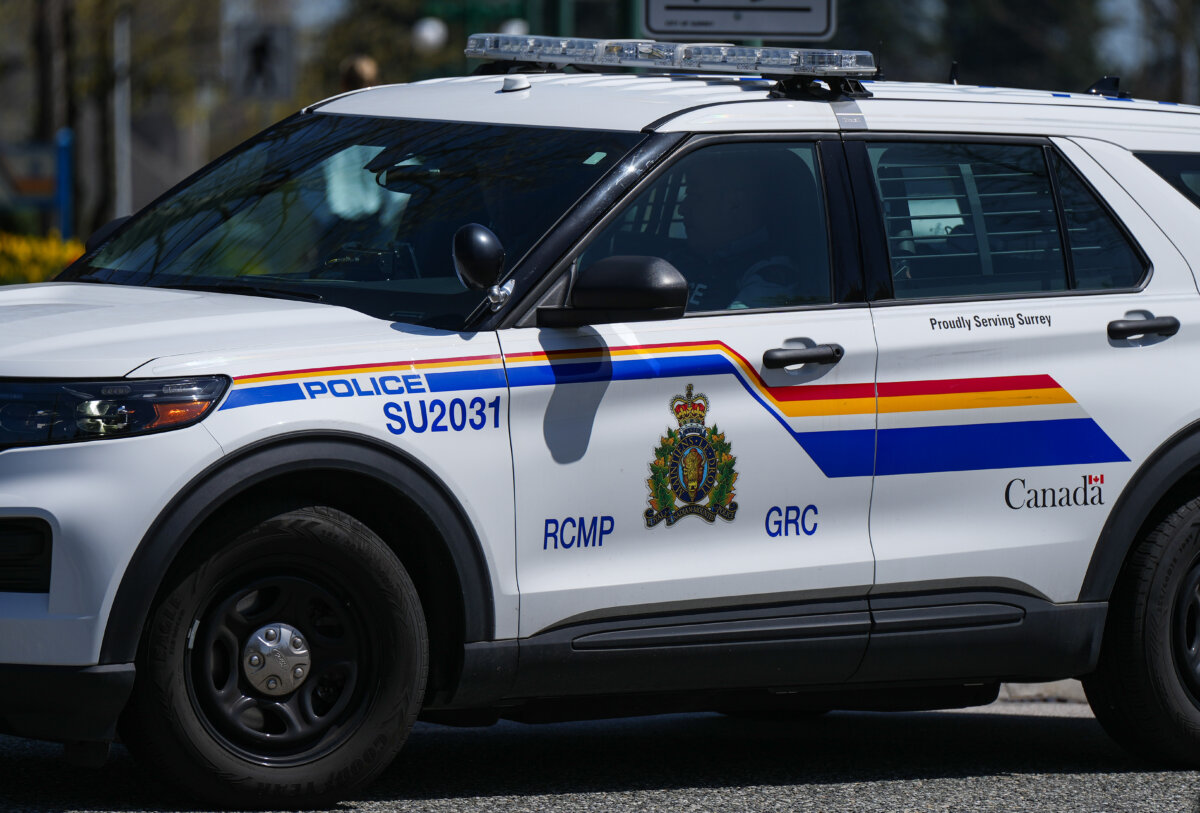

An RCMP detachment in British Columbia is warning gun owners not to bring unsecured or unregistered firearms to its detachments as the federal gun buyback program is underway.
The police force noted in an April 12 press release that firearm owners who have registered with the program have to wait for instructions from Public Safety Canada to schedule an appointment.
“We would like to remind firearm owners that arriving at a detachment with unsecured or unregistered firearms is a Criminal Offence,” the B.C. RCMP said.
The RCMP detachment said “several individuals” had attended its Upper Fraser Valley detachments seeking to relinquish firearms under the program. The RCMP encouraged Canadians to call their local detachment’s non-emergency phone number if they have firearms to relinquish as part of the program, and have not yet registered for it.
The Liberal government has banned around 2,500 types of what it refers to as “assault-style” firearms since 2020. Eligible gun owners had until March 31, 2026, to make an online declaration to receive compensation for their newly banned firearms.
Canadians who do not make a declaration on their banned firearms must dispose of or deactivate them before the amnesty period ends on Oct. 30, 2026. After that date, those who are still in possession of the banned firearms could face criminal charges.
The federal government recently said that gun owners have declared more than 67,000 recently prohibited firearms in order to receive financial compensation. The federal government had budgeted $248.6 million in compensation for firearms turned in under the program, which it had said would cover around 136,000 guns.
Numerous provinces and regional police forces have refused to participate in the buyback program. The provinces of Alberta, Manitoba, Ontario, Saskatchewan, and Newfoundland and Labrador, as well as the Yukon territory and Northwest Territories, have all said they will not participate in the buyback program.
Quebec is the only province that has expressed support for the federal buyback program.
The Supreme Court of Canada recently agreed on March 19 to hear an appeal challenging the federal ban on “assault-style” firearms. The Federal Court dismissed multiple lawsuits by various groups and individuals in 2023, including firearms owners, businesses, hunters, and recreational and sport shooters, who were challenging the firearms ban.
That appeal was submitted by the gun rights advocacy group Canadian Coalition of Firearms Rights (CCFR), along with several firearms dealers and gun owners. The CCFR said it was “thrilled” the Supreme Court would hear its appeal, and it is a “pivotal moment not only for the hundreds of thousands of licenced firearms owners affected by the ban, but for the rule of law and the proper limits of executive power in our democracy.”
Public Safety Minister Gary Anandasangaree has said the banning of “assault-style” firearms will help to limit “the devastating effects of firearms violence” across Canada, while Prime Minister Mark Carney has said the buyback program is “not about confiscation” but is about the “voluntary return of firearms for compensation.”
Conservative MP Blaine Calkins, his party’s shadow minister for hunting, fishing and conservation, said the BC RCMP’s warning to gun owners showed “bungled policy delivery.”
“Who knew forced confiscation, under false pretences of public safety, amidst widespread rejection from anybody in law-enforcement, piled upon generational waste from previous liberal governments, compounded by a complete lack of understanding of firearms ownership and firearms owners by Liberal MPs could lead to such bungled policy delivery,” he said on X on April 12, adding, “About 2 1/2 million of us.”
Olivia Gomm contributed to this report.
 Friends Read Free
Copy
Facebook
Tweet
Friends Read Free
Copy
Facebook
Tweet