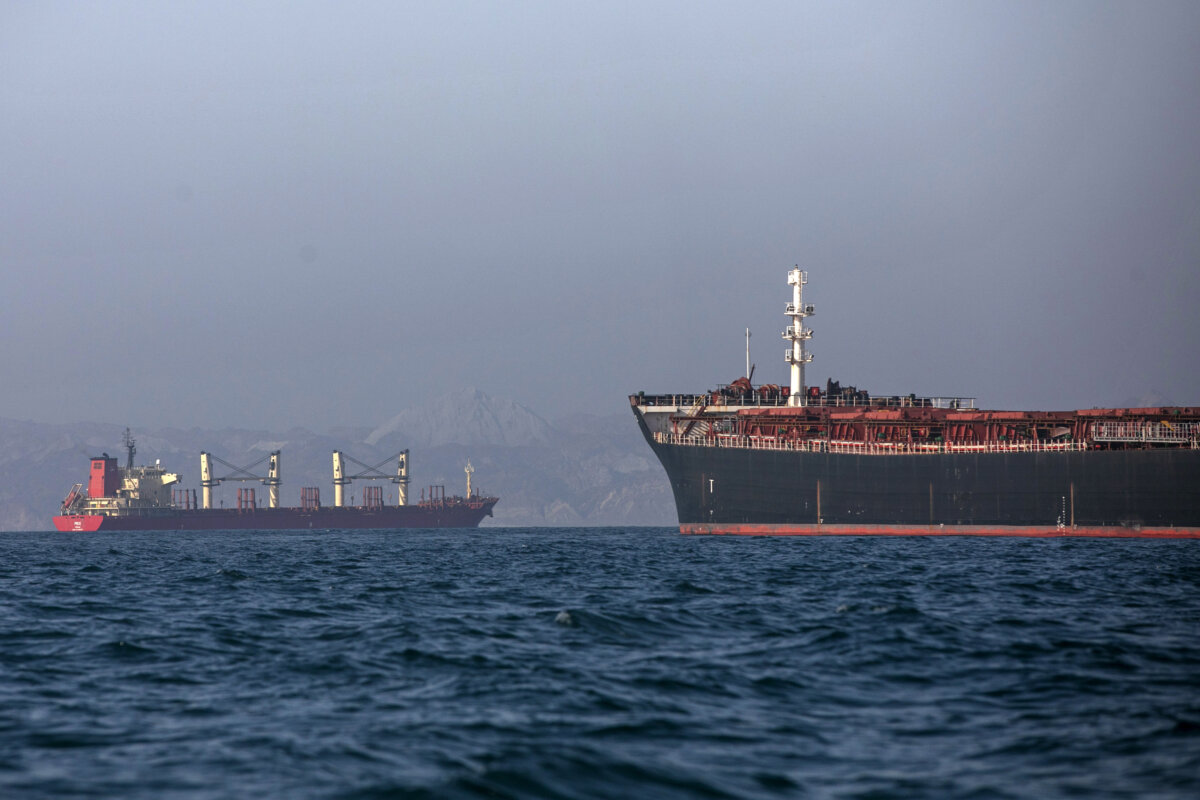

At least 54 vessels passed through the Strait of Hormuz during the week ending May 18, according to Lloyd’s List Intelligence data, as U.S.–Iran talks continue and U.N. officials call for unrestricted access to the waterway.
The figure compares to 25 vessels in the week preceding May 11, Lloyd’s List Intelligence said in a May 19 post on X. The shipping analytics company said the traffic increase included 10 China-owned vessels after Iran signaled it would allow some Chinese ships to pass through the strait.
“Two LPG carriers left the Middle East Gulf for India, while an Adnoc-owned LNG carrier made its way into the MEG via dark transit,” the company said in a separate post.
Iranian state-linked media reported last week that Tehran had begun allowing some Chinese vessels to transit the strait under newly established “management protocols.” Tehran has since moved to formalize its oversight of the strait by launching a new body called the Persian Gulf Strait Authority, or PGSA.
The authority said in a May 18 post on X that it is responsible for managing transit through the Strait of Hormuz on behalf of the Iranian regime. The PGSA said vessels traveling within Iran-designated areas of the strait must coordinate with Iranian authorities and armed forces.
“Passage without permission will be considered illegal,” the PGSA added.
Farhan Haq, deputy spokesperson for the U.N. secretary-general, told reporters on May 18 that the U.N. prioritizes “freedom of navigation on the high seas and on the Strait of Hormuz.”
“We don’t want any particular entity to restrict that freedom of access,” he added.
The Strait of Hormuz remains one of the world’s most important energy chokepoints, linking Gulf oil and natural gas producers to global markets. Concerns over disruptions have intensified since fighting involving Iran, Israel, and the United States escalated earlier this year.
The UK Maritime Trade Operations office said in a May 14 advisory that since Feb. 28, it had received 49 reports involving vessels operating near the Arabian Gulf, Strait of Hormuz, and Gulf of Oman. The incidents included 27 reported attacks, 20 suspicious activity reports, and two hijackings.
Global shipping companies and insurers are continuing to monitor the situation closely because disruptions in Hormuz can quickly affect oil prices, shipping costs, and supply chains worldwide.
Haq also warned that disruptions involving fuel and fertilizer shipments could contribute to inflation, slower economic growth, and future food shortages.
While Tehran says it is continuing military oversight operations in the Strait of Hormuz, the U.S. naval blockade on Iranian ports announced last month remains in effect.
U.S. military officials on May 18 said that 84 ships were diverted to and from Iranian ports.
Ongoing Exchange
Washington and Tehran have exchanged multiple proposals in recent weeks under a ceasefire that paused most of the six-week conflict.
U.S. President Donald Trump said in a May 18 Truth Social post that the United States halted a planned military strike on Iran scheduled for May 19 because negotiators believe “a deal will be made” with Tehran that “will be very acceptable” to the United States.
Trump also warned that U.S. forces remain prepared for “a full, large scale assault of Iran” if negotiations collapse.
Tehran’s latest peace proposal, according to a May 19 report by Iran’s state-run Islamic Republic News Agency (IRNA), includes an end to fighting across multiple fronts.
This includes the withdrawal of U.S. forces from areas near Iran and compensation for war-related damage. The proposal also calls for sanctions relief, recognition of Iran’s uranium enrichment program, and the release of frozen Iranian assets.
Iranian army spokesperson Brig. Gen. Mohammad Akraminia warned on May 19, according to IRNA, that Iran would respond forcefully to any future attacks and said the situation in the Strait of Hormuz “could not return to its previous state.”
Reuters contributed to this report.
 Friends Read Free
Copy
Facebook
Tweet
Friends Read Free
Copy
Facebook
Tweet