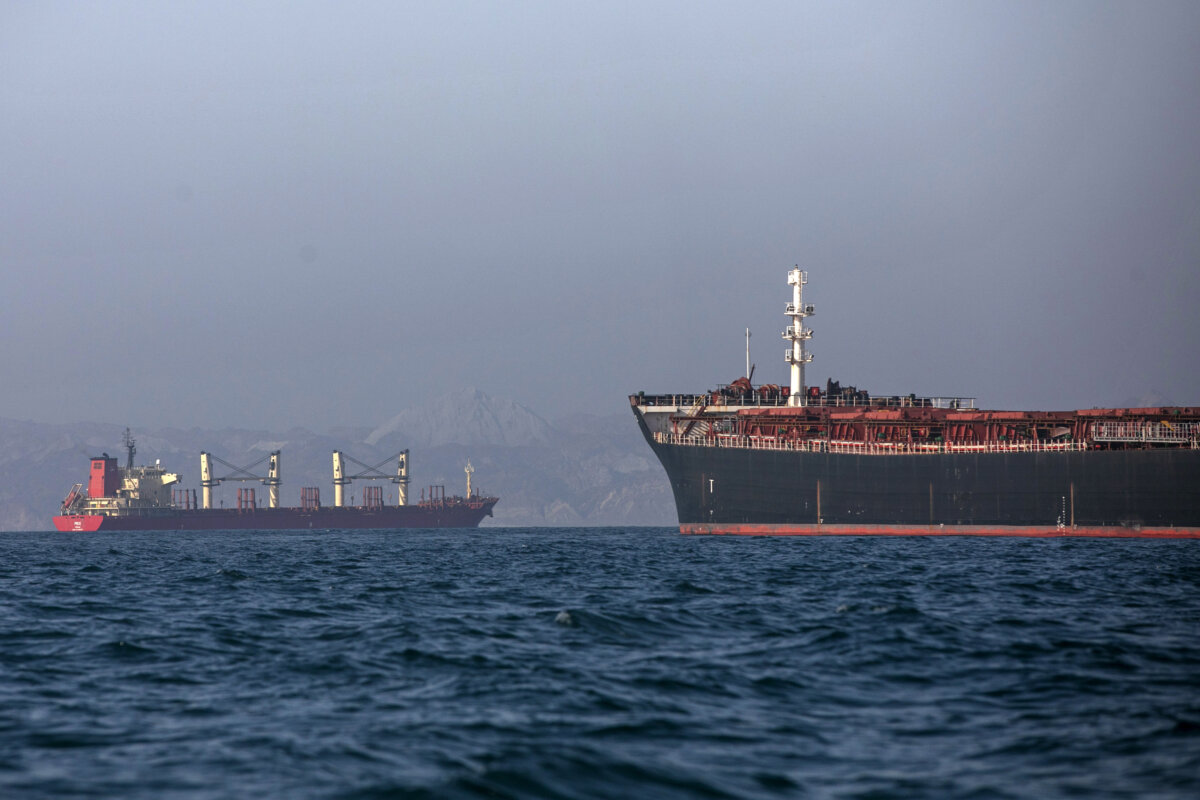

Tehran has moved to formalize its control over the Strait of Hormuz by introducing a new body to oversee maritime transit through the strategic waterway and charge tolls, as businesses worldwide face mounting losses tied to shipping disruptions and rising energy costs.
The newly created Persian Gulf Strait Authority, or PGSA, announced in a May 18 post on X that it is now the “legal entity and representative authority” responsible for managing passage through the Strait of Hormuz on behalf of the Iranian government.
Vessels navigating within the Iranian-designated boundaries of the strait must coordinate with Iranian authorities and armed forces, it said.
“Passage without permission will be considered illegal,” the PGSA said.
The PGSA launched its official X account on May 18 with a statement saying it would provide “real time updates.” The announcement marked Iran’s clearest public effort so far to institutionalize control over shipping in the Strait of Hormuz.
The move came as global companies warned about the economic fallout from disruptions in the waterway, which handles an estimated 20 percent of global oil shipments.
The Iran conflict has already cost companies worldwide at least $25 billion due to higher energy prices, shipping disruptions, and supply chain interruptions.
At least 279 companies across the United States, Europe, and Asia have cited the conflict as a factor behind defensive business measures, including production cuts, fuel surcharges, staffing reductions, and suspended shareholder payouts.
Transit System With Fees
Iranian officials said the new authority could become part of a broader system requiring commercial vessels to cooperate directly with Tehran to access the waterway.
Ebrahim Azizi, chairman of the Iranian parliament’s national security commission, said in a May 16 post on X that Tehran had prepared a “professional mechanism” to manage shipping traffic through the strait.
“The necessary fees will be collected for the specialized services provided under this mechanism,” he wrote.
Azizi also said the route would remain closed to participants in what he called the “freedom project,” an apparent reference to the U.S.-led maritime initiative aimed at protecting commercial shipping in the Gulf.
The announcement came amid continued international criticism of Iran’s maritime actions.
UN Resolution
Washington has sought international backing for a U.N. Security Council resolution condemning Iran’s attacks on shipping, sea mine deployments, and efforts to impose tolls on vessels.
U.S. Secretary of State Marco Rubio said in a May 5 statement that Iran was “holding the world’s economy hostage” through threats against commercial shipping. He said the U.N. resolution would “defend freedom of navigation in the Strait of Hormuz.”
The resolution calls on Iran to stop attacks on shipping, disclose the location of sea mines, and cooperate with international maritime safety efforts.
U.S. Vice President JD Vance said on May 12 that Washington was pursuing diplomacy through the U.N. while criticizing Iran’s actions in the Gulf.
U.S. Ambassador to the U.N. Mike Waltz later said on May 13 that 113 countries had co-sponsored the draft resolution.
“Iran is ISOLATED in its illegal actions to mine international waters and charge tolls,” Waltz said.
The United States and Iran entered a temporary ceasefire in April through negotiations mediated in part by Pakistan and Gulf states.
However, tensions have remained high because the U.S. naval blockade on Iranian ports continues while Tehran maintains military oversight operations in the Strait of Hormuz.
President Donald Trump said on May 11 that the ceasefire remained fragile after rejecting Iran’s latest proposal to end the conflict.
Reuters contributed to this report.
 Friends Read Free
Copy
Facebook
Tweet
Friends Read Free
Copy
Facebook
Tweet