

U.S. academic and crime analyst John Lott Jr. says more discussion is needed on how mass shooters plan their attacks, rather than just motivation and ideology, which typically receives the most media attention.
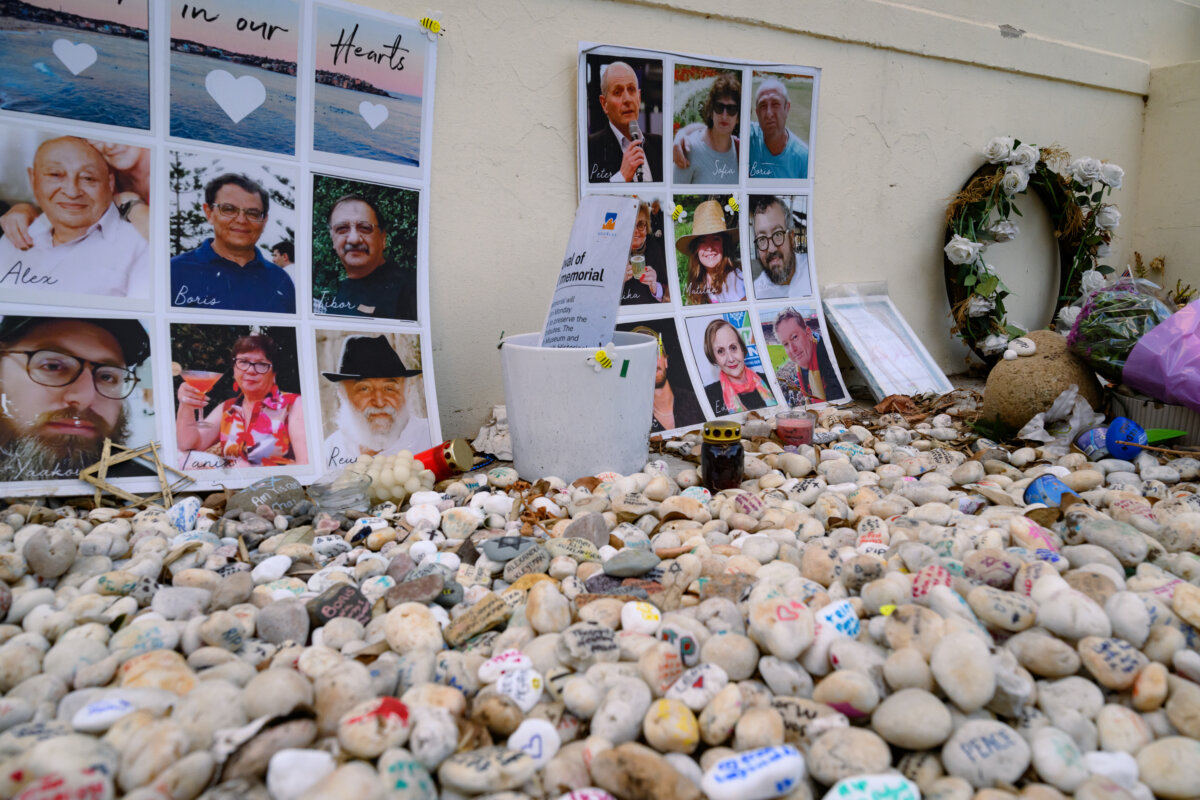
Lott Jr., founder of the Crime Prevention Research Center, was in Australia on a speaking tour last month following the Bondi Beach terror attack that targeted the Jewish celebration of Hanukkah and killed 15 people on Dec. 14. last year.
The response to Bondi has included tougher gun control, a national gun buyback scheme, and new anti-hate speech laws.
Yet Lott Jr. says the methods of mass shooters can be overlooked, even if they have a stark bearing on how governments should deal with such incidents.
“I’ve read literally dozens of diaries and manifestos from these mass murderers, many dozens,” he told The Epoch Times, noting he had interviewed hundreds of witnesses too.
“And you know, certain patterns occur very regularly,” Lott Jr. said.
“These monsters go and explain why they picked the targets that they did. It’s not random, and unfortunately, the media really ignores why these guys say they pick the targets.”
Lott Jr. says mass shooters tend to choose “easy” targets and areas where they can gain the most media attention, while avoiding being harmed themselves.

“And basically it comes down to this, these killers seek out places where they know guns are banned,” Lott Jr. said.
“They may be crazy in some sense, but they’re not stupid.
“Their goal is to get media attention, and they know the more people they kill, the more attention that they’re going to be able to get.”
Gun Restrictions Tightened
The Australian government has introduced a range of new reforms in the wake of the Bondi shooting, including a national gun buyback scheme to purchase surplus, newly banned, and illegal firearms—the first since the 1996 Port Arthur Massacre.
Meanwhile several states—including New South Wales, the Australian Capital Territory, and Tasmania—have introduced or passed measures to cap the number of firearms an individual can own.
Other measures include reclassifying certain weapons into more restricted categories, reducing licence terms, and expanding police powers to refuse or revoke licences on public safety grounds.
There will also be tighter background checks, new limits on magazine capacity, and offences targeting the possession of 3D-printed gun blueprints.
“The terrorists in Bondi had hate in their hearts, but guns in their hands,” Albanese said in January. “Our legislation that was passed by the Parliament dealt with both.”
New hate speech laws aimed at dealing with anti-Semitism have also come into play.
The Australian Gun Safety Alliance, which supports gun control, says Australia’s total gun deaths fell from 2.9 per 100,000 in 1996, to 0.88 per 100,000 in 2018.
“Our gun death rate is 12 times lower than the U.S. rate of about 10.6 per 100,000 people,” the group said in a statement on its website.
The group also says firearm-related suicides have more than halved since Australia first introduced gun reforms in 1996.
Rates of firearm-related hospitalisation and deaths are around four and six times higher, respectively, for residents of remote and very remote areas when compared with residents of major cities, though around 33 percent of hospitalisations are due to accidents.
Yet the Shooters Union Australia says firearm owners were being blamed for the actions of terrorist extremists.
“Punishing farmers, sport shooters and recreational firearms users for the actions of terrorists is unjust, discriminatory and completely ineffective,” Union President Graham Park said in a statement.
“These Australians are already heavily vetted, tightly regulated and overwhelmingly compliant. They are not the cause of terrorism, and none of the proposed measures would have prevented the Bondi attack.”
 Friends Read Free
Copy
Facebook
Tweet
Friends Read Free
Copy
Facebook
Tweet