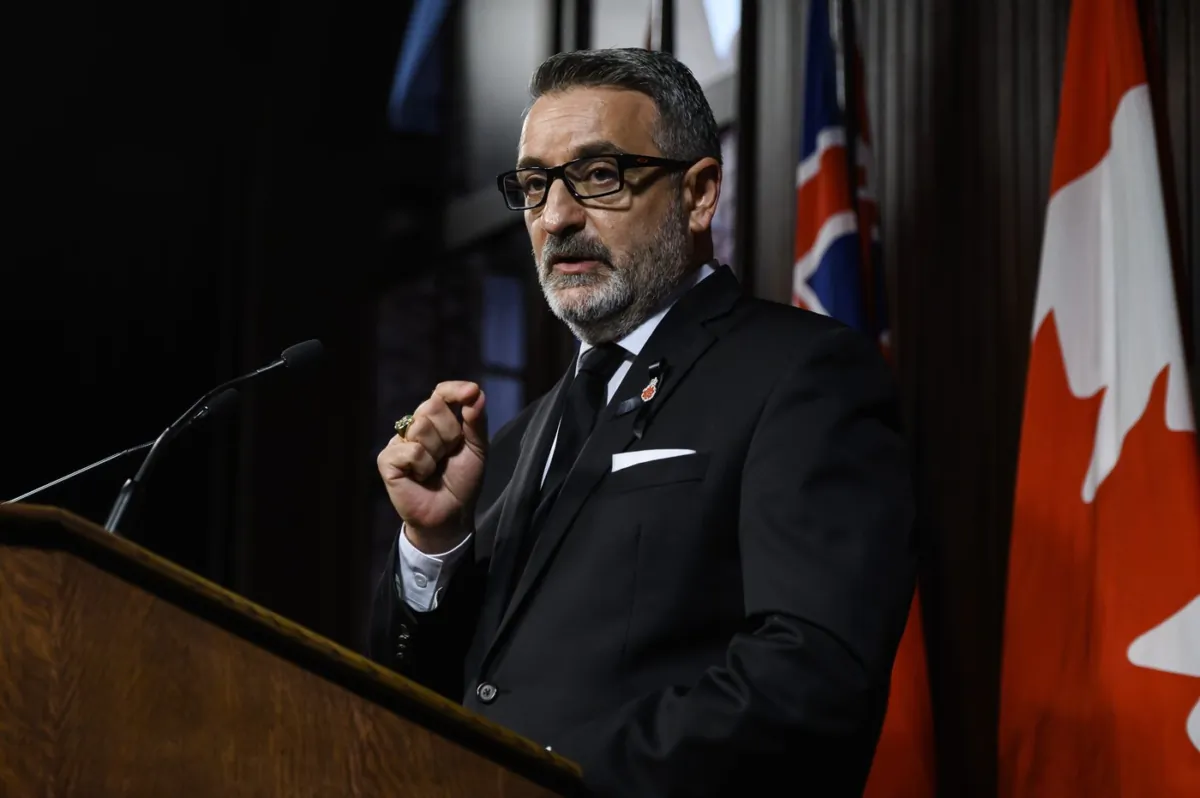

Ontario Education Minister Paul Calandra has introduced legislation expanding the minister’s authority over school boards, citing concerns about boards misusing public funds, shifting focus away from student achievement, and turning schools into “a political battle zone.”
Bill 33, called the “Supporting Children and Students Act, 2025,” would allow the minister to step in more quickly when there are concerns over a school board’s practices. Measures include directing an investigation or putting a school board under supervision, Calandra said at a May 29 press conference.
The minister said the province has seen school boards “wasting” resources on issues that divert focus from academic achievement, including what he described as “endless discussions” about changing school names. He cited one school board that spent more than $100,000 renaming three schools while dealing with potential teacher layoffs.
“I want politics out of the schools first and foremost,” Calandra said. “I don’t need trustees to develop curriculum, I don’t need them to give me advice on global affairs. What I need them to do is put money into classrooms and into our teachers so our students can succeed.”
Currently, the minister’s ability to assume responsibility over a school board can depend on a months-long process involving a third-party’s investigation and recommendation for the minister to intervene.
The proposed legislation would give the minister “authority to step in much sooner, and does not require a third party telling us to do the job that we are meant to do,” he said.
Parents and teachers are also concerned about how resources are allocated, he said.
“I am, frankly, as done as all parents are and teachers are with a school system that has turned into a political battle zone,” he said. “Teach our kids, give the parents and the teachers the resources they need, or we will step in and do the job for them.”
The minister also cited examples of what he described as mismanagement of funds, including school board trustees in one case travelling to Italy to purchase art for a school, and another board spending nearly $40,000 on a staff retreat.
“Teachers shouldn’t have to be going to Dollarama to buy pencil cases or crayons for their classes,” he said, but when boards “take trips and waste money and do things … not in their mandate, I think parents rightfully get upset [and] teachers get even more upset.”
NDP education critic Chandra Pasma said Bill 33 “does nothing to improve learning conditions, reduce class sizes, or support kids with special needs.”
In a May 29 social media post, Pasma said the government is “doubling down on policing schools, silencing student voices, and putting more power in the hands of the Minister of Education without any guardrails or accountability,” instead of listening to students, parents, and educators.
The Ontario Public School Boards’ Association issued a statement the same day, saying the province should standardize processes to address inappropriate activity by school boards, adding that underfunding is “the fundamental reason for many of the challenges in classrooms right now.”
In a May 29 statement. the organization said it is “always willing to engage in conversations about accountability” and it would be helpful “if these conversations included a discussion about the funding necessary to support students in Ontario in 2025-26.”
The “oversight and accountability” measures proposed in the new bill sets rules for school board expense policies and requires that key individuals’ expenses be posted on the board’s public-facing website.
It would also require public colleges and universities to have “clearly outlined, merit-based admissions policies.”
In addition, the bill would direct school boards to allow school resource officers in schools where they are offered by local police services. The minister said that having police officers engage with students can “help build relationships between youth and police, and actively promote a positive behaviour and create a culture of mutual respect.”
 Friends Read Free
Copy
Facebook
Tweet
Friends Read Free
Copy
Facebook
Tweet