

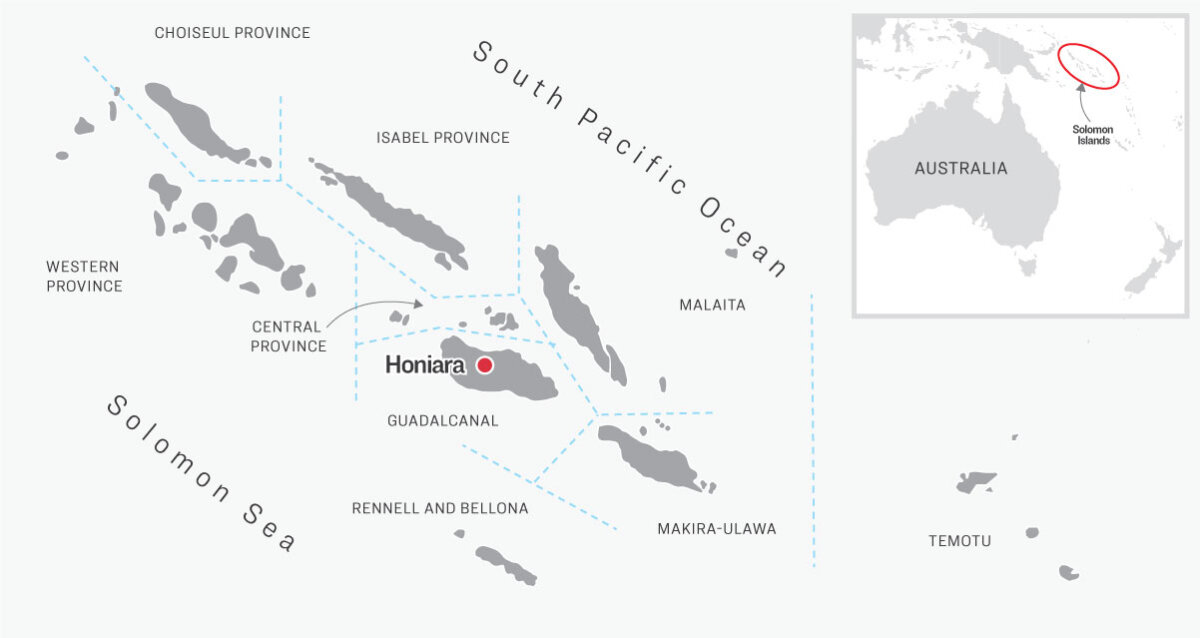
Had news of the 2022 signing of a defence pact between the Solomon Islands and Beijing not been leaked, there would now be Chinese People’s Liberation Army (PLA) troops on the streets of Honiara, off the coast of Australia, says one security analyst.
Former Australian Federal Police officer Paul Johnstone only recently returned from the Solomon’s capital Honiara, where he says locals—unlike the political class—are unsettled by the Chinese Communist Party’s (CCP) presence in the island.
“If Australia had not been told about that [agreement], if it wasn’t leaked, right now we’d have PLA troops in the streets on the island, and I’m not exaggerating,” Johnstone said in an exclusive interview with The Epoch Times, highlighting the precarious situation in that region.
The Solomon Islands, Vanuatu, and Fiji are all of great importance to the CCP and its future ambitions, he says, and its interest in the Pacific is as a base from which to target Australia and New Zealand.
“The [CCP is] using the [same] playbook as the Japanese in World War II,” Johnstone says. “Why did Japan want to take Solomons? Because it was a strategic spot. It’s close to Australia, it’s close to Guam, it’s close to everywhere, and they can block off shipping routes.”
“You look at where the CCP is and where the PLA is, especially in the African countries. They’ve got troops on the ground there. They’ve got the paramilitary forces over there, too.
“At the moment, they’ve got Chinese police in the Solomons, training, advising, and mentoring. What could a Chinese police officer teach the local people in a Polynesian or Melanesian country when the Chinese have absolutely zero experience of working in these cultures, and [when] China has no interest in any culture except its own?” Johnstone asks.
In early 2022, official documents leaked revealed Beijing had signed a “security” deal with the then-Sogavare government of the Solomons that would allow Beijing to station troops, weapons, and even naval ships on the island.
The move was described by some defence experts as Beijing pushing its South China Sea frontier all the way to the South Pacific near Australia.
Aid Competition Between Beijing and the West
Since then, Beijing has continued to amp up its infrastructure spending in the country, and influence over the political class.
The 2019 official switch by Honiara towards Beijing occurred despite sustained aid payments from Australia, which the Department of Foreign Affairs and Trade (DFAT) puts at $172.2 million (US$114.3 million) in 2024/25, and $159.9 million the previous year.
Official Development Assistance (ODA) to the Solomon Islands is Australia’s third-largest and includes funding from bilateral, regional and global programmes, as well as from other government departments and agencies, including the Australian Federal Police.
Australia has invested around $1.2 billion in disaster-resilient infrastructure across the Solomon Islands since 2019, and thousands of its citizens have participated in Australia’s labour mobility programme.
But Australia maintains tight controls over where its money goes—something the CCP does not, Johnstone says, leaving the way open to local politicians and officials to directly benefit.
Even a relatively small cash incentives translate to a major boon for someone in a country where, in 2023, the gross national income per capita was $3,163 compared to around $65,000 in Australia.
Donated Police Cars Not Being Put to Use
While the leaders of Pacific Island nations claim that their support of the CCP—characterised by cutting diplomatic relations with Taiwan, editing official documents to suit Beijing’s worldview, and even expelling Australian and New Zealand advisors from government buildings—is reciprocated with aid and investment, Johnstone says ordinary citizens see no benefit.
“[Beijing has] done a lot of good stuff over there. Good stuff for them, not for the local people. There might be new roads there, but most people don’t have cars. So it’s good for the Chinese businesses [and] Chinese government officials over there,” he said. “But don’t think for one moment they’re doing this for the local people.”
Even the much-vaunted aid to the Solomon Islands Police, which supposedly included a fleet of vehicles, seems not to have reached the people who need it.
Johnstone talks about an article in the local newspaper during his latest visit, which said police told magistrates they couldn’t bring people to court because there were no vehicles available.
“The magistrate turned around and said, ‘Well, hold on a moment. I see in the media all the time all these cars that have been donated to the Solomon Islands police from China and from Australia. So where are these vehicles?'” he relates.
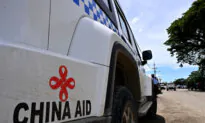
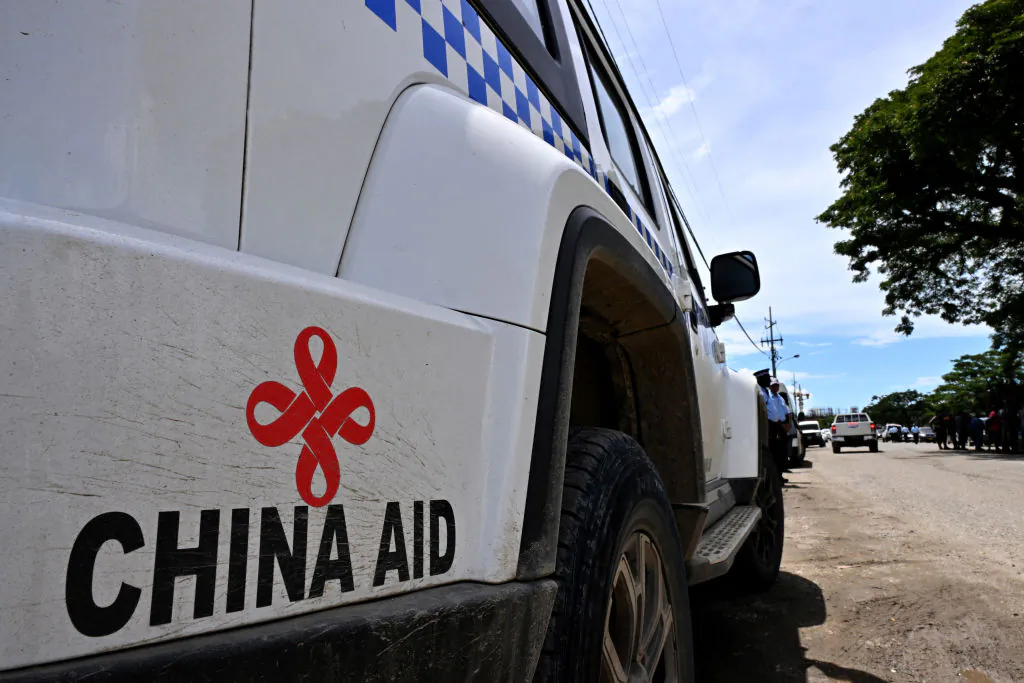
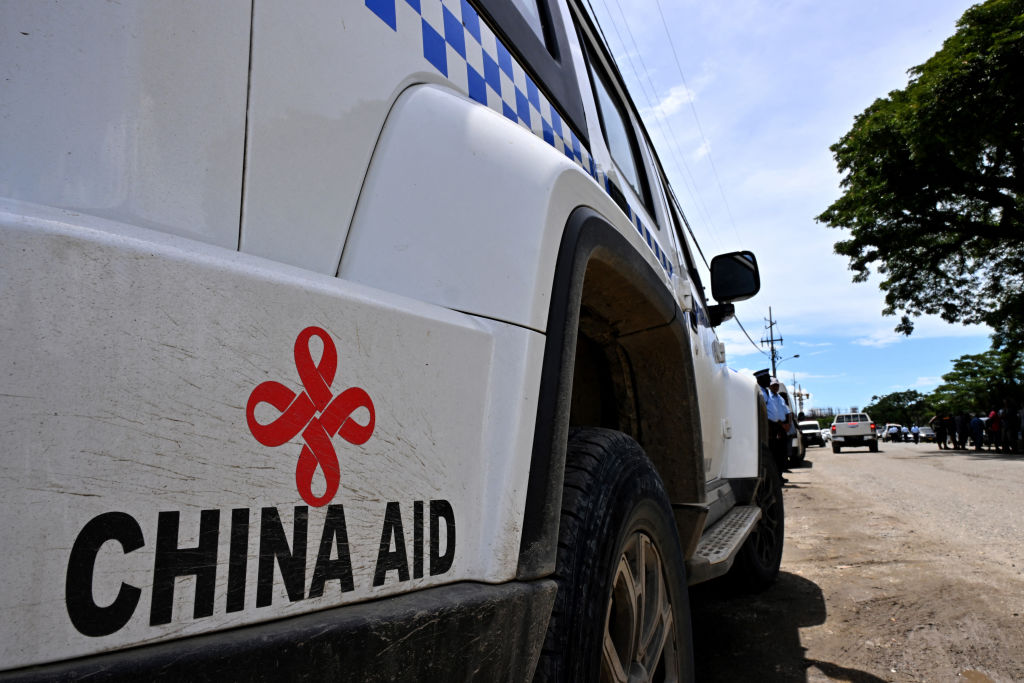
“I saw lots of cars here, police cars and government cars. But on the side, it’ll say ‘China Aid’ or that it’s donated by the Guangzhou Police or something like that. So there’s a lot of these police cars from China, but when they are needed, apparently there’s no cars to go and arrest people.”
He speculates that the vehicles have actually been gifted to people—particularly politicians—in return for their support of the CCP’s agenda.
Locals Not Benefitting from Infrastructure Projects
Solomon residents also complain that the big infrastructure spending backed by Beijing has little benefit for locals.
“Every single person I spoke to, I spoke to over three days [during my visit]—over 60 people—not one told me they believed that what the Chinese Communist Party was doing in the Solomon Islands was to benefit the local people. I couldn’t find anyone to say something positive,” Johnstone says.
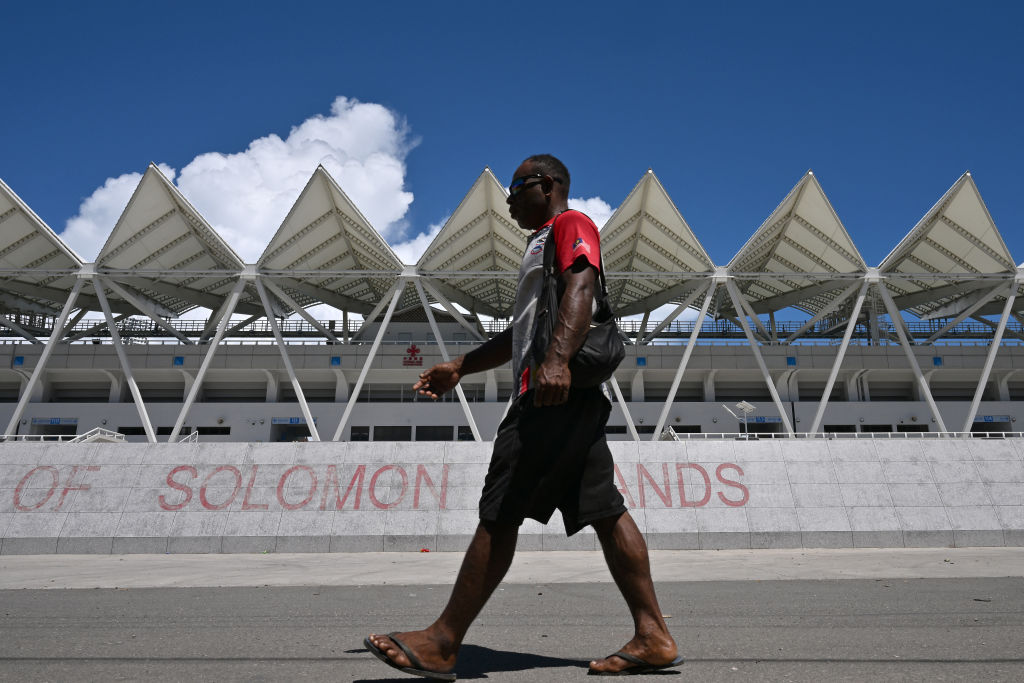
“The reason is, all these infrastructure projects, like the beautiful big sports stadium for the Pacific Games, they bring in labour from mainland China [to build them]. None of the local people gets work. They might get a guard position or something like that, but they’re kept out of it.
“So when you talk to the local people, they tell you that there are so many Chinese here [and ask,] ‘Why can’t the Australians come back? Why can’t the Kiwis come back? Why can’t RAMSI come back?'” referring to the Regional Assistance Mission to Solomon Islands, which began in 2003 in response to a request for international aid by the governor-general.
China Winning Over Youths
There is, however, one segment of the local population getting a lot of CCP attention: the young.
“The people 40 and upwards, they oppose what the CCP is doing there. But the younger generation [a target for Beijing’s] is soft power,” Johnstone explains.
“They’re setting up a kind of YMCA for the youth so they can bring them in off the streets because they’ve got no work. They can brainwash them and tell them, ‘Hey, this is how good the CCP is!’ They bring in the police in their Chinese police uniforms, teaching the local kids self-defence.”
It’s a similar point shared by Nick Coyle, a Papua New Guinea-based CEO, who said Beijing’s big spend—despite corruption issues—on large visible infrastructure was helping the CCP win the PR battle for hearts and minds.
“I think there’s quite a lot of justification to the way China looks at economic development, which is that you’ve got to get your infrastructure in first. So power, ports, airports, rail, connectivity, and telecommunications, and then you worry about things like governance and that sort of thing later,” Coyle previously told The Epoch Times.
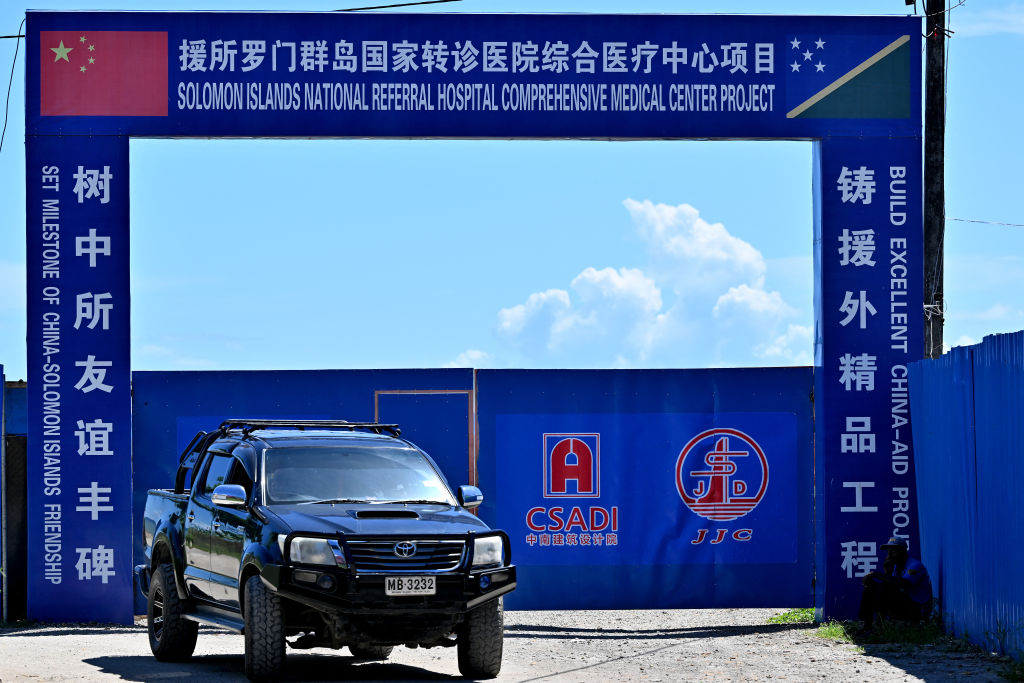
This however, is exacerbating an ongoing disconnect between the reality of life for most Pacific residents and the way leaders loyal to Beijing portray the CCP’s presence, Johnstone says.
“[A large] number of locals said to me how much they hate the government. If RAMSI had let them keep their firearms [back after the civil war], they’d be kicking the Chinese out at gunpoint and taking over the government grounds until they got a government that’s going to do the right thing for the people.”
 Friends Read Free
Copy
Facebook
Tweet
Friends Read Free
Copy
Facebook
Tweet