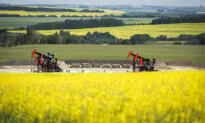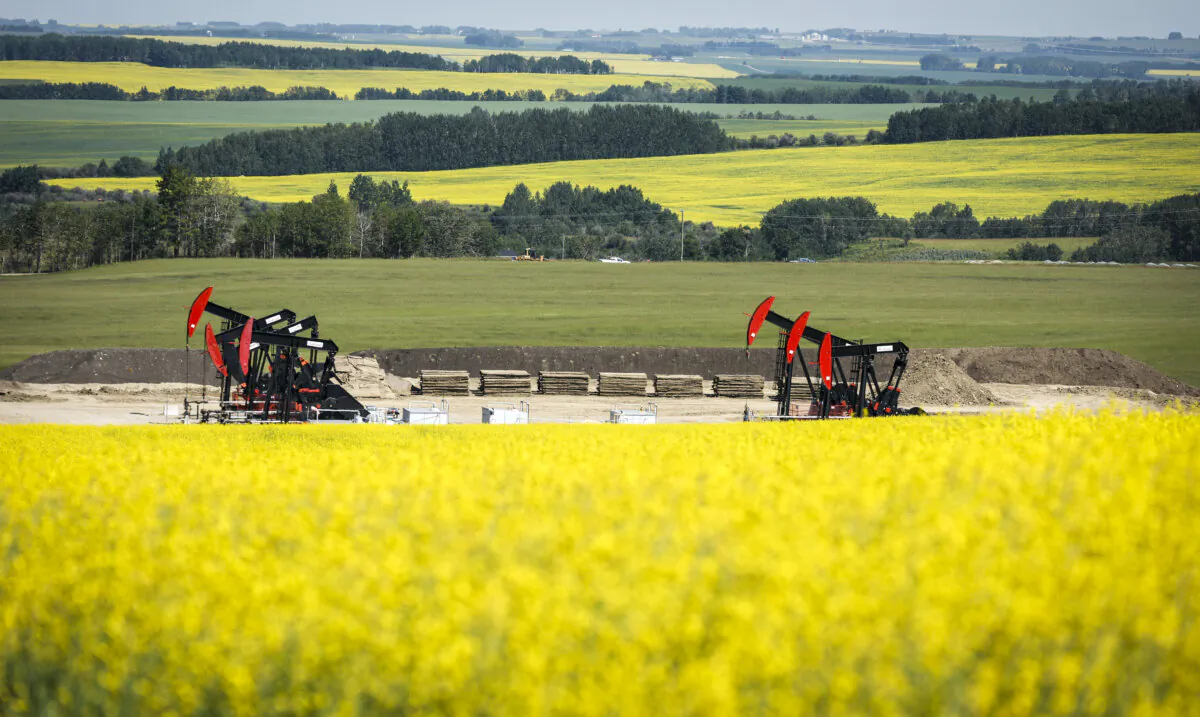

CALGARY/DIDSBURY, Canada—The Canadian province of Alberta is known for its oil rigs, cowboys, cattle runs, and strong traditions. Like Texas, these features have shaped Alberta’s unique history and culture.
Here, endless prairies roll toward the rugged Rockies, and a spirit of resilience pulses through both the land and its people, fueling a desire for more autonomy from the federal government.
Some Albertans want to go further by holding a public referendum on making Alberta independent from Canada. A petition question on separation was approved under the province’s new laws earlier this year.
Supporters of Alberta’s independence say the province has often been overlooked by federal politicians who make choices that help them win votes in bigger provinces like Ontario and Quebec. These sentiment rose after the April 2025 election, when the governing Liberals, led by new leader Prime Minister Mark Carney, won a fourth consecutive term after 10 years in power.
Alberta has consistently voted in federal elections for the opposition Conservative Party, which advocates greater oil and gas development and favors traditional policies. Polls indicate support for Alberta separation among one-third of the population after the Liberals’ victory.
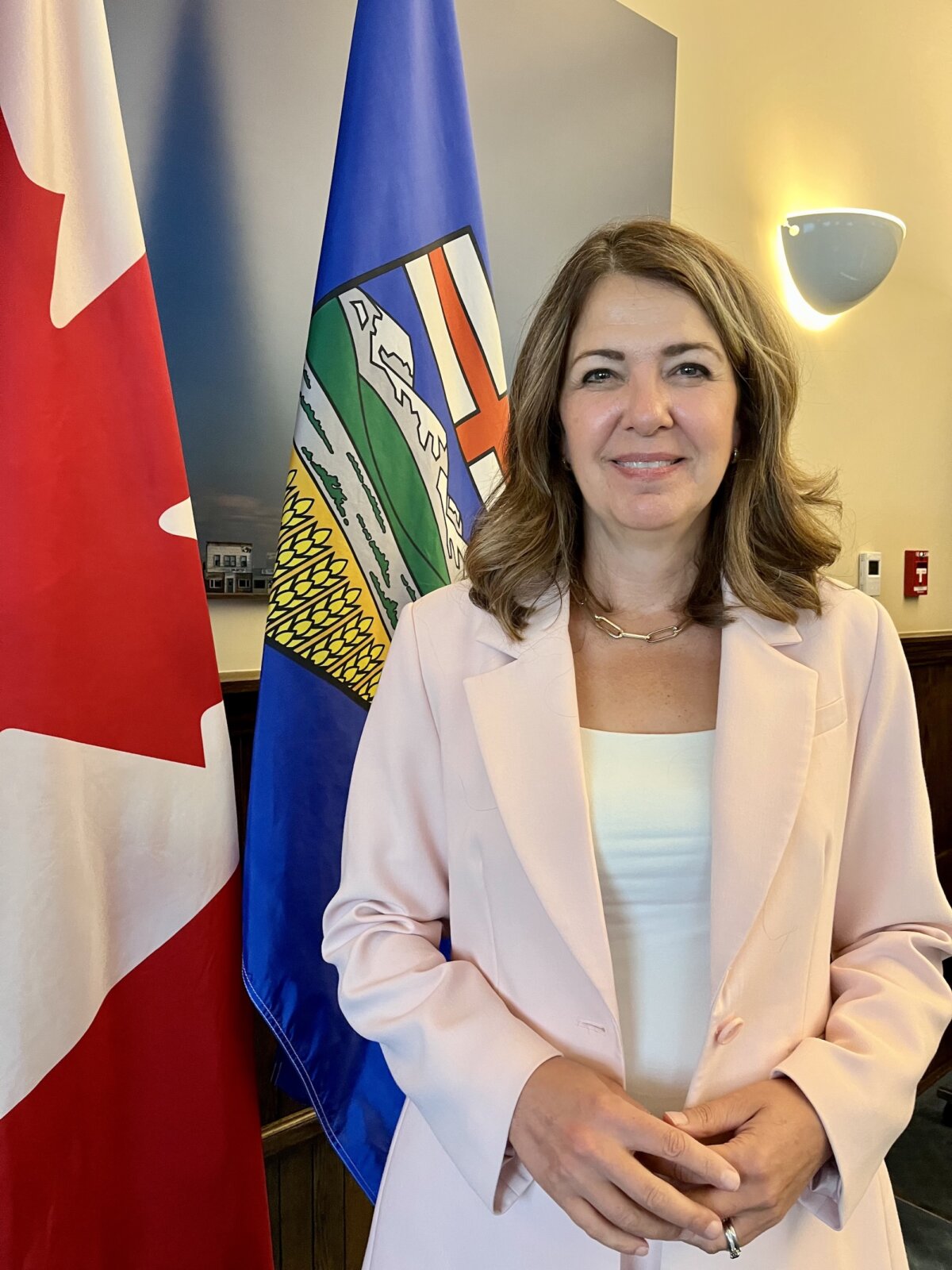
Alberta’s Premier Danielle Smith, who leads the provincial United Conservative Party, says she wants Alberta to stay in Canada. However, she has warned Ottawa that policies seen as harmful to Alberta’s interests are fueling separatist sentiment.
She has introduced new laws and opposed court decisions that tried to limit citizens from gathering signatures for a possible separation referendum. She says the democratic process should not be restricted.
“I think it’s very much up to Prime Minister Mark Carney—I mean, it was his predecessor that created this frustration,” Smith told The Epoch Times.
“And if he wanted to solve some of the tension, he would start repealing some of those bad policies.”
Feeling Disadvantaged
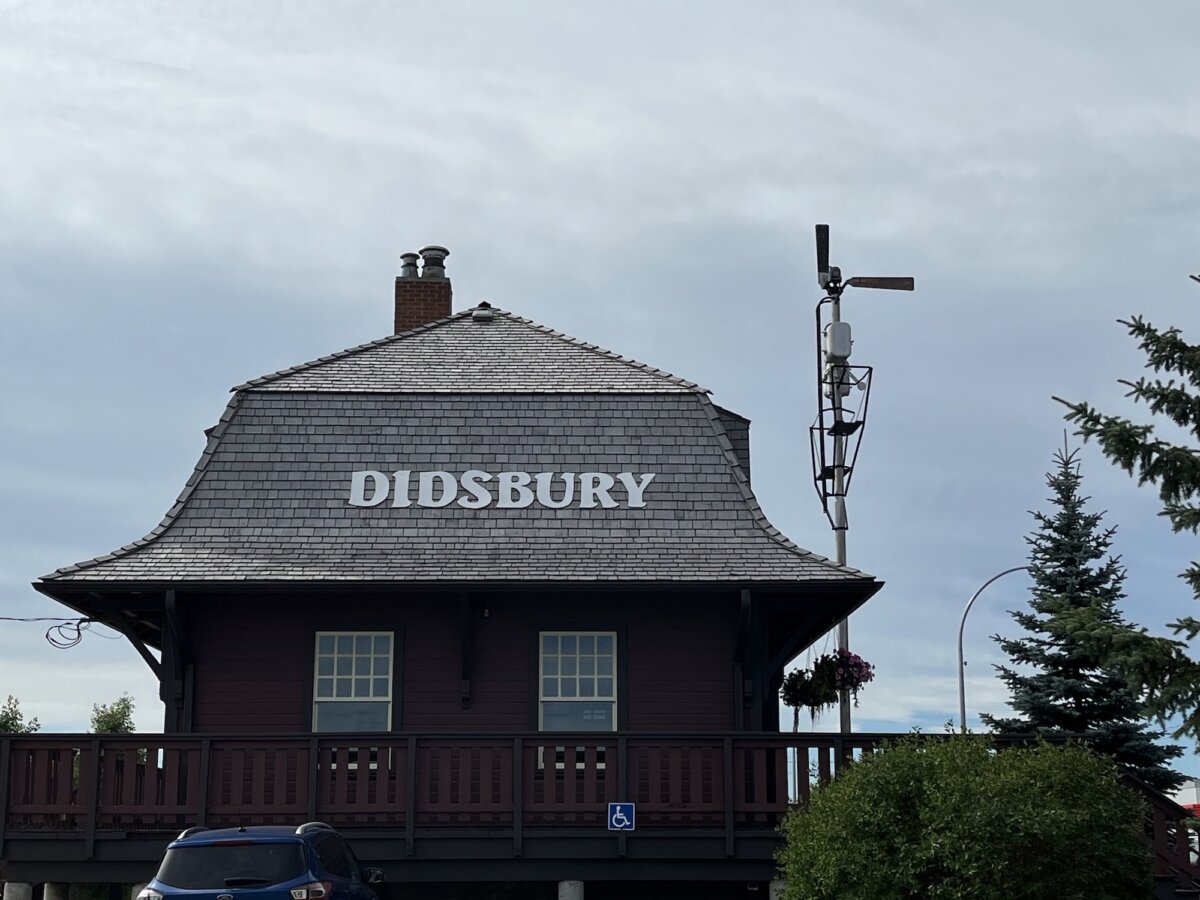
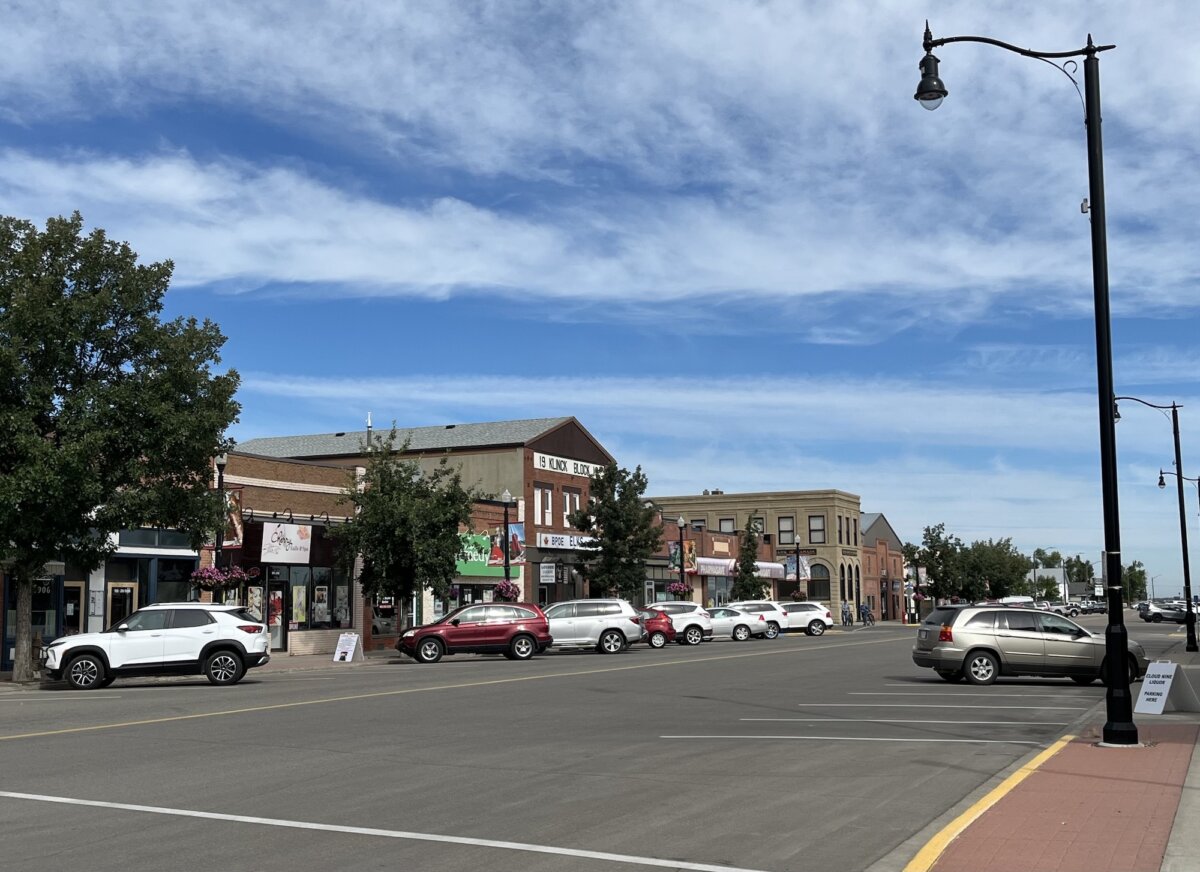
The spirit of tradition and self-reliance is especially evident in the historic town of Didsbury in central Alberta.
It’s here, amid the buzz of electric clippers at Black Knight men’s styling salon on 20th Street, that political talk flows as freely as the scent of tonic and aftershave.
Earl Scott, a local rancher, took a seat in the only barber’s chair. Mike, the shop owner, covered him with a clean sheet and picked up his scissors.
“Been getting out much lately, Mike?” Scott asked casually.
Mike, who preferred not to share his last name over privacy concerns, shook his head in response.
“Work. Home. Work. Home,” he said.
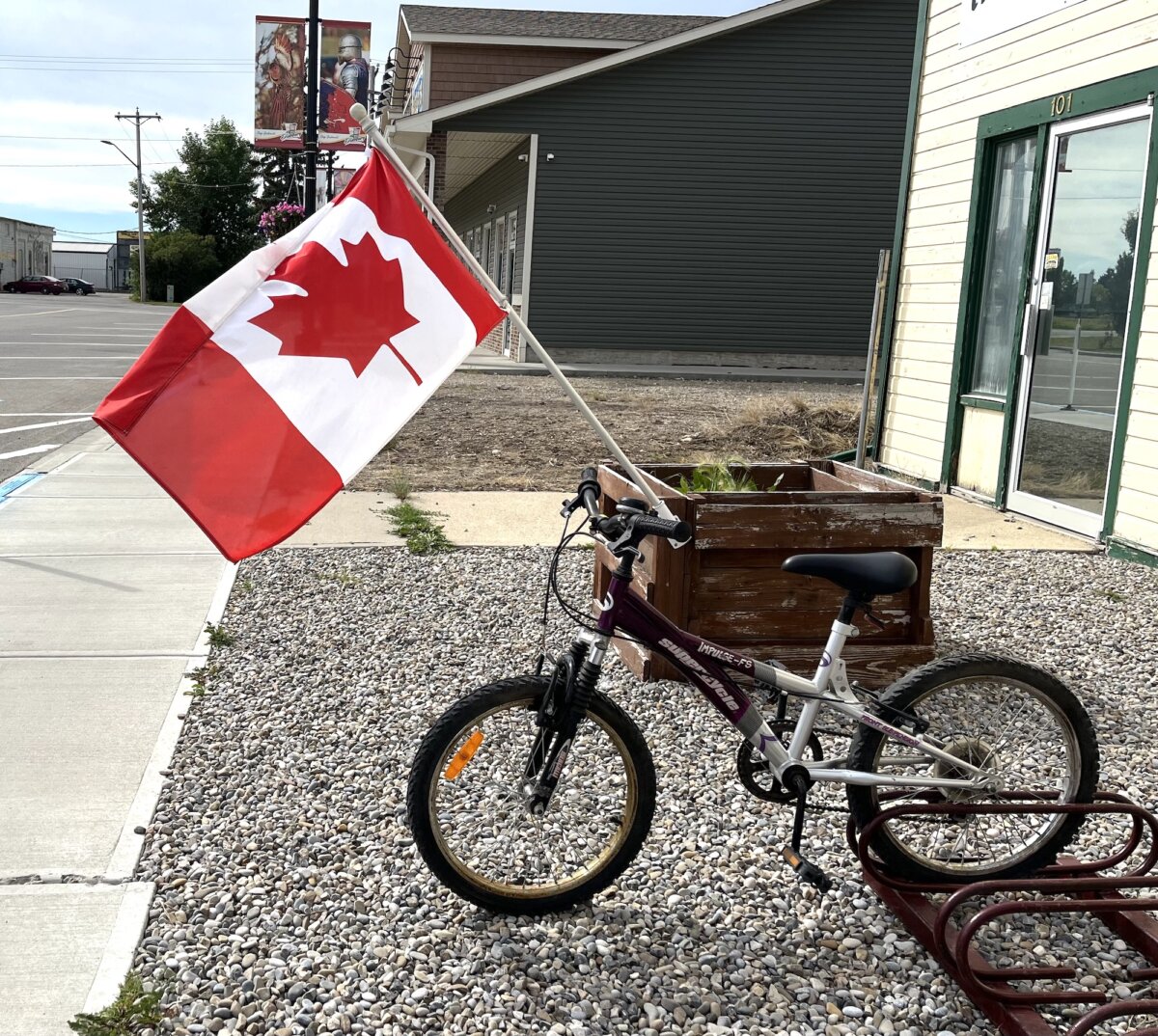
A Canadian flag on the wall reflects the ties that still bind this town of 5,070 people, situated approximately 145 miles south of Edmonton, Alberta’s capital.
When small talk turns to politics, Scott said he believes that national unity in Canada is not as strong as it once was, as tensions rise between Alberta and the federal government in Ottawa over policies affecting the western provinces.
Scott said that Carney’s predecessor, Justin Trudeau, made things worse for many people during his tenure by introducing strict COVID-19 rules and mandates.
He added that with “equalization,” Alberta pays significantly more tax money into the system than it receives in benefits from the east.
Equalization is a redistributive federal program in Canada’s constitution. Its goal is to help balance financial differences among the country’s 10 provinces.
The non-profit Canadian Taxpayers Federation said that people in Alberta, a province rich in oil and gas resources, have paid $67 billion into equalization since its inception in 1957. However, Albertans have received back less than 0.02 percent of all the money allocated to provinces through this program.
“It always seems we’re at the back end,” Scott said. “Basically, the east is the one that separates us. That’s what I’ve been hearing from a lot of people.”
Canada’s equalization payments surpassed $27 billion for 2026, with all provinces except British Columbia, Alberta, and Saskatchewan set to receive some funding.
“Whether due to higher incomes, higher employment rates, or other factors, these three provinces have a greater ability to collect government revenue, so they will not receive equalization payments,” says the Vancouver-based think tank the Fraser Institute.
The institute noted that in 2021, the cost of the equalization program increased, despite oil-producing provinces such as Alberta, Saskatchewan, and Newfoundland and Labrador having less available funds.
Scott believes the federal government must treat provinces equitably and adhere to Canada’s constitution if the country is to remain prosperous and united.
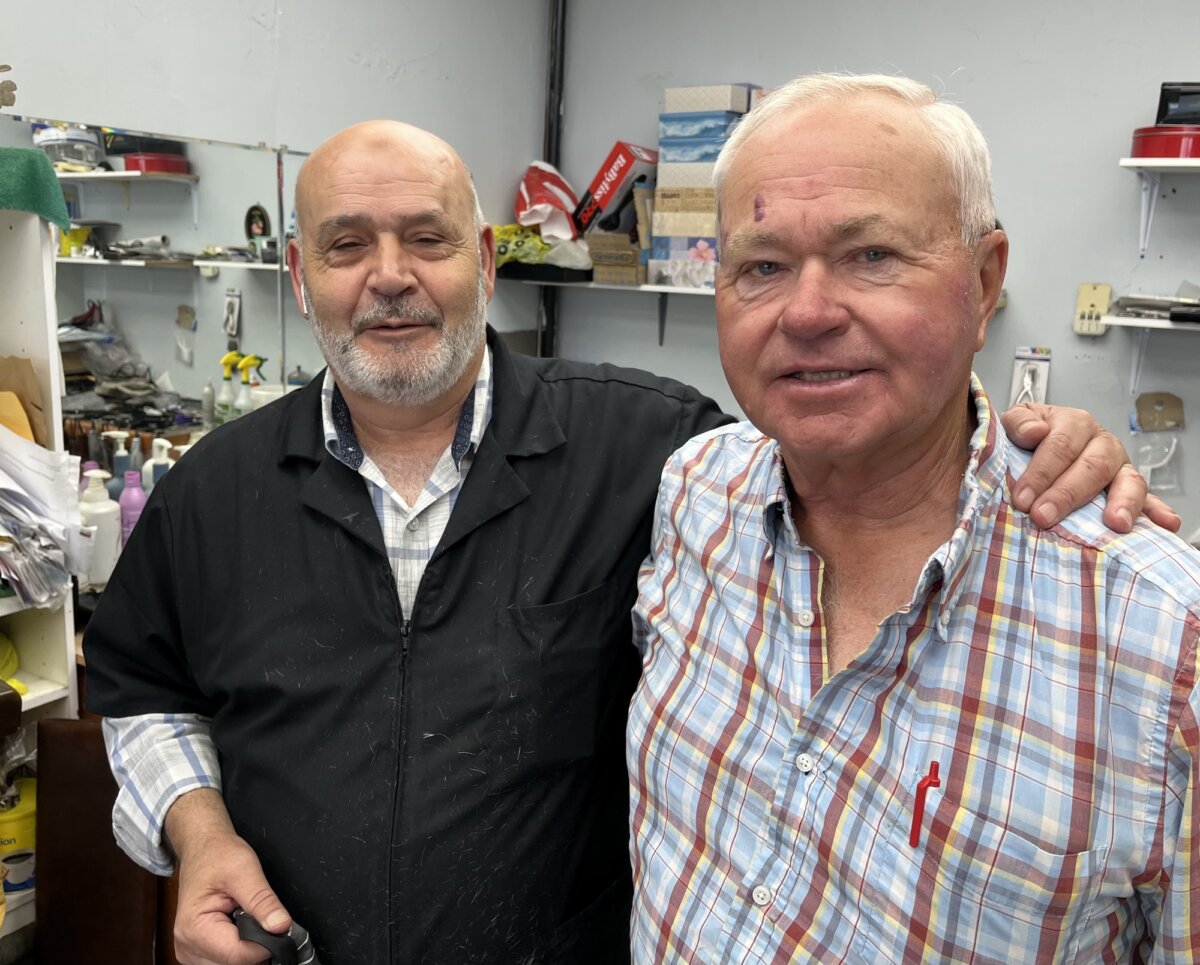
“I’m all for Alberta. I just want to be treated fairly—and that’s the thing,” Scott told The Epoch Times.
An Angus Reid poll in May showed support for provincial independence was 36 percent in Alberta and 34 percent in Saskatchewan.
The poll revealed fewer people are strongly committed: 19 percent in Alberta and 15 percent in Saskatchewan said they would definitely vote to leave in a referendum.
It found that many people who wanted to leave might change their minds if the federal government allowed an East-West pipeline.
They might also reconsider if the government lifted rules on oil and gas pollution or relaxed regulations on resource projects.
The organization said that “smaller, but still significant, portions of those who would ‘definitely’ vote leave in their province’s respective referendum would also be swayed to vote to stay by those concessions.”
The federal government and the province recently signed an agreement to remove some of the barriers to the oil and gas sector and a potential pipeline to the Pacific coast, though the federal Conservatives say major barriers remain.
Separation Referendum
The provincial government introduced legislation last year to lower the number of signatures needed to initiate a public vote to 177,000, even for major issues like secession. The legislation passed on May 15, 2025.
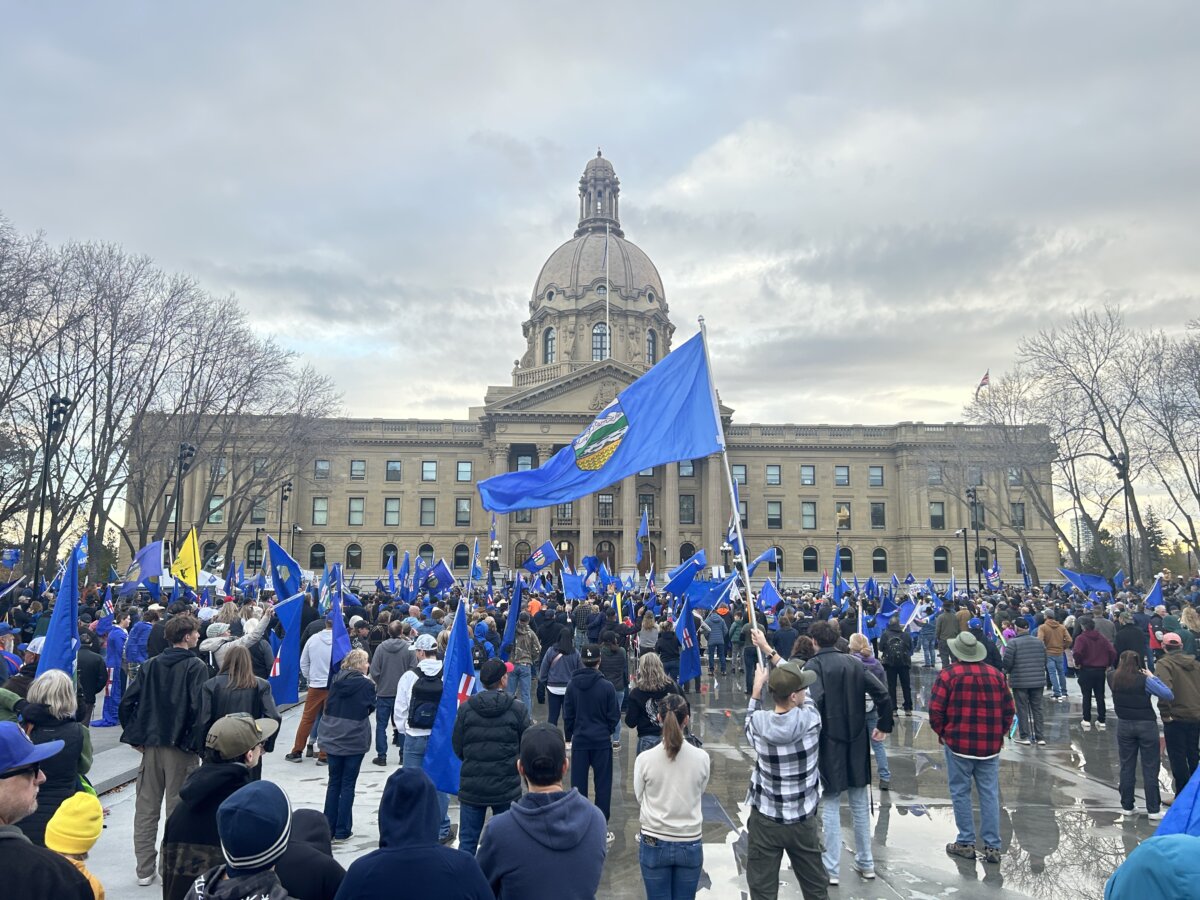
The pro-independence group Alberta Prosperity Project (APP) filed an application with Elections Alberta, seeking approval of its proposed independence question to begin gathering signatures for the question to qualify as a referendum. Alberta’s chief electoral officer said the matter needed to go to court to confirm the question’s constitutionality.
As a judge was considering the issue, Alberta’s government introduced new legislation on Dec. 4, 2025, that takes away the chief electoral officer’s power to send citizen-initiated questions to the courts and gives that authority to the justice minister.
One day later, the presiding judge issued his decision, saying that the proposed separation referendum is unconstitutional and violates the Canadian Charter of Rights and Freedoms, as well as First Nations treaty rights. He added that the government’s new legislation amounts to “silencing” the court.
The government pushed back on the judge’s comments, calling them interference, and passed the legislation in the provincial legislature, where Premier Smith’s United Conservative Party holds a majority.
Following the passage of the new legislation, the APP submitted a new petition question, which was approved by Elections Alberta. The group was told by the electoral body on Jan. 2 that it could begin collecting signatures.
The new proposed question asks, “Do you agree that the Province of Alberta should cease to be part of Canada to become an independent state?”
The group has until May 2 to collect more than 177,000 signatures for the question to qualify for a referendum.
Is Separation Possible?
Alberta became part of the vast Northwest Territories in 1882 and was granted province status within Canada in 1905.
Alberta could, in theory, separate from Canada. However, the process would be long, uncertain, and full of challenges, according to the Centre for Constitutional Studies in Canada.
People in French-speaking Quebec voted in a major referendum in 1995 to decide whether to separate from English-speaking Canada.
The result was very close: 50.58 percent voted “no” and 49.42 percent voted “yes.”
Quebec’s referendum caused a national unity crisis and led to a request for guidance from the country’s Supreme Court.
The Clarity Act of 1998 outlines the rules for how a province can separate.
First, a constitutional change would be required after a successful vote to leave Canada. This vote would need to clearly show the wishes of Alberta’s people, as decided by Canada’s House of Commons.
The vote would start discussions between Alberta, the federal government, and other provinces to change the Constitution. If these talks are successful, Alberta could become independent.
‘Alberta Wants Its Constitutional Rights Respected’
Smith said she values the grassroots democratic process. She also wants Canada to stay united and believes Alberta should have more control over its politics and natural resources.
“The way I look at it is that I think Alberta isn’t really interested in being dominated by Ottawa or Washington,” Smith told The Epoch Times at her legislative office in Calgary.
“Alberta wants its constitutional rights respected, wants the ability to develop its resources in its own way, and wants the ability to maintain the unique culture that we have.”
Smith said that since she took office more than three years ago, she has tried to guide Ottawa back to its own responsibilities, sometimes in public, sometimes through court cases, and sometimes by passing new laws.
She said she plans to keep using this approach, especially as the relationship with Ottawa might change.
“I’m trying to save Canada,” Smith said. “I believe we need to respect our constitution, which sets out a division of powers. Canada is one of the most decentralized federations in the world. Unfortunately, our federal government does not respect those boundaries.”
The premier recently signed an agreement with Carney to allow a new pipeline from her province to the Pacific coast of British Columbia, if a private company proposes the project and it includes carbon capture.
The agreement also relaxes some net-zero policies from the Trudeau era, in exchange for the province raising its industrial carbon tax and promising to reduce methane emissions.
Carney has said he understands the “frustrations” of people considering separation. In a September interview with an Alberta radio host, he added, “We’re stronger together.”
The pipeline agreement with Smith had a political cost for Carney. Some of his MPs from British Columbia pressured him, since their provincial government opposes lifting a tanker ban that would allow international oil shipments from the northern coast.
He also lost a high-profile cabinet minister, Steven Guilbeault. Guilbeault, who was minister of environment and climate change under the Trudeau government, introduced many net-zero policies that the new pipeline agreement removes.
The federal Conservatives say the government should stop choosing which projects to support. They want the government to remove barriers, repeal policies like the industrial carbon tax, and let the free market decide winners and losers.
Smith has called her agreement with Ottawa a success, saying it eliminates many of the “bad laws” her government has opposed.
She said at her party’s convention in November that she hopes people in the province “feel a lot more confident that Canada works than they did a couple of days ago.” Most of the audience had cheered her earlier comments about her government’s actions, but they booed this statement.
Polls show that while more than one-third of Albertans support separation, the number is much higher among United Conservative Party supporters. According to a May 8, 2025 Angus Reid Institute survey, 65 percent of those who voted for the UCP in the last provincial election said they would support separation.
Collecting Signatures
The APP believes more people in the province support separation than the numbers show.
“When you combine all the people in Alberta that want sovereignty in various ways, it is the vast majority of our province that wants sovereignty,” said Alberta Prosperity Project spokeswoman Tanya Clemens in an interview.
Clemens said the group’s mission is to educate people on why Alberta needs to be sovereign without Canada, “because that’s when we can end transfer payments. That’s when we can get our freedoms and autonomy back.”
Chris Scott, a member of the Alberta Prosperity Project, says that for him, seeking independence is about having more freedom.
“I see myself as an Albertan. I want to be free, and I understand that being free means that I can get hurt. But it’s my choice,” he said. He added that people in Alberta value faith, family, and freedom, and usually want to handle their own affairs.
The group is now holding sessions throughout the province to gather signatures. Dr. Dennis Modry, a co-founder of the Alberta Prosperity Project, says the group is approaching the issue in a pragmatic way.
“We’re looking at this from the point of view of what’s the most pragmatic legal pathway that has the greatest pragmatism and probability of success,” he told The Epoch Times.
Thomas Lukaszuk, a former deputy premier of Alberta, is running a pro-Canada petition called “Forever Canadian” to compete with APP’s proposed referendum.
In a previous interview with The Epoch Times, Lukaszuk said he is a proud Canadian and doesn’t want the province to separate.
“We are a country that is in constant negotiation, and that’s what makes us so unique, and that’s what makes us work so well. But we have mechanisms for solving the problems, but separating from Canada is never an option,” he said.
He said prospects of separation would harm the province’s economy as well.
“When we have these kinds of discussions, it puts a chill on investment.”
Energy Sector
Alberta is an important part of Canada’s energy sector. Its goods and services were worth $353.3 billion in 2024. This includes $19.7 billion from natural gas liquids, $18.2 billion from crude oil, and $5 billion from natural gas.
Smith said Alberta lost millions in potential revenue after oil pipeline projects were canceled. One example is the Keystone XL project, which ended after President Joe Biden revoked its presidential permit in 2021.
The pipeline was expected to move approximately 830,000 barrels of oil each day from western Canada to refineries on the U.S. Gulf Coast. It also promised to protect the environment and maintain safety.
Alberta has 255,541 square miles of prairie and forest. The oil industry added 604 new wells and operated 104 active drilling rigs in 2024.
“If you look historically, Albertans get really upset when Ottawa stands in the way of their economic productivity, their ability to create jobs and wealth, and develop their resources,” Smith said.
“It’s the missed opportunity, the missed jobs, and the uncertainty that is being created in energy.”
Chandra Philip contributed to this report.
 Friends Read Free
Copy
Facebook
Tweet
Friends Read Free
Copy
Facebook
Tweet