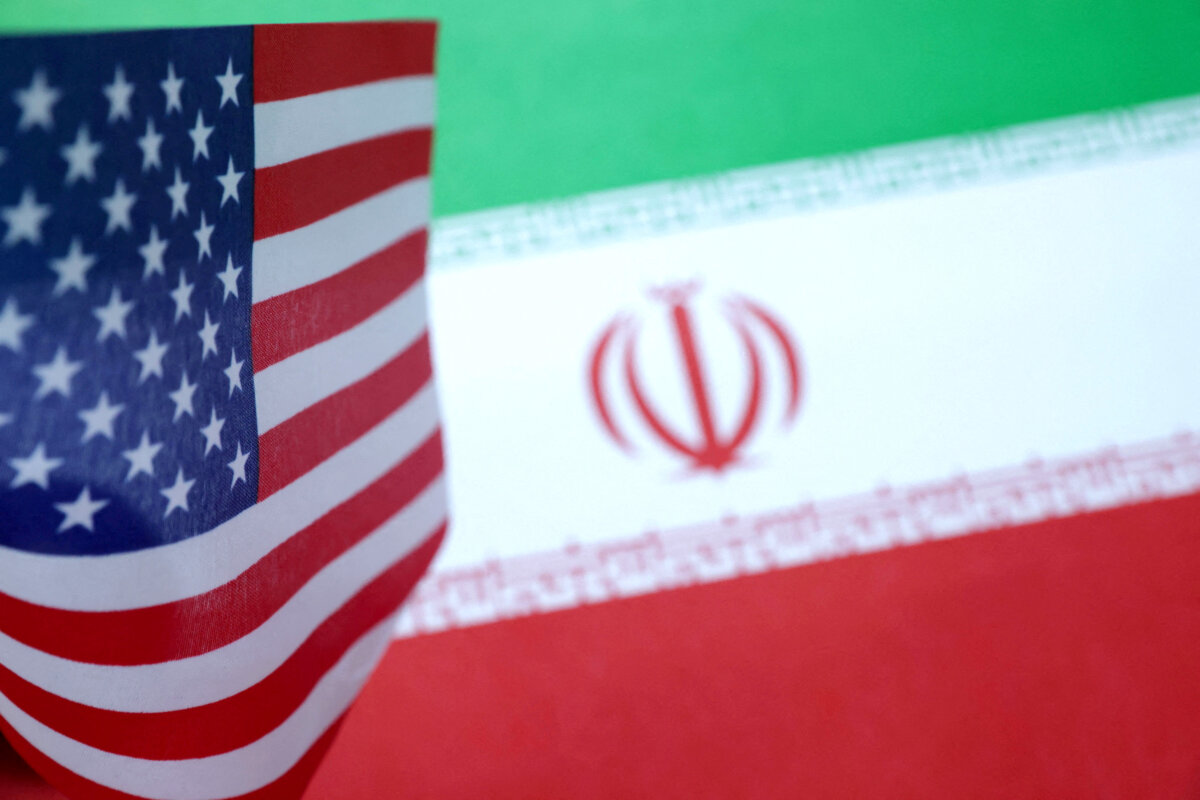

Iran seeks a “peaceful” nuclear agreement with the United States to resolve the decades-long dispute between the two nations, but will not compromise on its national security, Tehran Deputy Foreign Minister Saeed Khatibzadeh said on Nov. 11.
The United States, Israel, and many European nations have accused the Islamic Republic of using its self-professed “peaceful” nuclear energy program to cloak what they say is its true goal of developing atomic weapons. Tehran rejects this charge.
“Tehran is not seeking nuclear bombs and … is prepared to assure the world about it,” Khatibzadeh told the 12th Abu Dhabi Strategic Debate in the United Arab Emirates.
“We are very proud of our home-grown nuclear program,” he added, going on to say that Washington was sending contradictory messages about nuclear talks to Tehran via third countries.
The United States and Iran held five rounds of discussions on the latter’s nuclear project prior to a war erupting between the Islamic Republic and Washington’s close ally, Israel, in June.
The 12-day conflict saw U.S. forces give military backing to Israel and conduct strikes against several key Iranian nuclear sites.
In his comments in Abu Dhabi, Khatibzadeh accused Washington of “betraying diplomacy,” repeating the stated view of his nation.
Nuclear talks between Iran and the United States have not resumed since the war in June, and chasms remain between the two sides over issues such as the enrichment of uranium inside Iran.
Washington wants this process completely halted to minimize the risk of weaponization. Tehran, however, has so far rejected any such notion.
The Question of Sanctions
President Donald Trump said on Nov. 6 that Iran has been asking whether the United States can lift the sanctions it has imposed on the Islamic Republic.
“Iran has been asking if the sanctions could be lifted. Iran has got very heavy U.S. sanctions, and it makes it really hard for them to do what they’d like to be able to do. And I’m open to hearing that, and we’ll see what happens, but I would be open to it,” Trump told reporters at the White House on Nov. 8.
Earlier that same week, however, Iranian Supreme Leader Ayatollah Ali Khamenei said that cooperation is not possible without Washington drastically altering its foreign policy toward the entire Middle East.
“The United States sometimes says it’s willing to cooperate with Iran. If they stop supporting Zionist regime, remove military bases from the area, and stop interfering in the region, these matters could potentially be reviewed. This isn’t something foreseeable for now, nor for the near future,” Khamenei said, according to the state-controlled Tehran Times.
Speaking at the Israeli Knesset in October, Trump said the United States was prepared to make a deal when Tehran was ready to do so, adding, “the hand of friendship and cooperation (with Iran) is open.”
Pressure has also mounted on Iran since its war with Israel earlier in the year from outside the United States, with the European Union reimposing sanctions on the country in late September.
The European Council, where government ministers of the bloc’s 27 members meet to discuss laws and coordinate policies, announced it would freeze the assets of the Central Bank of Iran and major commercial Iranian banks.
The EU also reinstated measures blocking Iranian cargo flights from European airports and prohibiting the service or maintenance of Iranian cargo craft if they are carrying banned materials.
The EU sanctions also included bans on exporting certain types of software, the sale of precious metals and diamonds, as well as the import, purchase, and transportation of crude oil, natural gas, petrochemicals, and petroleum products.
This followed a move by the United Nations on Sept. 27 to reintroduce an arms embargo and other sanctions on Iran.
Reuters and Victoria Friedman contributed to this report.
 Friends Read Free
Copy
Facebook
Tweet
Friends Read Free
Copy
Facebook
Tweet