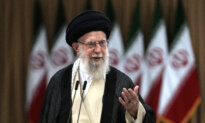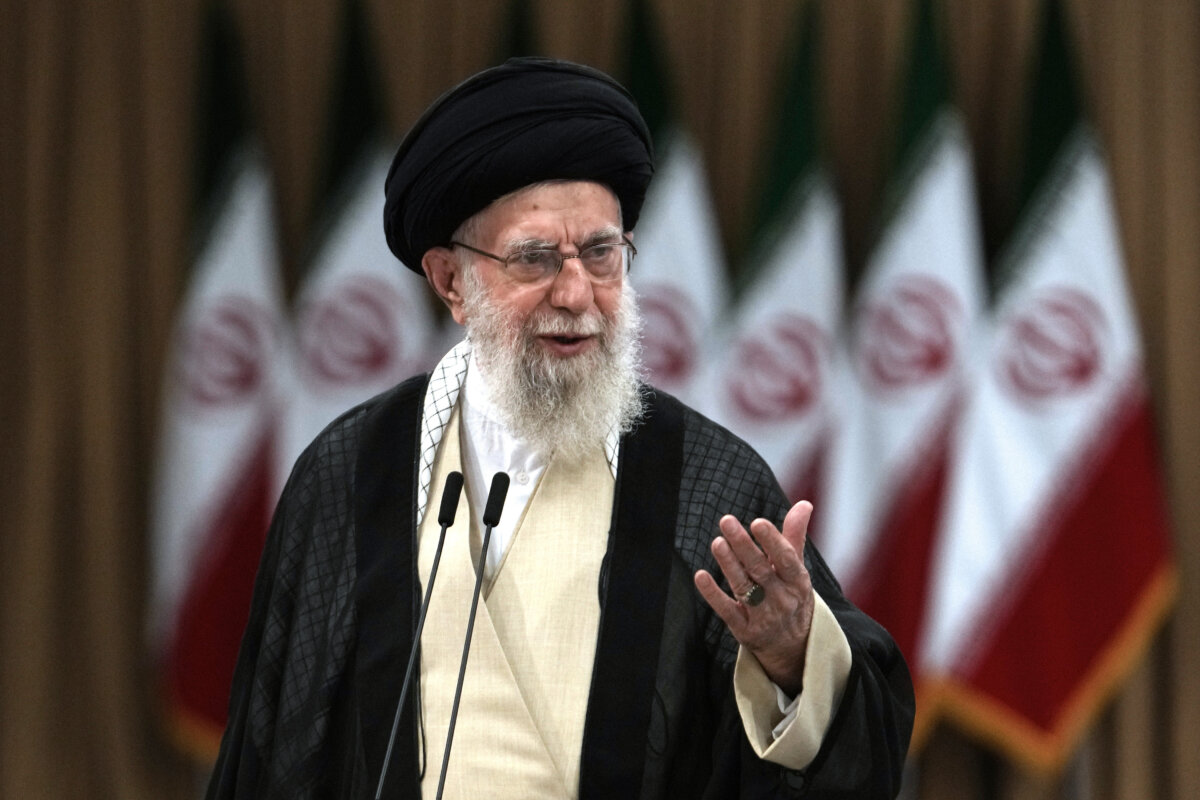
Iranian leader Ali Khamenei has turned down direct talks with the United States over his country’s nuclear program and said the current situation was “unsolvable.”
Tehran suspended negotiations with Washington after U.S. Air Force B-2 Spirit stealth bombers dropped 30,000-pound bunker-busting bombs on Fordow, a nuclear site deep underground, on the night of June 21–22.
According to Iranian state-run news agency IRNA, Khamenei gave a speech on Aug. 24, in which he said: “The U.S. wants Iran to be obedient to it. The Iranian nation is deeply offended by such a great insult and will stand with all its strength against those who harbor such a false expectation of the Iranian people.”
Khamenei described those proposing direct negotiations with Washington as “shallow-minded.”
The 86-year-old, who has been the leader of Iran since 1989, said, “This issue is unsolvable.”
Khamenei’s comments come after Iran agreed on Aug. 22 to resume talks with Britain, France, and Germany on Tehran’s nuclear enrichment program.
On July 15, French Foreign Minister Jean-Noël Barrot said the three countries would be justified in reapplying sanctions if no agreement is reached on a long-term framework for Iran’s nuclear program.
Under a “snapback” mechanism, the U.N. sanctions could be reapplied if Tehran refuses to negotiate.
Germany Threatens ‘Snapback’ Sanctions
On Aug. 22, German Foreign Minister Johann Wadephul said the talks would begin on Aug. 26 and warned Iran that the snapback sanctions will take effect unless it reaches a verifiable and durable deal to allay concerns about its nuclear program.
Iran, which has among the largest oil and gas reserves in the world, has always said it seeks only to develop nuclear power and is not making weapons.
But on June 12, the International Atomic Energy Agency’s 35-nation board of governors passed a resolution declaring Iran noncompliant and in breach of its obligations under the Nuclear Nonproliferation Treaty.
Within hours of the passage of that resolution, Israel began bombing nuclear sites and other targets within Iran, which continued for 12 days.
Iran retaliated with missile and drone strikes on Israel, but a cease-fire was finally agreed to on June 24, hours after the Iranians launched a symbolic missile strike against a U.S. military base in Qatar in retaliation for the bombing of Fordow.
On June 30, U.S. President Donald Trump said he would not be offering Iran anything and was not planning to engage in any talks with the regime in Tehran.
Khamenei said the United States had been hostile toward Tehran since 1979, when the Shah was overthrown and replaced by a theocratic regime, according to the IRNA report.
Khamenei said the reasons for U.S. hostility were “often obscured under various pretexts, such as terrorism, human rights, women’s issues, and democracy.”
But he said the Trump administration had clarified its true objective, which Khamenei said was for Iran to be obedient to U.S. demands.
Khamenei said Iran remained united and that the Islamic system could not be subdued through war.
The Iranian leader went on to describe the suffering of Palestinians in Gaza as “unprecedented in history” and said verbal condemnations of Israel by various Western governments were insufficient.
Referring to Israel, Khamenei said, “We hope God almighty will bless the movement of the Iranian nation and truth-seekers worldwide and uproot this malignant cancer.”
The Iranian regime, having survived the military onslaught by Israel, appears to have renewed its threat toward dissidents and critics in Europe and North America.
On July 31, the United States, Canada, and 12 European countries released a joint statement condemning the “growing number of state threats” from Iranian intelligence services.
“We are united in our opposition to the attempts of Iranian intelligence services to kill, kidnap, and harass people in Europe and North America in clear violation of our sovereignty,” the statement said.
It also said that Iranian intelligence operatives were targeting “journalists, dissidents, Jewish citizens, and current and former officials in Europe and North America.”
Reuters contributed to this report.
 Friends Read Free
Copy
Facebook
Tweet
Friends Read Free
Copy
Facebook
Tweet