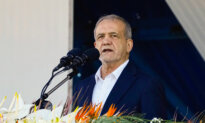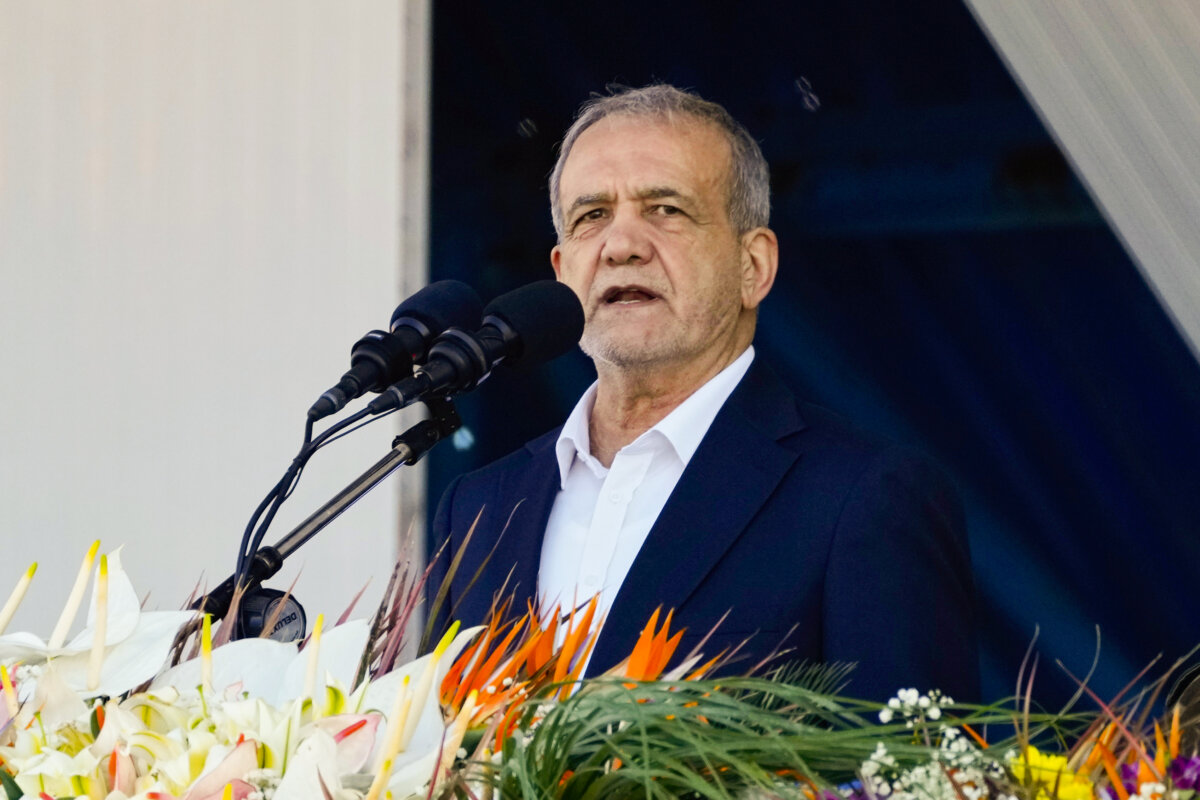

Iranian President Masoud Pezeshkian offered to bring his country back into compliance with a June peace framework with the United States if Washington does the same.
“I am stating clearly that if the United States returns to its commitments under the Memorandum of Understanding, the Islamic Republic of Iran will immediately reciprocate,” Pezeshkian said in remarks at the Shanghai Cooperation Organization summit in Kyrgyzstan on Sept. 1.
On June 17, Washington and Tehran formally enacted a memorandum of understanding that set out a framework for negotiations to resolve months of fighting.
In addition to reinforcing a preexisting ceasefire, the June peace framework called for the release of frozen Iranian financial assets.
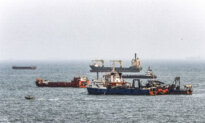
The deal also wanted Iran to facilitate a safe resumption of commercial traffic in the Strait of Hormuz, halting attacks on shipping it began after U.S. and Israeli forces started bombing Iran on Feb. 28.
The peace framework collapsed in early July, as Iranian forces resumed attacks on commercial ships they said were circumventing designated transit routes in the strait.
As he addressed the Shanghai Cooperation Organization, Pezeshkian said Washington caused the peace framework to collapse by breaching its commitments and making excessive demands of Tehran.
Pezeshkian’s offer to return to the peace framework came after U.S. and Iranian forces exchanged fire on Aug. 30, marking the first direct armed clash between the two countries in a month.
U.S. forces, on Aug. 30, claimed responsibility for attacking a pair of rocket launchers on Iran’s Larak Island that were equipped to disperse sea mines into the Strait of Hormuz.
Iranian forces responded by firing missiles at bases hosting U.S. forces in Jordan.
U.S. President Donald Trump has vowed to retaliate for the attack on Jordan.
“We’re going to hit them hard,” Trump told Fox News on Aug. 31.
Before the latest exchange of fire between U.S. and Iranian forces, the Trump administration had already begun ramping up a campaign to economically isolate Iran.
The heightened financial siege includes an expanded set of secondary sanctions and a threat that firms continuing to have business dealings with Iran will be cut off from the U.S. dollar system.
Amid the growing economic pressure, Pezeshkian called for the members of the Shanghai Cooperation Organization—which includes China, Russia, India, and Pakistan—to establish a shared bank, create an export and investment insurance union, and form an energy consortium.
Since the start of the armed U.S.–Iran standoff, China has continued to provide an economic lifeline to Iran by purchasing its oil exports.
Trump is set to host Chinese leader Xi Jinping in Washington later this month.
Beijing’s continued financial ties with Tehran could serve as a point of contention during the meeting, as Trump navigates sensitive trade relations with China.
Andrew Moran and Emel Akan contributed to this report.
 Friends Read Free
Copy
Facebook
Tweet
Friends Read Free
Copy
Facebook
Tweet