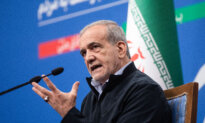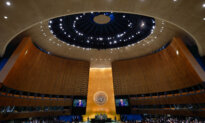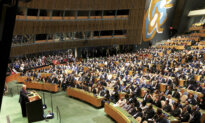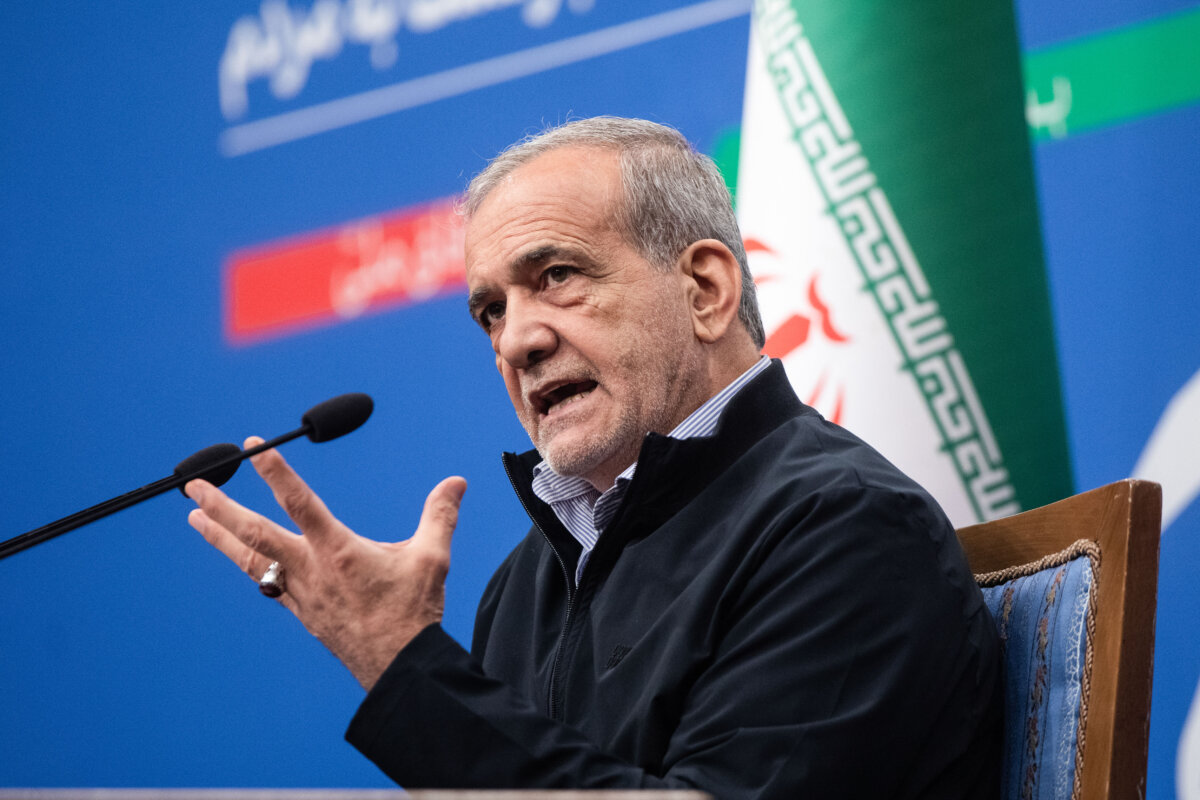
Iranian President Masoud Pezeshkian vowed during his Sept. 23 address to the U.N. General Assembly that the Iranian regime will not back down under pressure from the United States.
Pezeshkian said that “the resistance of the Iranian people will only increase in the face of sanctions, increased pressure, increased bullying.” He also disputed President Donald Trump’s description of the Iranian regime as a sponsor of terrorism, arguing that Iranians have been “the victims of terrorism.”
A member of the U.S. delegation to the U.N. General Assembly walked out on the Iranian president’s speech, which was translated from Farsi to English, shortly after Pezeshkian accused the United States and Israel of targeting civilians.
“We have only defended ourselves. We are not terrorists,” Pezeshkian said. “Our innocent people have been the targets of cowardly attacks and aggressions imposed upon our country. And we defended ourselves with utmost strength. America and Israel attacked us.”
“We will never bow our head or bend at the knee,” Pezeshkian added. “Iran must be understood by Mr. Trump and those who seek to bully us that we are ready for dialogue and diplomacy and negotiations without accepting the language of force.”
The Iranian president’s comments come nearly seven months since the start of Operation Epic Fury, alongside Isreal’s Operation Roaring Lion, during which U.S. forces have carried out strikes on Iran’s navy, missile capabilities, and nuclear development.
On Aug. 24, the Trump administration also announced new sanctions targeting Iran, as well as entities and individuals linked to the regime. The sanctions, known as Operation Economic Outcast, are aimed at isolating Tehran’s economy and increasing pressure on the regime to make a deal with the United States.
During Wednesday’s address to the U.N. General Assembly, Pezeshkian asserted that Iran has “proven that we’re not afraid of fighting of war, a war that is defensive in nature.”
Asked for a response to Pezeshkian’s criticism of the United States during a press conference on Wednesday, Secretary of State Marco Rubio accused Tehran of repeatedly violating the principles of the United Nations.
“I think slaughtering 10,000 of your own people in protests is a violation of the U.N.—I hope it’s a violation of the U.N. principles,” he responded. “I think sponsoring terrorist organizations in the region to attack your neighbors, attack energy infrastructure, attack civilian sites is a violation of the U.N. system.”
“So I don’t know what standing Iran has to lecture anyone on human rights or the international system when they habitually violate it,” he added.
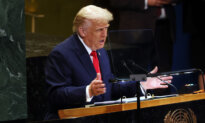
Pezeshkian’s speech was given just a day after Trump said he had a major decision to make regarding the conflict with Iran during his address to the U.N. General Assembly on Sept. 22.
“Will a deal be made with Iran that lets them rebuild and create a far greater country than it ever was before, maybe one of the greatest in the Middle East or even the world?” Trump said.
“Or do I annihilate the Islamic Republic and do it quickly, never giving them a chance to kill and destroy people and countries again? Do I drive them into hell with no chance of survival and no hope of future greatness or generations?”
Later on Tuesday, Trump told reporters that U.S. special envoys Steve Witkoff and Jared Kushner had a “very good” three-hour meeting with Iranian officials on the sidelines of the U.N. General Assembly.
Elaborating on the meeting, Witkoff said in a post on X that “lengthy talks with the Iranian delegation” were held through mediators throughout the day. He added that the United States hoped the discussions would “prove constructive and promising.”
“I think there’s a lot of momentum for them to make a deal,” Trump said at a meeting with leaders and officials of all the Gulf nations except Iran on Tuesday.
In his speech to the United Nations on Tuesday, Trump said that he believed the United States and Iran would reach a deal shortly after the upcoming midterm election. However, he said consideration of the midterm elections did not factor into his administration’s negotiations with Iran.
 Friends Read Free
Copy
Facebook
Tweet
Friends Read Free
Copy
Facebook
Tweet