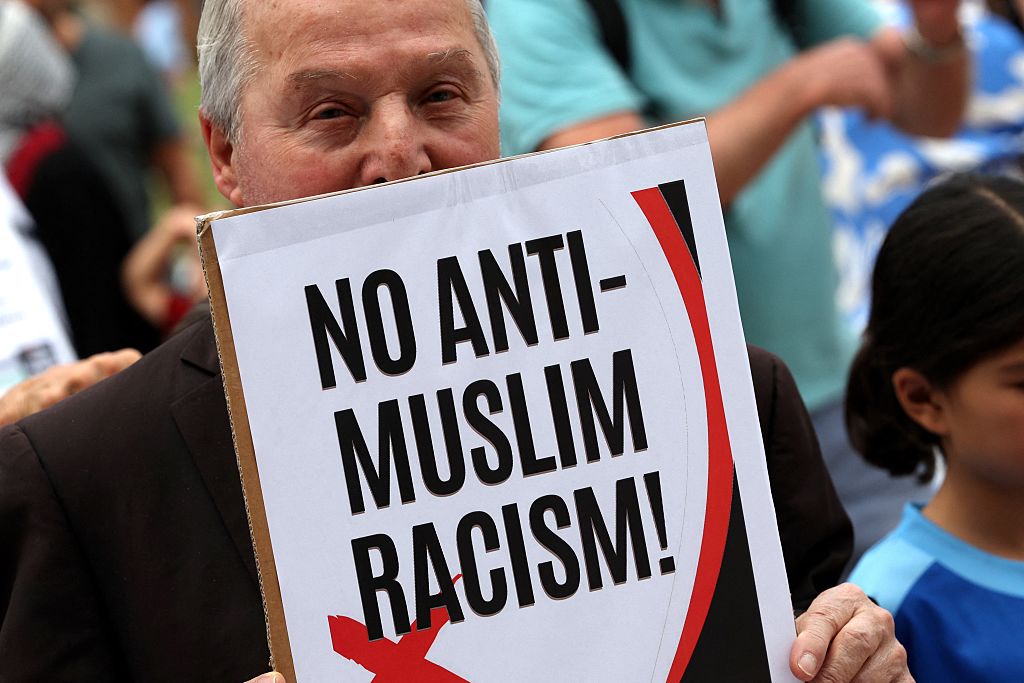

Australia’s Special Envoy to Combat Islamophobia has released his report containing 54 recommendations, including the introduction of federal religious freedom laws and updates to racial discrimination protections to include Muslims in the definition of race, as had been done with Jews and Sikhs.
Speaking at a joint press conference with Prime Minister Anthony Albanese, Special Envoy Aftab Malik made note of the violence, discrimination, and prejudice the Muslim community faces as he outlined the report, which he called a “historic opportunity” for the nation to address Islamophobia.
“It is a moment where we decide who we are as a country, and whether we are prepared to take the necessary steps to ensure that every person in Australia, regardless of faith, ethnicity, or background, is safe, valued, and treated with dignity,” he said.
He said Muslim women in particular face the brunt of racism.
“Many are physically assaulted, spat [at] or shoved, or subjected to threats simply for wearing a headscarf. This prejudice undermines the core value of mutual respect, fairness, and compassion,” he said.
“It also disproportionately disenfranchises Australian Muslims, who are not asking for special treatment but equal recognition of harm.”
He said Islamophobic incidents had “skyrocketed,” with the Islamophobia register recording a 150 percent increase by November 2024.
Islamophobia ‘Deeply Ingrained’ in Australia, Envoy Says
One in three Australians had expressed negative views about Muslims, making them the most negatively viewed group, research had found (pdf).
“The reality is that Islamophobia in Australia has been persistent, at times ignored and other times denied, but never fully addressed,” Malik said, calling it a “deeply ingrained societal challenge” which needed to be tackled with the same urgency that was given to other forms of discrimination.
“It’s a moment where we decide who we are as a country, and whether we are prepared to take the necessary steps to ensure that every person in Australia, regardless of faith, ethnicity, or background, is safe, valued and treated with dignity,” he said.
Albanese said Australia “must stamp out the hate, fear, and prejudice that drives Islamophobia and division in our society.”
“The targeting of Australians based on their religious beliefs is not only an attack on them, but it’s an attack on our core values,” he said.
Multicultural Affairs Minister Anne Aly said Malik had “given voice to Muslims across Australia” who have faced discrimination, racism, and hatred.
All Recommendations to Be Reviewed
Recommendations were broken down into specific areas, including better hate crime data collection by law enforcement and mandated religious sensitivity training for all Australian Federal Police officers, formally recognising the International Day to Combat Islamophobia on March 15, establishing a parliamentary inquiry into Islamophobia, and creating a duty for employers to stamp out racial discrimination.
The Department of Education should also develop an anti-racism and inclusivity framework.
Counter-terrorism legislation needed to be reviewed because of “narratives depicting Islam as intrinsically associated with violence, extremism, and terrorism” after attacks.
Malik said this would identify potential discrimination in the application of national security laws.
He also recommended the creation of a panel of diverse Muslim community representatives to advise on future reforms.
Strengthening online safety laws to prevent the dissemination of hateful content, addressing foreign actors spreading Islamophobia as part of broader foreign influence operations, and more funding to research evidence-based programs to combat Islamophobia were also flagged.
The special envoy called for clarity on migration law to ensure the minister could refuse visas to people promoting hate speech, “including those with a history of promoting Islamophobic hatred.”
Albanese said he would review all 54 recommendations but remained noncommittal about reintroducing religious freedom laws shelved by Labor when an agreement couldn’t be reached with the Coalition.
He said he had told faith leaders that he supported such legislation.
“But I don’t support starting a debate that leads to rancour,” he said, adding that he hoped to work on the issue with new opposition leader Sussan Ley.
Malik’s recommendations did not go as far as anti-Semitism envoy Jillian Segal’s report, which called for the government to cut funding to universities, programmes, or academics that enabled or failed to act against anti-Semitism.
Segal’s report also argued that public funding agreements with festivals or cultural institutions should include terms to allow for the termination of the agreement when they promote or facilitate hatred against Jewish people.
The government has been delaying acting on her recommendations, wanting to consider the two reports together.
 Friends Read Free
Copy
Facebook
Tweet
Friends Read Free
Copy
Facebook
Tweet