
“There’s this thing called Jewish propaganda, where they say that a German leader killed six million Jews … But he actually should have done it, because they are evil.”
Those haunting words, spoken by his uncle when Luai Ahmed was a teen, marked his first introduction to the Holocaust.
Growing up in Yemen, Ahmed recalls how the word “Jew,” or Yehudi in Arabic, was used as a curse. “If I want to insult you, I tell you that you’re a Jew,” he said.
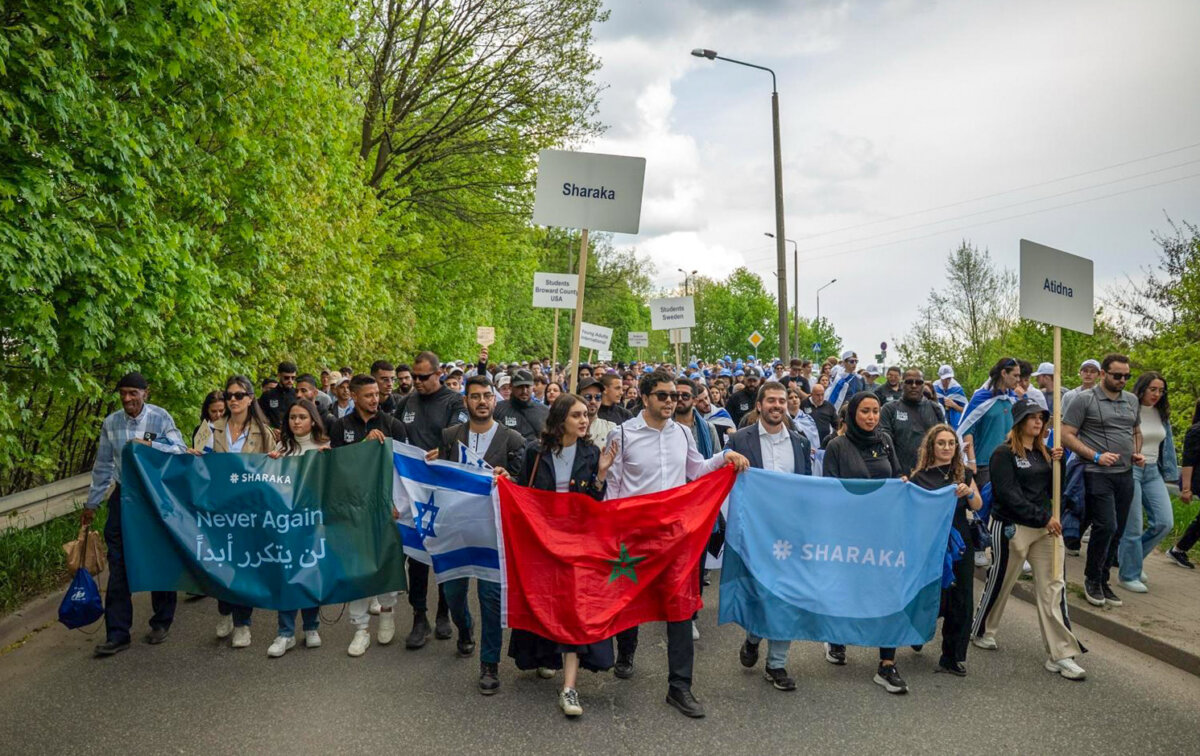
Ahmed recently joined a trip to Poland and Germany, organized by the Israel-based nonprofit Sharaka—meaning “partnership” in Arabic.
Founded in the wake of the historic Abraham Accords—the 2020 peace agreements signifying a new era of cooperation between Israel and several Arab neighbors—Sharaka’s aim is to transform the Middle East from the ground up, promoting what it calls “people to people diplomacy.”
With a small team, the organization sends Arabs and Muslims from around the world to Israel, Germany, and Poland to explore Jewish history, foster interfaith trust, and plant the seeds for long-lasting peace between peoples.
In April, Sharaka led an immersive program of Jewish history and Holocaust education, bringing more than 30 participants from diverse backgrounds to Berlin and Krakow, Poland.
They hailed from the United States, Morocco, Bahrain, Syria, Afghanistan, Jordan, Lebanon, and from countries that are so hostile to Israel that the anonymity of the participants was vital to their safety.
For some, the decision to join a trip organized by Israeli Jews risked relationships, reputations, and even their lives.
Over five days, the group visited Berlin’s iconic Brandenburg Gate, the Reichstag, and the city’s Holocaust memorial. They met with the Israeli ambassador to Germany and the German government’s commissioner for combating anti-Semitism. They joined the March of the Living in Poland, toured Auschwitz, and celebrated Shabbat at Krakow’s Jewish community center.
The emotionally dense itinerary demanded a level of vulnerability and trust rarely expected among strangers, participants said.
“We have come to be friends, to become a community, to look each other in the eyes, to project empathy, compassion, and mutual respect,” Adam Waddell, Sharaka’s tour guide, told The Epoch Times.
The Holocaust
Some in the group knew virtually nothing about the Holocaust—Shoah in Hebrew—the largest planned, industrialized mass slaughter in history.
Under the fascist dictatorship of Adolf Hitler, the Third Reich eradicated six million Jews and millions of others. By 1945, two-thirds of Europe’s Jewish population had died.
Eighty years later, the global Jewish population remains below pre-Holocaust levels, at around 15 million, with most living in Israel and the United States.
Other victims included Poles, Soviets, Catholics, homosexuals, Roma (gypsies), the mentally ill, and the disabled.
The systematic extermination was assisted by the active and silent complicity of ordinary people, driven by fear, anti-Semitism, or indifference.
In 1935, the newly-enacted Nuremberg Laws stripped German Jews of property, citizenship, and rights, laying the groundwork for genocide.
Three years later, Nazi leaders unleashed a wave of violent anti-Jewish pogroms that swept through Germany, culminating in the infamous Kristallnacht, or Night of Broken Glass, widely regarded as the grim beginning of the Holocaust..
By 1939, the Fuhrer’s mobile killing squads were sweeping across Eastern Europe on the heels of the invading German army, executing an estimated 2 million people, half of them Jews. Entire Jewish villages were wiped out.
At the same time, Jews were segregated into ghettos, where they endured starvation, disease, and hypothermia, as well as ruthless abuse and humiliation from their SS guards. Thousands were executed.
In Krakow, Poland, a railway runs through the ghetto—where today’s Jewish quarter is located. From train windows, Poles commuting to work could witness guards tormenting prisoners and see dead bodies piling up in the streets.
In 1943, Jewish residents of the Warsaw Ghetto staged a fierce uprising that became a powerful symbol of Jewish resistance. Israel’s annual Holocaust Remembrance Day coincides with the 27th of Nisan on the Hebrew calendar, to mark the beginning of the Warsaw Ghetto uprising.
The ghettos were a dark prelude to the concentration camps. In January 1942, seeking more efficient methods of mass murder, Hitler and his top officials formalized the “final solution to the Jewish question” at the infamous Wannsee Conference in Berlin.
Under the pretense of “saving humanity,” Nazi leaders approved plans for systematic genocide, outlining the construction of gas chambers and death camps. As Heinrich Himmler, head of the SS—Hitler’s elite guard—declared at one meeting, “It’s part of our program, elimination of the Jews, extermination … This is a glorious page in our history that has never been written.”
‘House 88’
The Sharaka participants soon came face to face with the horrors of the “final solution.”
After a day in Berlin, the group traveled by bus to Poland, where participants rose early the next morning for the two hour drive to Oswiecim, the town surrounding Auschwitz.
Oswiecim’s Jewish community dates back to the 15th century and flourished in peace until World War II, when German forces destroyed its synagogues and Jewish institutions.
As the Sharaka delegates arrived in Oswiecim, they were met by stark contrasts. The village’s peaceful beauty stood in sharp opposition to its horrific history. Bright sun and blooming flowers clashed with the memory of the unimaginable cruelty that had occurred there.
The group’s first stop was 88 Legionow Street—“House 88”—the former home of Auschwitz commandant Rudolph Höss. For three years, Höss lived comfortably with his family just a few hundred feet from the camp where thousands were being sent to gas chambers and murdered on a daily basis.
The unsettling irony of Höss’s dual nature—as both a devoted family man and a cold-blooded mass murderer—prompted somber reflection from the group.
“I never thought it would be possible … that a person who is very genuine and very humble with himself and his family, at the same time, can be a monster to another community,” said one participant, who asked to remain anonymous for fear of reprisal.
This contradiction surfaced repeatedly throughout the day, as stories emerged of heartless SS killers known for simultaneously being loving husbands and fathers.
The March of the Living
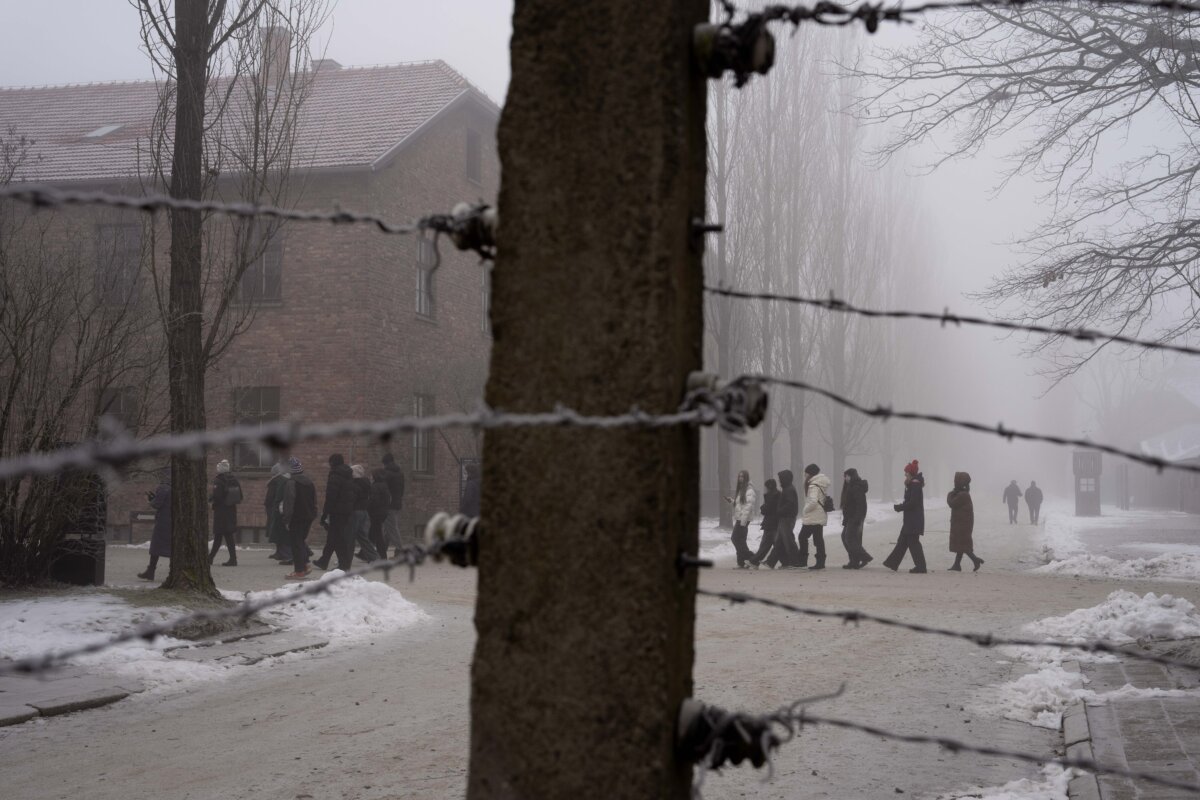
The March of the Living is an annual journey that honors the nearly 60,000 prisoners who were evacuated from the Auschwitz concentration camp in 1945 as Soviet forces advanced. Barefoot, frail, and freezing, they endured brutal forced marches of up to 39 miles. Many perished along the way.
Today, people from around the world walk a symbolic, approximately two-mile path from Auschwitz I to the concentration camp of Birkenau—also known as Auschwitz II—stepping through the shadows of the past toward a celebration of resilience.
“We’re turning it into a march of life,” researcher and commentator Nir Boms, a close friend of the Sharaka staff, shared with the group as the bus approached Auschwitz. “Yes, we have been victimized … throughout much of our history. But we don’t want that to define us.”
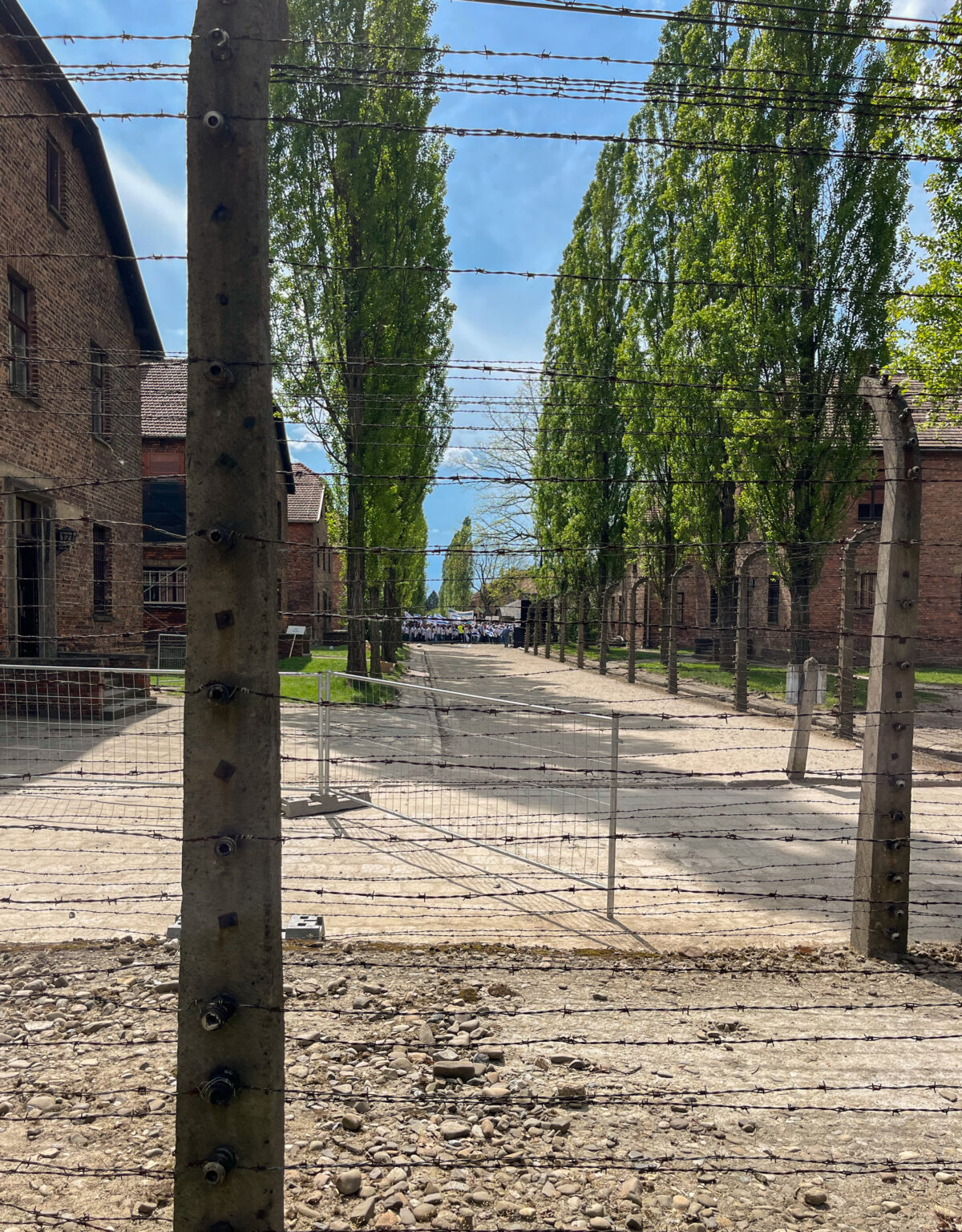
This year, the March of the Living welcomed the presidents of both Israel and Poland, along with a group of hostages—taken captive in the Oct. 7, 2023, Hamas attack—who had been recently released in a deal with the terror group. Several Holocaust survivors now living in Israel also took part, some passionately calling for the return of grandchildren still held by Hamas in Gaza. Among the participants was 98-year-old Bella Eisenman, an Auschwitz survivor.
As the group crossed an overpass, they noticed a small anti-Israel demonstration below. The staff explained that some visitors to Auschwitz arrive carrying Palestinian flags, and sometimes even display signs reading, “this job is not finished yet.”
Having grown up witnessing the demonization of Israelis and Zionists in their own communities, the Muslim and Arab participants were unsurprised by the Nazi-inspired rhetoric embraced by the demonstrators. Some said they saw no meaningful difference between anti-Zionism and anti-Semitism.
“As Muslims, we have a big problem,” Texas-based Imam Marzuq Abdul-Jaami said, through tears. “We have to accept the problem, and we have to go back and make sure that we get this problem out among us about Jews … and never let this happen again.”
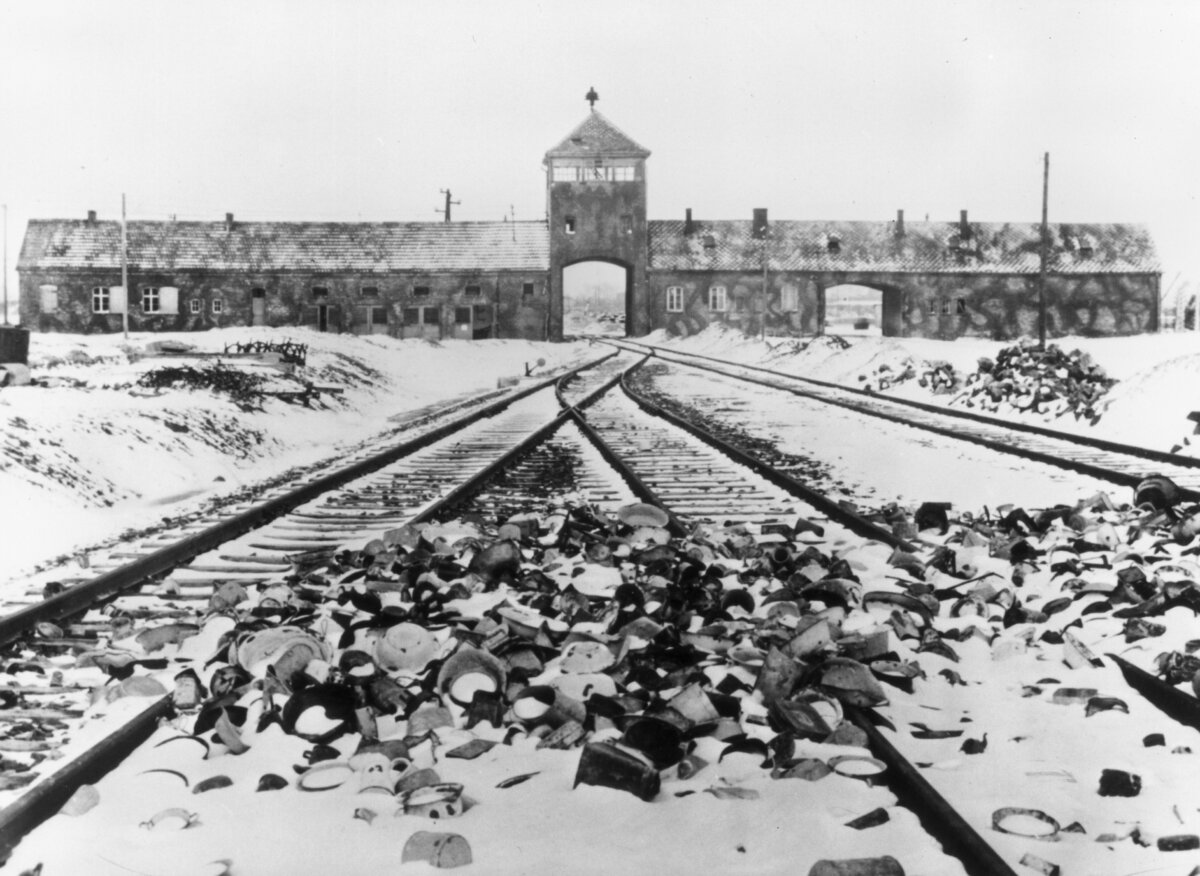
The march ended at Birkenau, where attendees left candles and messages on the train tracks that had carried countless Jews to their deaths.
Many of those prisoners had endured harrowing journeys of up to 10 days without food or water, in cramped cattle cars. Upon arrival, those who survived were subjected to the “selection process,” conducted by a volunteer Nazi “doctor,” who separated children from parents and determined which prisoners were fit for labor. Approximately 25 percent—mostly elderly and children—did not pass the selection process and were sent directly to the gas chambers.
The March of the Living was cut short by a sudden rainstorm. The relentless downpour, which left the group drenched and trudging through mud for more than an hour, offered a humbling glimpse into the merciless conditions faced by Auschwitz victims.
“It was the hardest rain that I’ve been outside in … which was sort of fitting,” observed Jonah Platt, an actor and Jewish advocate.
“It really grounded me in where I was, in the history, thinking about how there were Jewish slaves there, working out in that kind of rain, in threadbare pajamas, starving to death, and having to do physical labor and be shot if they didn’t keep up,” he said.
“And meanwhile … I get to go on a warm bus and get a hot meal after this.”
The two-hour bus ride back to the hotel in Krakow was unusually quiet. Earlier commutes had been filled with lively conversations as participants connected with one another. Now, the atmosphere was heavy.
Questions posed by the staff that morning echoed in the group’s minds: Why were they here? What was the purpose of this journey? Should they focus on the memory of the dead or the lessons left for the living?
The staff also shared with them the powerful words of the late Holocaust survivor and Nobel laureate Elie Wiesel, who wrote, “To forget the dead would be akin to killing them a second time.”
Wiesel’s words underscored the importance of passing the torch to future generations to ensure that the Holocaust and its fading victims will never be forgotten.
Auschwitz
The group returned to Auschwitz the next day under overcast skies, the weather mirroring the atmosphere of the bus ride to the camp.
Many participants had only begun, following the Oct. 7, 2023, massacre in Israel, to confront and reevaluate long-held prejudices against Jews and Israelis.
On that October day, Hamas terrorists launched a ferocious invasion of southern Israel by land, sea, and air. Savagely hunting down Jews and targeting anyone else in their path, Hamas took the lives of 1,200 individuals, including Holocaust survivors, infants, and Arabs. Two hundred fifty-nine people were taken hostage. Dozens still languish in captivity in Gaza.
Against this backdrop, the delegation entered the gates of Auschwitz.
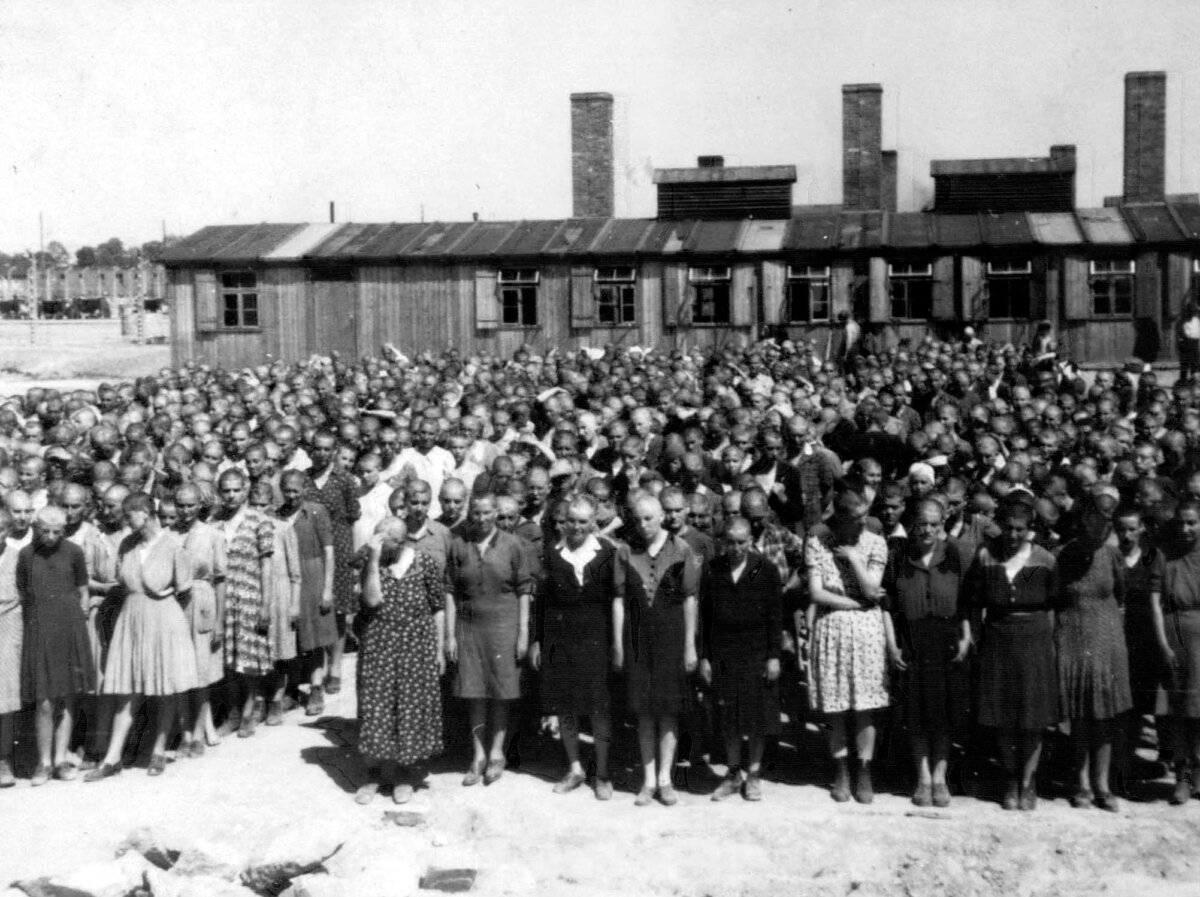
Auschwitz was the largest and most notorious of the German death camps. At least 1.3 million people were deported to the camp, including one million Jews. More than 75 percent of those who arrived perished from disease, starvation, hypothermia, execution, torture, gassing, or medical experimentation.
Of the 15,000 Soviet prisoners at Auschwitz, only six survived.
Of the 232,000 children at the death camp, most of them Jewish, only 22,000 were “selected” for forced labor—the rest were sent directly to the gas chambers.
Of the 3,000 twins subjected to the camp’s grotesque eugenic experiments, only about 200 survived, many of them eventually succumbing to lasting medical complications.
Between May and July of 1944, nearly half a million Hungarian Jews, who had managed to avoid deportation for much of the war, were sent to Auschwitz. Almost all were killed. “They were not even slaves, because slaves have value,” the group’s guide, Agata, recounted from a survivor’s testimony.
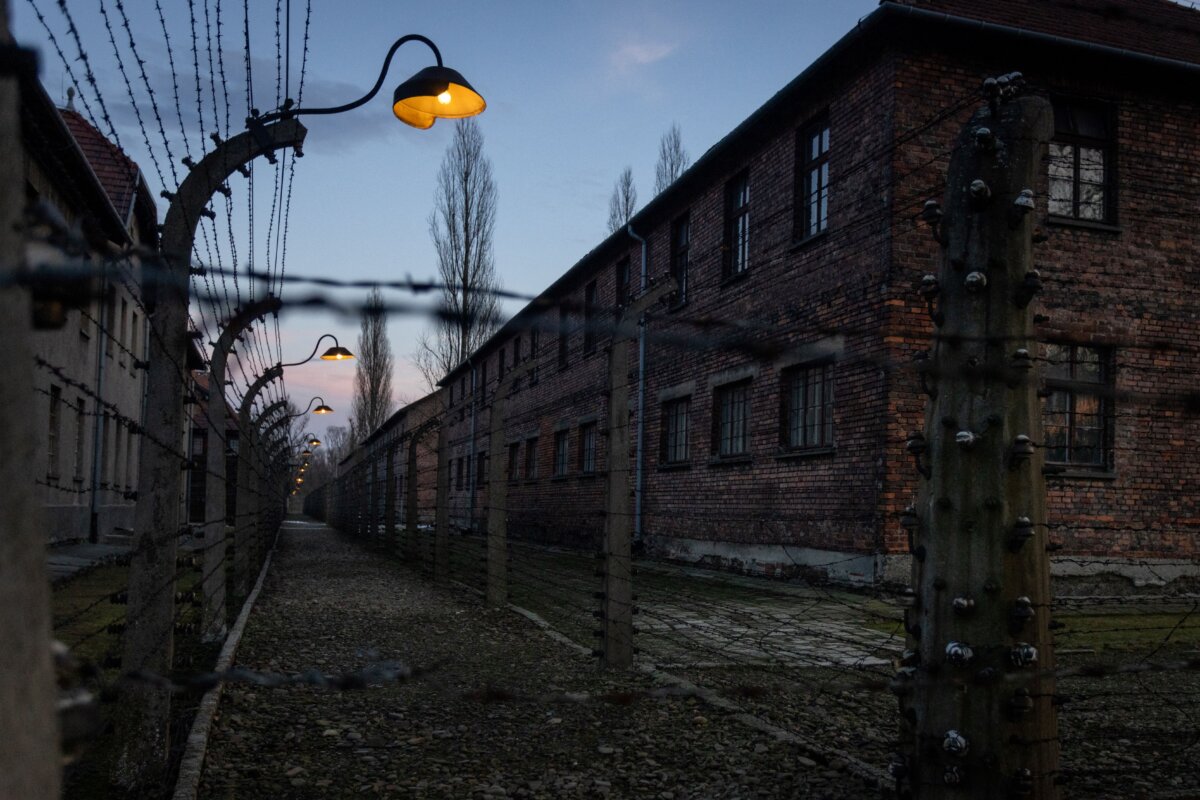
The tour of Auschwitz began with a solemn walk along paved paths flanked by stark concrete walls. The air was heavy with the sound of victims’ names echoing from loudspeakers—a poignant reminder that this was not a tourist site but rather, a mass grave.
“You did not go to Auschwitz, the museum. You went to Auschwitz, the cemetery,” Talia Rabb, a 21-year-old Israeli and descendant of Auschwitz survivors, told the group.
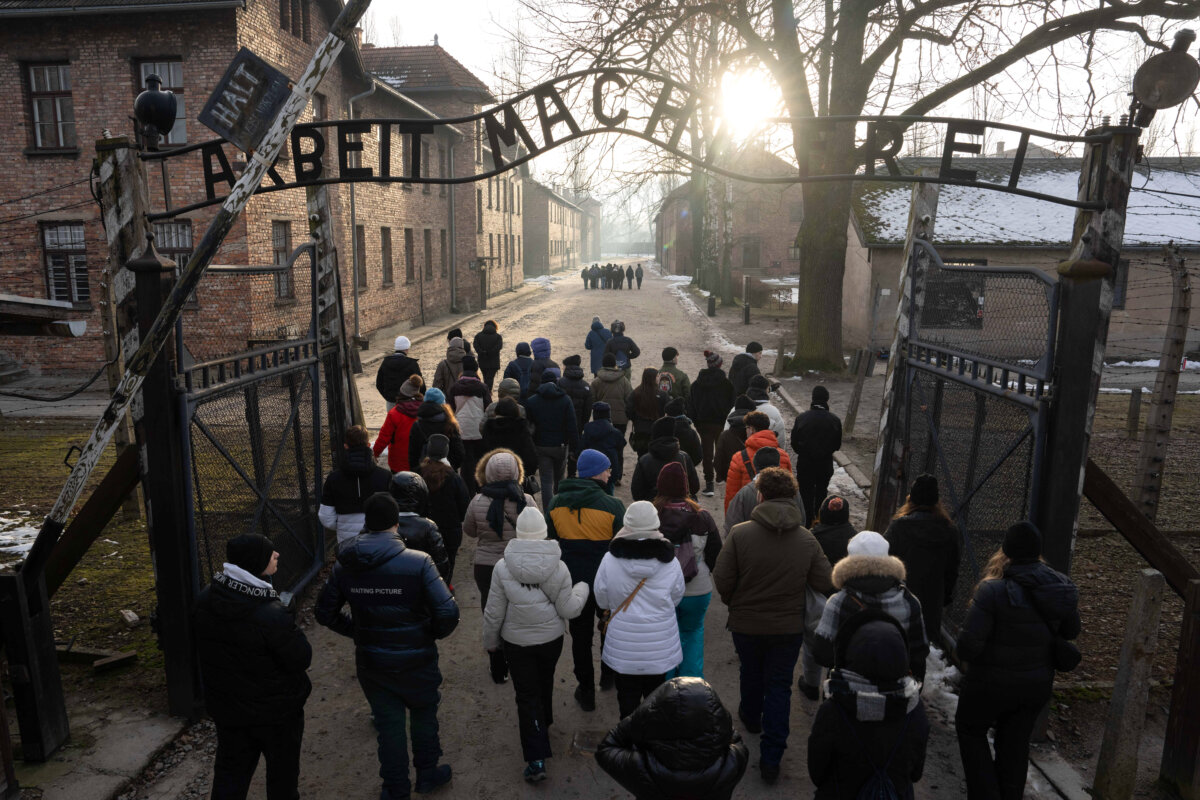
As they passed beneath the macabre “Arbeit Macht Frei” (“Work Will Set You Free”) sign, the group met with the gripping irony of Nazi deception.
Inside, six-foot urns filled with human ashes and carpets woven from human hair, recovered after liberation, laid bare the inescapable truth: Auschwitz was a factory of death.
The group heard about prisoners who were buried alive, children forced to work barefoot in flea- and diarrhea-infested pajamas in frigid winters, and mothers forced to choose which of their children to save from execution as their Nazi captors smiled.
The group learned about the color-coded tags that marked inmates: yellow for Jews, brown for Roma, pink for homosexuals, black for the mentally ill, green for criminals, purple for Jehovah’s Witnesses, and red for communists and other political prisoners.
Tattoos on prisoners’ wrists served a grim, pragmatic purpose: within days or weeks, inmates were frequently so ill that they were unrecognizable.
In the face of this massive dehumanization, saying the names of victims aloud has become a bittersweet act of remembrance—a restoration of victims’ humanity.
The group stood before the execution wall, now adorned with flowers left by the presidents of Israel and Poland, and learned of the brutality once inflicted there.
Inside a nearby barrack lay the “Book of Names,” listing more than four million identified Jewish victims along with their birthplaces and dates.
Mya El Yaalaoui, a Moroccan college student now living in Paris, said she was overwhelmed by the ledger of stolen lives. “Six million names. Each one an entire universe … a book so huge it swallows all light, all hope,” she wrote in her notes.
“It contains my story because the Shoah isn’t only a Jewish wound. It is a gash across the soul of humanity.”
The group also learned about Nazi doctor Joseph Mengele, his racist philosophy of eugenics and the ghastly experiments he conducted.
“This was torture dressed in a white coat,” said Saad Chroqi, a physician from Morocco. “Being here reminds me that science without ethics becomes a weapon, that our duty as doctors goes far beyond knowledge. It is rooted in compassion and in respect for life.”
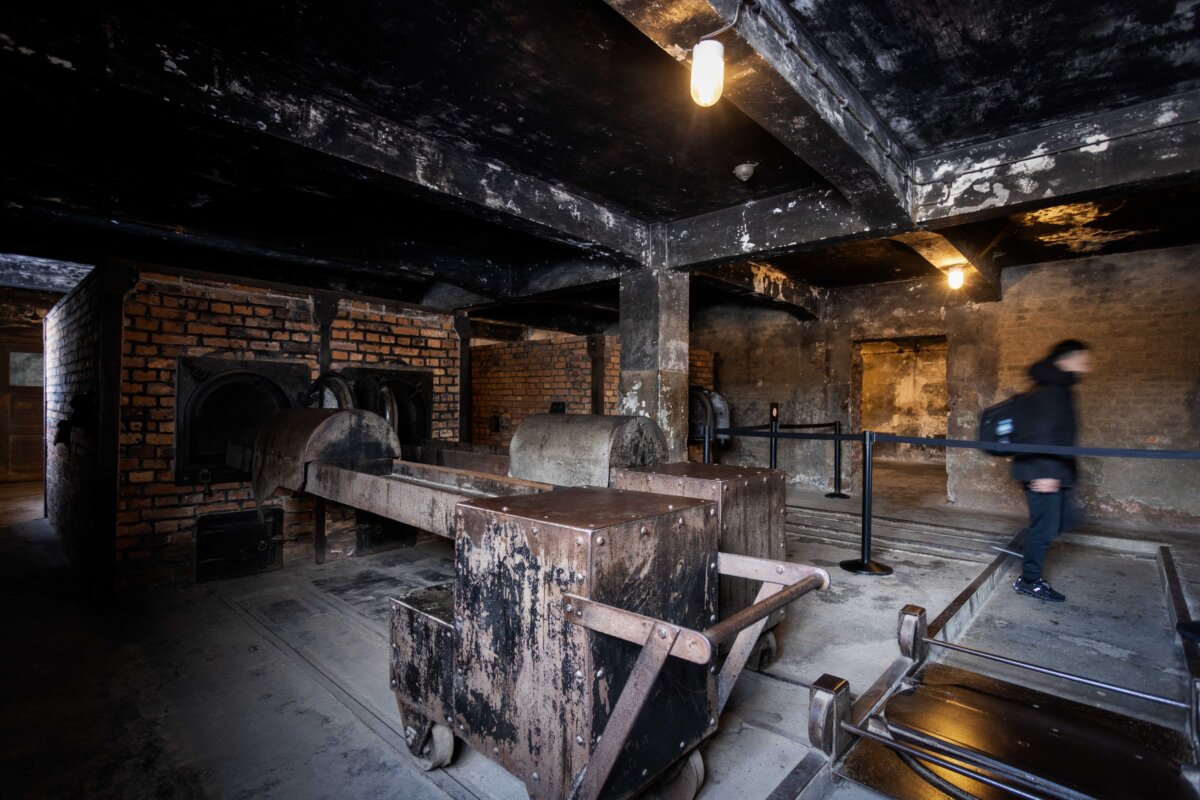
The tour of Auschwitz ended at the sole crematorium left intact in the complex before liberation. Silent tears fell as the group moved quietly through the chamber.
Here, victims were deceived into believing they were entering showers. After days packed into cattle cars, some may even have felt a brief sense of relief.
Instead, they were locked inside a dark, underground chamber. Above them, an SS guard poured Zyklon B, a pesticide that releases hydrogen cyanide on exposure to water or heat, through openings in the roof. The sprinklers then released the poisonous gas, which filled the room. Within half an hour, every life inside was extinguished. Jewish prisoners were then forced to process and dispose of the bodies.
While Auschwitz I was a site of appalling terror, Birkenau—Auschwitz II—was even worse. Its four gas chambers could kill 2,000 people in just 20 minutes, and up to 12,000 in a single day.
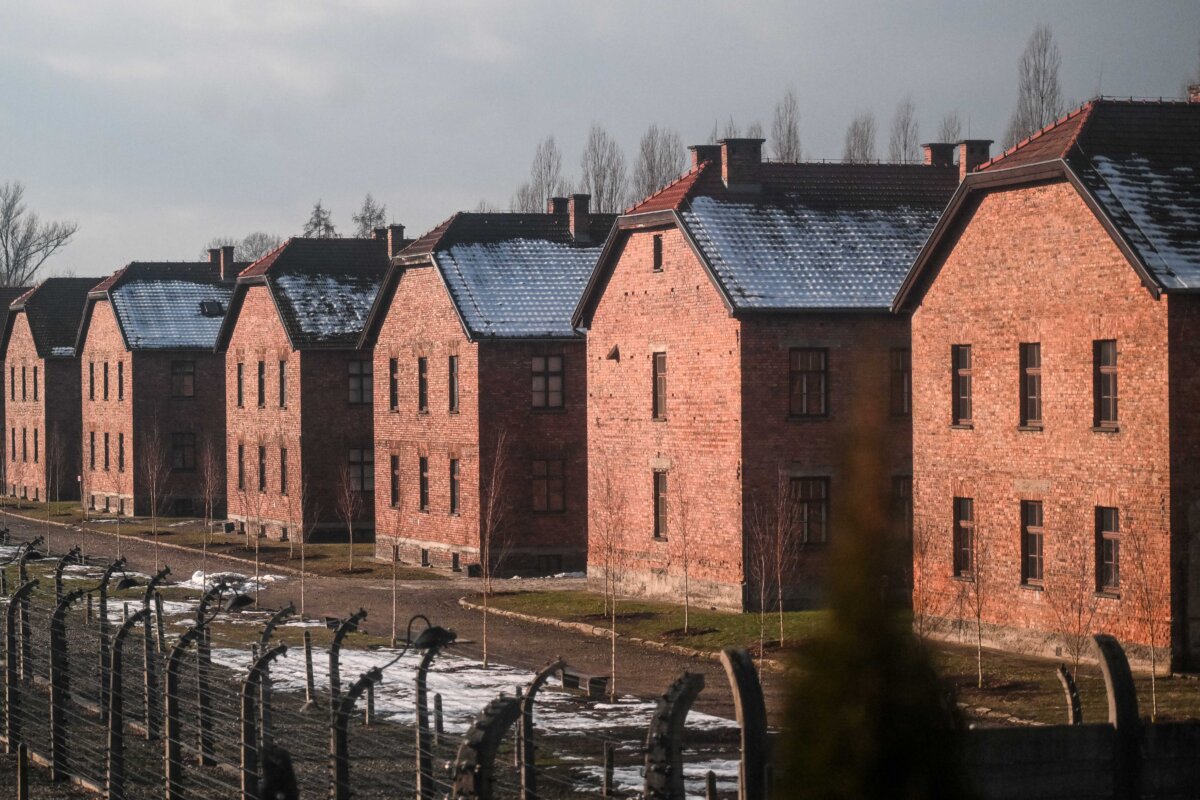
Birkenau’s wooden barracks lacked ventilation and offered little protection from the cold, making survival even more unlikely. As the Sharaka group entered one barrack, they saw open pits in front of the bunks that served as toilets, forcing prisoners to relieve themselves in full view of others—stripping away any remaining dignity.
Participants touched the bunk beds—simple wooden frames with a thin layer of straw, and were told that each bed held five people, with many others relegated to the filthy dirt floor. For those strong enough to climb, the top bunk was a grim prize: starvation and disease caused uncontrollable diarrhea, and the porous straw offered no barrier for those sleeping on the lower levels, who frequently woke up covered in waste.
After more than four hours in Auschwitz, the group ended the day at the only synagogue in Oswiecim, restored and re-opened in 2000 by the Auschwitz Jewish Center Foundation.
They met Hila Weisz-Gut, 34, the town’s sole Jewish resident. Several of Weisz-Gut’s relatives died at Auschwitz after being deported from Hungary; her grandmother survived Birkenau.
In 2023, Weisz-Gut moved back to the town where there were once 29 synagogues and where Jews made up more than half of the population. She now works at the town’s Jewish museum, educating visitors about Oswiecim’s once-vibrant Jewish community.
In the synagogue’s basement, each participant received the name and story of a Holocaust victim. One by one, participants read the names aloud and lit memorial candles.
One individual, who asked to remain anonymous, warned, “never underestimate a hateful message, even when it is very small … even when it is coming to you through algorithms, social media, or someone else that seems less powerful at this moment.”
Shabbat in Krakow
Before World War II, Poland was home to Europe’s largest Jewish community. Krakow, the country’s second biggest city, sits along the Vistula River, its ancient streets now bustling with tourists.
Those same streets once witnessed Polish mobs descending upon Jewish-owned businesses, shattering windows and setting them ablaze. The city was once home to approximately 70,000 Jews, a vibrant community dating back to the 13th century. Today, fewer than 1,000 Jews remain.
In recent years, however, a quiet resurgence of Jewish life has taken root, centered around the Jewish Community Center. It was here that the Sharaka delegation spent its final night, joining locals for a Shabbat dinner.
Every Friday evening, observant Jews around the globe celebrate Shabbat, a sacred day of rest that begins at sundown and offers a respite from the week’s chaos.
They described the evening as a cathartic release, brimming with warmth, affection, and gratitude. The Jewish Community Center welcomes visiting groups weekly, but the gathering of Muslims and Jews was different. “You guys are the most important group that’s come here,” the rabbi’s wife—or Rebbetzin—told them. “because you represent the idea of seriously understanding that we all need to live together.”
As the meal and prayers ended, the room transformed into a vibrant celebration of unity, alive with Arabic and Hebrew songs and dances. The uninhibited display of joy and brotherhood was a fitting conclusion to the exhausting, information-packed journey.
Ehsanullah Amiri, an Afghani journalist who fled the Taliban in 2021 and now lives in Canada, told the group, “Instead of going on vacation, I’m going to use my savings to bring my wife and my small kid to Auschwitz to show her the history. That’s what I’ve committed to myself, and hopefully I can afford to do it next year.”
Hope for Reconciliation
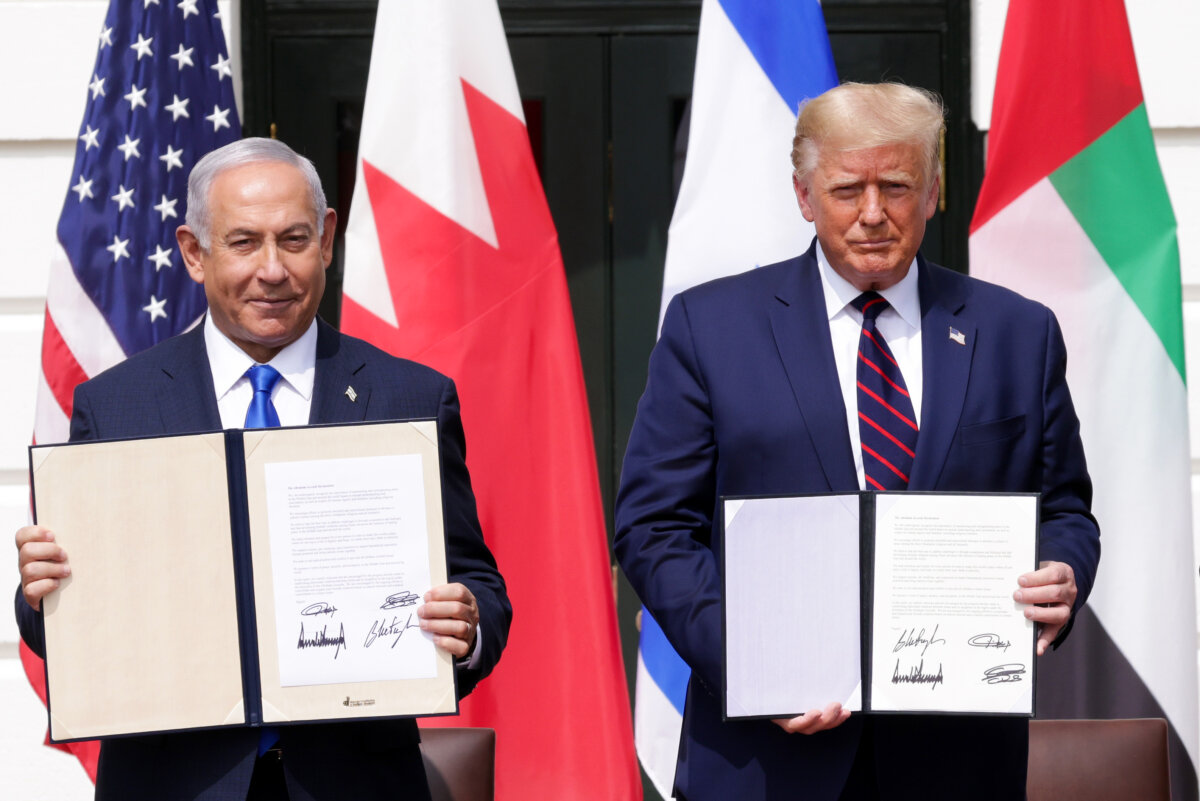
On Sept. 15, 2020, President Donald Trump brokered the historic Abraham Accords, in which the United Arab Emirates and Bahrain normalized relations with Israel. Soon after, Morocco and Sudan followed suit.
The accords represented a seismic shift, rejecting the long-held narrative that the Israeli–Palestinian conflict was the linchpin of Middle Eastern stability.
They were also a direct challenge to entrenched anti-Semitism in Arab societies, where Holocaust denial and glorification coexist, Mein Kampf is displayed in bookshops, stores are named after Adolph Hitler, and conspiracies about Jewish power and malevolence pervade mosques, schools, media, and governments.
Unlike the “cold peace” agreements Israel signed with Egypt in 1979 and Jordan in 1994, the accords went beyond the state-level diplomacy of embassy openings, intelligence sharing, and trade deals.
The Abraham Accords ushered in an era of unprecedented collaboration between ordinary people. As travel restrictions were lifted, waves of Israeli tourists flocked to Dubai, and Arab visitors explored the beaches of Tel Aviv.
As a result of the accords, Hanukkah is now openly celebrated in the United Arab Emirates, and Morocco has begun restoring hundreds of Jewish heritage sites. Students and scholars are crossing borders to study at one another’s universities, fostering deeper cultural and educational exchanges.
Named after Abraham, the common patriarch of Judaism and Islam, the accords embody the hope for reconciliation between two peoples long divided by centuries of conflict.
Initiatives like Sharaka will nurture that reconciliation.
“They always tell us, there’s one solution,” Noam Meirov, Sharaka’s managing director, reflected at the Shabbat dinner. Invoking the lyrics of John Lennon’s “Imagine,” he told the group, “It’s a very nice song—Imagine no borders, no countries, and no religion.”
But what the Abraham Accords brought to the Middle East was the rejection of that idea, he continued. “Instead, they told us to imagine countries, imagine cultures, imagine religions. Imagine that we will create peace through our diversity. This is what is happening right here, with you.”
 Friends Read Free
Copy
Facebook
Tweet
Friends Read Free
Copy
Facebook
Tweet